Senator Charles Carroll
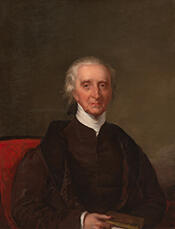
Here you will find contact information for Senator Charles Carroll, including email address, phone number, and mailing address.
| Name | Charles Carroll |
| Position | Senator |
| State | Maryland |
| Party | Unknown |
| Status | Former Representative |
| Term Start | March 4, 1789 |
| Term End | March 3, 1793 |
| Terms Served | 2 |
| Born | September 19, 1737 |
| Gender | Male |
| Bioguide ID | C000185 |
About Senator Charles Carroll
Charles Carroll served as a Senator from Maryland in the United States Congress from 1789 to 1793, holding office during the formative years of the federal government under the newly ratified Constitution. A member of the Unknown Party, he completed two terms in the United States Senate and contributed to the early legislative process as the new national institutions and precedents of governance were being established. In this capacity, he participated in debates and votes that helped define the role of the Senate and represented the interests of his Maryland constituents at a time when the balance between federal and state authority was still being worked out in practice.
Carroll’s service in Congress occurred during a significant period in American history, immediately following the adoption of the Constitution and the inauguration of the first federal administration. As a member of the Senate, he took part in the democratic process at a time when the United States was organizing its financial system, establishing executive departments, and setting early foreign and domestic policy. His tenure from 1789 to 1793 coincided with the First Congress and the beginning of the Second Congress, when foundational legislation, including measures on the judiciary, revenue, and the structure of the executive branch, came before the Senate. Within this context, Carroll’s role as a Senator from Maryland placed him among the first generation of federal lawmakers charged with translating constitutional principles into working institutions.
The name Charles Carroll is associated with a prominent Maryland family whose members played notable roles in colonial, revolutionary, and early national public life. Earlier bearers of the name included Charles Carroll the Settler (1661–1720), a wealthy early Maryland planter and lawyer who became a leading figure in the colony and was the father of Charles Carroll of Annapolis. His son, Charles Carroll of Annapolis (1702–1782), was a wealthy Maryland Catholic planter who maintained the family’s social and economic prominence and was the father of Charles Carroll of Carrollton. Another relative, Charles Carroll (barrister) (1723–1783), served as a Continental Congressman from Maryland during the Revolutionary era, participating in the governance of the emerging nation before the adoption of the Constitution.
The most famous member of the family, Charles Carroll of Carrollton (1737–1832), was a signer of the United States Declaration of Independence for Maryland and the son of Charles Carroll of Annapolis. As a leading advocate of independence and one of the wealthiest men in the colonies, he became a symbol of Maryland’s commitment to the revolutionary cause and later remained active in public affairs during the early national period. The Carroll name continued to appear in American public life beyond Maryland as well. Charles H. Carroll (1794–1865) served as a United States Congressman for New York, extending the family’s political influence into another state during the nineteenth century.
In subsequent generations, individuals bearing the Carroll name pursued a variety of careers in public service, law, philanthropy, and the military. Charles Carroll (1865–1921) was known as a philanthropist and a member of New York society during the Gilded Age, reflecting the family’s continued social prominence. Charles J. Carroll (1882–1942) was an American lawyer and politician, further associating the name with legal and political work. Beyond the United States, Charles Carroll (1923–1992) served as a British Army officer in the Brigade of Gurkhas during the Second World War, illustrating the broader international presence of individuals with the Carroll name in the twentieth century.
The Carroll name also appears in American education and popular culture. Charles Carroll High School, a former high school in Philadelphia, Pennsylvania, bore the name until its closure in 2013, demonstrating the enduring recognition of the Carroll legacy in American civic life. In the realm of sports, Chuck Carroll (1906–2003) gained prominence as an American football player, adding an athletic dimension to the public associations with the name. Although distinct individuals, these various Charles Carrolls collectively underscore the historical resonance of the name in American and, at times, British public life.
While the Senator from Maryland who served from 1789 to 1793 is recorded here as a member of the Unknown Party and as a participant in the early federal legislative process, his tenure is best understood against this broader backdrop of the Carroll family’s longstanding engagement in law, politics, and public service. His years in the Senate placed him within the critical transition from revolutionary governance to the stable operation of the constitutional system, aligning his career with a period in which many members of the extended Carroll lineage were active in shaping colonial, revolutionary, and early national institutions.