Representative Charles David Carter
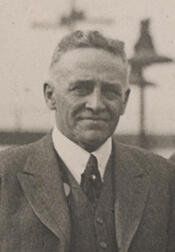
Here you will find contact information for Representative Charles David Carter, including email address, phone number, and mailing address.
| Name | Charles David Carter |
| Position | Representative |
| State | Oklahoma |
| District | 3 |
| Party | Democratic |
| Status | Former Representative |
| Term Start | December 2, 1907 |
| Term End | March 4, 1927 |
| Terms Served | 10 |
| Born | August 16, 1868 |
| Gender | Male |
| Bioguide ID | C000196 |
About Representative Charles David Carter
Charles David Carter (August 16, 1868 – April 9, 1929) was an American politician and a member of the Democratic Party who served as a Representative from Oklahoma in the United States Congress from 1907 to 1927. He represented Oklahoma’s 4th and later 3rd congressional districts, holding office for ten consecutive terms during a significant period in American history that included statehood for Oklahoma, World War I, and the early postwar era. Of Chickasaw and Cherokee descent, he was among the early Native American members of the United States Congress and played a prominent role in the political life of both the Chickasaw Nation and the new state of Oklahoma.
Carter was born near Boggy Depot, in the Choctaw Nation, Indian Territory (now in Oklahoma), on August 16, 1868. In April 1876 he moved with his father to Mill Creek, a stage stand on the western frontier of the Chickasaw Nation. He attended Indian day schools and later the Chickasaw Manual Training Academy at Tishomingo, receiving an education that combined basic academics with vocational training. His upbringing in Indian Territory and his Native ancestry shaped his early understanding of tribal governance, land issues, and the challenges facing Native communities under federal policies of the late nineteenth century.
As a young man, Carter worked in a variety of occupations that connected him to the developing economy of Indian Territory. From 1887 to 1889 he was employed on a ranch, gaining experience in the region’s livestock and agricultural life. Between 1889 and 1892 he worked in a mercantile establishment in Ardmore, Oklahoma, a growing commercial center, which exposed him to business practices and the needs of local residents and traders. On December 29, 1891, he married Ada Gertrude Wilson; the couple had four children: Stella LeFlore, Italy Cecil, Julia Josephine, and Benjamin Wisnor Carter, Jr. After Ada’s death on January 30, 1901, Carter later married Cecile Whittington Jones on January 8, 1911.
Carter’s public career began within the government of the Chickasaw Nation, where he quickly assumed positions of responsibility. He served as auditor of public accounts of the Chickasaw Nation from 1892 to 1894, overseeing financial matters for the tribal government. In 1895 he was a member of the Chickasaw Council, participating in legislative deliberations affecting the Nation. By 1897 he had become superintendent of schools of the Chickasaw Nation, directing the administration of tribal education at a time when schooling was a central issue in relations between Native nations and the federal government. His work in these posts established him as a capable administrator and advocate for Chickasaw interests.
In November 1900, President William McKinley appointed Carter as Mining Trustee for Indian Territory, a federal position he held from 1900 to 1904. In this role he was responsible for overseeing mineral leases and revenues in Indian Territory, a matter of considerable importance as railroads, coal mining, and other extractive industries expanded in the region. His service as mining trustee further deepened his experience with federal-tribal relations and resource management. By 1906, as the movement for Oklahoma statehood accelerated, Carter became Secretary of the first Democratic executive committee of the proposed State of Oklahoma, serving from June to December 1906 and helping to organize the Democratic Party’s structure in anticipation of statehood.
Upon the admission of Oklahoma as a state into the Union on November 16, 1907, Carter was elected as a Democrat to the Sixtieth Congress and to the nine succeeding Congresses, serving from November 16, 1907, to March 4, 1927. During his ten terms in the House of Representatives, he participated in the legislative process and represented the interests of his constituents in Oklahoma’s 4th and later 3rd congressional districts. His tenure coincided with major national developments, including Progressive Era reforms, World War I, and the early years of Prohibition and agricultural adjustment. In Congress, he became particularly associated with legislation affecting Native Americans and the administration of former Indian Territory lands.
Carter’s most prominent congressional role came during the Sixty-fifth Congress, when he served as chairman of the House Committee on Indian Affairs. In that capacity he was centrally involved in shaping federal Indian policy, addressing questions of land allotment, citizenship, education, and the administration of tribal affairs. His leadership on this committee reflected both his personal heritage and his long experience in Chickasaw governance and Indian Territory administration. Despite his lengthy service and seniority, he was an unsuccessful candidate for renomination in 1926, bringing his congressional career to a close at the end of his tenth term in March 1927.
After leaving Congress, Carter remained active in public service at the state level. He was appointed to the Oklahoma State Highway Commission, serving from 1927 to 1929, during a period when the state and nation were expanding and modernizing their road systems to accommodate increasing automobile traffic. His work on the commission contributed to the development of Oklahoma’s transportation infrastructure in the years just before the Great Depression.
Charles David Carter died in Ardmore, Carter County, Oklahoma, on April 9, 1929. He was interred at Rose Hill Cemetery in Ardmore. Remembered as a long-serving Democratic representative, a leader in the Chickasaw Nation, and a Native American voice in the United States Congress, his career spanned the transition from Indian Territory to statehood and reflected the complex interplay of tribal, state, and federal governance in early twentieth-century Oklahoma.