Representative Charles Andrew Christopherson
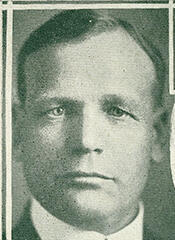
Here you will find contact information for Representative Charles Andrew Christopherson, including email address, phone number, and mailing address.
| Name | Charles Andrew Christopherson |
| Position | Representative |
| State | South Dakota |
| District | 1 |
| Party | Republican |
| Status | Former Representative |
| Term Start | May 19, 1919 |
| Term End | March 3, 1933 |
| Terms Served | 7 |
| Born | July 23, 1871 |
| Gender | Male |
| Bioguide ID | C000384 |
About Representative Charles Andrew Christopherson
Charles Andrew Christopherson (July 23, 1871 – November 2, 1951) was an American lawyer and Republican politician from South Dakota who served seven consecutive terms as a United States Representative from 1919 to 1933. His congressional career spanned a significant period in American history, including the aftermath of World War I, the Roaring Twenties, and the early years of the Great Depression, during which he participated in the legislative process and represented the interests of his South Dakota constituents.
Christopherson was born on July 23, 1871, in Amherst Township, Fillmore County, Minnesota, to Norwegian immigrant parents, Knute C. Christopherson and Julia (Nelson) Christopherson. His father had come to the United States at the age of fourteen. One of seven children, he was raised in the Lutheran Church and attended local public schools. Seeking broader opportunities, he moved to Sioux Falls, South Dakota, where he enrolled in Sioux Falls Business College and Normal School. He graduated in 1890 and then read law with an established firm in Sioux Falls, following the traditional apprenticeship route to a legal career rather than attending a formal law school.
In 1893, Christopherson was admitted to the bar and began practicing law in Sioux Falls, initially at the Joe Kirby law office. He later established his own practice and, in 1913, took Fredolph H. Melquist as a law partner. Alongside his legal work, Christopherson became increasingly active in civic and educational affairs. He served on the Board of Education of Sioux Falls from 1908 to 1918 and was president of the board from 1911 to 1915, helping to oversee the city’s public school system during a period of growth and modernization. He also served as president of the board of directors of the Union Savings Association in 1912, reflecting his engagement in local business and financial matters.
Christopherson’s formal political career began at the state level. In 1912, he was elected as a Republican to the South Dakota House of Representatives. During his service in the state legislature, he rose to a position of leadership and was chosen as Speaker of the House beginning in 1915, in what was his final term in the state body. His work in Pierre helped establish his reputation as an effective legislator and party leader, positioning him for higher office.
In 1918, Christopherson successfully ran for the United States House of Representatives from South Dakota’s 1st congressional district as a member of the Republican Party. He entered Congress on March 4, 1919, and served continuously until March 3, 1933, completing seven terms in office. During these years, he contributed to the legislative process in the House of Representatives and participated in the democratic governance of the nation at a time marked by postwar adjustment, agricultural challenges, and the onset of the Great Depression. He was re-elected six times, reflecting sustained support from his constituents. However, in the election of 1932, amid the political realignments associated with the economic crisis and the rise of the New Deal coalition, he was defeated for re-election by Democrat Fred H. Hildebrandt.
Christopherson remained active in politics after leaving Congress. In 1934, he again sought to reclaim his former House seat, running once more against Fred H. Hildebrandt, but lost by a wider margin than in 1932. Undeterred, he pursued higher office in 1936, entering the Republican primary for the United States Senate from South Dakota. In that contest he was defeated by Chan Gurney, ending his bids for federal elective office. Following these campaigns, he returned full-time to Sioux Falls to continue his legal practice and to remain engaged in community affairs.
On November 30, 1897, Christopherson married Abbie M. Deyoe (1871–1952) of Cedar Falls, Iowa, whose parents were both born in New York State. The couple had two children, Wanda M. and Charles A. Christopherson. Although he had been raised in the Lutheran tradition, he and his family belonged to the Congregational Church in Sioux Falls. He was also active in a number of fraternal and civic organizations, including the Masons, the Independent Order of Odd Fellows, the Knights of Pythias, and the Elks, reflecting a broad engagement in the social and communal life of his city and state.
Charles Andrew Christopherson died on November 2, 1951. He was buried at Woodlawn Cemetery in Minnehaha County, South Dakota. His long career as a lawyer, state legislator, and seven-term member of the United States House of Representatives left a notable imprint on the public life of South Dakota during the first half of the twentieth century.