Representative Charles J. Colden
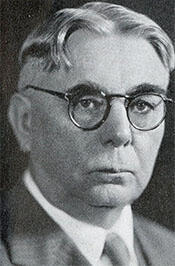
Here you will find contact information for Representative Charles J. Colden, including email address, phone number, and mailing address.
| Name | Charles J. Colden |
| Position | Representative |
| State | California |
| District | 17 |
| Party | Democratic |
| Status | Former Representative |
| Term Start | March 9, 1933 |
| Term End | January 3, 1939 |
| Terms Served | 3 |
| Born | August 24, 1870 |
| Gender | Male |
| Bioguide ID | C000605 |
About Representative Charles J. Colden
Charles J. Colden (August 24, 1870 – April 15, 1938) was an American politician and newspaper editor who served in the Missouri House of Representatives, on the Los Angeles City Council, and as a Democratic Representative from California in the United States Congress from 1933 until his death in 1938. Over the course of three terms in the House of Representatives, he contributed to the legislative process during a significant period in American history, representing the interests of his constituents during the early years of the New Deal.
Colden was born on a farm in Peoria County, Illinois, on August 24, 1870. In 1880, when he was ten years old, he moved with his parents to Nodaway County, Missouri. He attended grade school at the Ireland Schoolhouse near the family farm and later traveled about ten miles to attend Maryville High School in Maryville, Missouri. Seeking further education, he studied at Stanberry Normal School in Stanberry, Missouri, and at Shenandoah College in Shenandoah, Iowa, institutions that prepared him for a career in teaching and public life.
From 1889 to 1896, Colden taught school in Missouri and Iowa, beginning his professional life in education. He then turned to journalism and publishing, becoming editor and publisher of the Parnell Sentinel in Parnell, Missouri, from 1896 to 1900. In 1900 he acquired and edited the Nodaway Forum in Maryville, Missouri, which later became the Maryville Daily Forum, and he remained in that role until 1908. During this period he also entered public service in state government, serving as a member of the Missouri House of Representatives from 1901 to 1905. From 1905 to 1908 he was president of the board of regents of Northwest Missouri Teachers College (now Northwest Missouri State University), and in recognition of his service, Colden Hall on the campus was later named in his honor.
After leaving the newspaper business, Colden worked in the construction industry in Kansas City, Missouri, from 1908 to 1912. In 1912 he took a vacation tour of the American West and was attracted to the commercial and developmental possibilities of the Los Angeles harbor at San Pedro, California. He soon settled in San Pedro and entered the real estate and building business, becoming an active civic leader in the growing harbor community. His prominence in local affairs was reflected in his service as president of the San Pedro Chamber of Commerce from 1922 to 1924, where he advocated for harbor development and local economic growth.
Colden’s political career in California began at the municipal level. After the Harbor Area was annexed to the City of Los Angeles in 1909 through a narrow “shoestring” strip of land connecting it to the main part of the city some twenty miles to the north, residents sought direct representation on the Los Angeles City Council. Colden first ran for the council in an at-large election in 1923, placing tenth in a field of eighteen candidates when only the first nine were elected. A new city charter adopted in 1925 reorganized the council into district-based seats, creating the 15th District to represent the Harbor Area. Colden ran for this new district office and narrowly defeated James H. Dodson Jr. in the general election by a vote of 4,750 to 4,599, becoming the first resident of the Harbor Area to serve on the Los Angeles City Council. He was reelected in the May 1927 primary. Choosing not to run again in 1929, he publicly expressed disappointment with the city’s decision to purchase an airport and classification yards at the harbor, arguing that such projects might have been better promoted and financed by private enterprise and the direct beneficiaries rather than by the municipality.
Colden advanced to national office in the early 1930s. A member of the Democratic Party, he was elected to the United States House of Representatives from California’s 17th congressional district and took his seat on March 4, 1933. He served continuously in Congress from 1933 to 1938, encompassing three terms in the House. His tenure coincided with the Great Depression and the implementation of President Franklin D. Roosevelt’s New Deal, and he participated in the democratic process at a time of major federal economic and social legislation. During the 1934 California gubernatorial election, Colden supported George Creel in the Democratic primary. After Upton Sinclair won the primary, Colden announced his support for Sinclair as the Democratic nominee and endorsed Sinclair’s “End Poverty in California” (EPIC) program, aligning himself with efforts to address widespread economic hardship in the state.
Charles J. Colden died in office in Washington, D.C., on April 15, 1938, while still serving as a Representative from California. He was initially buried in Roosevelt Memorial Park Cemetery in Gardena, California. In 1965 his remains were reinterred at Green Hills Memorial Park in Rancho Palos Verdes, California. He was survived by his wife, Clara N. Colden; a sister, Mrs. B. C. Hall; two daughters, Mrs. Lester Hawthorne and Abbe Colden; and two sons, John C. Colden and Charles J. Colden Jr. His career, spanning education, journalism, state and municipal government, and the United States Congress, reflected a long-standing engagement with public service in both the Midwest and California.