Representative Charles Robert Connell
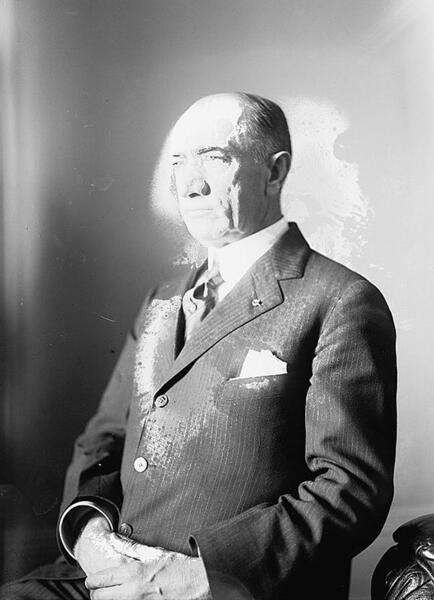
Here you will find contact information for Representative Charles Robert Connell, including email address, phone number, and mailing address.
| Name | Charles Robert Connell |
| Position | Representative |
| State | Pennsylvania |
| District | 10 |
| Party | Republican |
| Status | Former Representative |
| Term Start | April 11, 1921 |
| Term End | March 3, 1923 |
| Terms Served | 1 |
| Born | September 22, 1864 |
| Gender | Male |
| Bioguide ID | C000685 |
About Representative Charles Robert Connell
Charles Robert Connell (September 22, 1864 – September 26, 1922) was a Republican member of the U.S. House of Representatives from Pennsylvania who served one term in Congress from 1921 to 1923. A son of William Connell, himself a U.S. Representative, he participated in the legislative process during a significant period in American history, representing the interests of his constituents as a member of the House of Representatives.
Connell was born on September 22, 1864, in Scranton, Pennsylvania, to William Connell and Annie (née Lawrence) Connell. He grew up in a family already prominent in business and public life in northeastern Pennsylvania, with his father’s later service in Congress providing an early example of political engagement. Connell attended the public schools of Scranton and then pursued preparatory education at Williston Academy in Easthampton, Massachusetts, from which he graduated in 1884.
After completing his education, Connell returned to Scranton and entered mercantile pursuits in association with his father. He soon expanded his activities into banking and manufacturing, becoming a significant figure in the region’s industrial and financial life. Connell served as president of Lackawanna Mills, reflecting his involvement in the textile and manufacturing sector. From 1888 until his death in 1922, he was president and treasurer of the Scranton Button Company, a major local enterprise. In the banking field, he held the positions of vice president and director of the Third National Bank and director of the South Scranton Bank. His business interests extended beyond Pennsylvania; he was a director of the Cherry River Boom and Lumber Company, the Richwood Store Company, and the Cherry River Paper Company, all associated with lumber and related industries. He also served as a member of the board of trustees of Forest Hill Cemetery in Scranton, underscoring his role in local civic affairs.
Connell’s prominence in business and his family’s political legacy helped pave the way for his entry into national politics. A member of the Republican Party, he was elected as a Republican to the Sixty-seventh Congress, representing Pennsylvania in the U.S. House of Representatives beginning in 1921. His service in Congress coincided with the early post–World War I era, a time marked by economic adjustment, debates over tariffs, veterans’ issues, and the evolving role of the federal government in American life. During his one term in office, he contributed to the legislative process and participated in the democratic governance of the nation, acting on behalf of his district’s industrial and commercial interests as well as its broader constituency.
On September 26, 1889, Connell married Lizabeth R. Shafer, the daughter of Ann and Charles Shafer. The couple made their home in Scranton and had two children, a daughter, Gladys, and a son, Bernard L. Connell. His family life remained rooted in the community where he had been born and where he built his business and political career.
Connell’s congressional service was cut short by his death in office. He died on September 26, 1922, at his home on Vine Street in Scranton, Pennsylvania, while still serving as a member of the Sixty-seventh Congress. He was interred in Forest Hill Cemetery in Scranton, the institution whose board of trustees he had served. His death placed him among the members of the United States Congress who died in office in the first half of the twentieth century, and it brought to a close a career that combined industrial leadership, financial stewardship, and national legislative service.