Representative Charles Magill Conrad
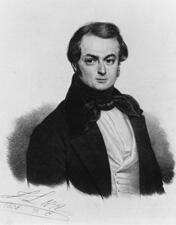
Here you will find contact information for Representative Charles Magill Conrad, including email address, phone number, and mailing address.
| Name | Charles Magill Conrad |
| Position | Representative |
| State | Louisiana |
| District | 2 |
| Party | Whig |
| Status | Former Representative |
| Term Start | January 1, 1842 |
| Term End | March 3, 1851 |
| Terms Served | 2 |
| Born | December 24, 1804 |
| Gender | Male |
| Bioguide ID | C000703 |
About Representative Charles Magill Conrad
Charles Magill Conrad (December 24, 1804 – February 11, 1878) was a Louisiana politician and lawyer who served in the United States Senate, the United States House of Representatives, the cabinet of President Millard Fillmore, and the Confederate Congress. A member of the Whig Party during his national legislative career, he later became a prominent secessionist leader in Louisiana and held office under the Confederate States of America. He also briefly acted as the United States Secretary of State following the tenure of Daniel Webster.
Conrad was born on December 24, 1804, in Winchester, Virginia. During his boyhood he moved with his family to Mississippi, and he later settled in Louisiana, where he would spend most of his public life. In New Orleans he received his education under a Dr. Huld, pursuing the classical and legal studies that prepared him for the bar. After completing his studies, he was admitted to practice law and established himself professionally in Louisiana, building the legal and political connections that would lead to his entry into public office.
Conrad’s early political prominence in Louisiana led to his selection for high federal office in the early 1840s. In April 1842 he was appointed to the United States Senate from Louisiana to fill the unexpired term of Senator Alexandre Mouton. He served in the Senate from April 1842 until March 1843, participating in national debates during a period of growing sectional tension. Although he sought to continue in that role, he was defeated in his bid for election to the Senate in his own right and returned to his legal and political activities in Louisiana.
Conrad subsequently entered the United States House of Representatives as a Whig. He served as a Representative from Louisiana in the United States Congress during a significant period in American history, contributing to the legislative process and representing the interests of his constituents. His service in the House occurred in two distinct periods. He first served from 1849 to 1850, when he resigned his seat to accept a cabinet appointment. Existing records also place his House service more broadly between 1841 and 1851, encompassing two terms in office as a member of the Whig Party. During his time in the House of Representatives, he participated in the democratic process on issues that reflected the emerging sectional divisions of the antebellum era.
On August 15, 1850, Conrad entered the executive branch when President Millard Fillmore appointed him Secretary of War. He resigned his House seat to assume this post and remained in charge of the War Department from August 15, 1850, to March 7, 1853. In this capacity he oversaw the administration of the United States Army at a time marked by the implementation of the Compromise of 1850 and continued expansion into the western territories. Conrad continued as Secretary of War briefly into the administration of President Franklin Pierce in 1853, serving until the new cabinet was installed. During Fillmore’s presidency he also briefly acted as United States Secretary of State following the death of Daniel Webster, performing the duties of that office on an interim basis until a permanent successor was named.
As the sectional crisis deepened in the late 1850s, Conrad emerged as a leading advocate of secession in his adopted state. He was a leader of the secession movement in Louisiana in December 1860, as Southern states debated withdrawal from the Union following the election of Abraham Lincoln. With the formation of the Confederate States of America, Conrad continued his public service under the new government. He served as a delegate to the convention that framed the Provisional Constitution of the Confederate States and was a member of the Provisional Congress of the Confederate States. Subsequently, he represented Louisiana in the Confederate Congress from 1862 to 1864, participating in the legislative work of the Confederate government during the American Civil War.
After the collapse of the Confederacy in 1865, Conrad returned to private life and resumed the practice of law in Louisiana. He lived in New Orleans during his later years, remaining a figure identified with the state’s antebellum and Civil War–era political leadership. Charles Magill Conrad died in New Orleans on February 11, 1878, closing a long career that had spanned service in both houses of the United States Congress, the cabinet of a U.S. president, and the legislative bodies of the Confederate States.