Representative Charles Noel Crosby
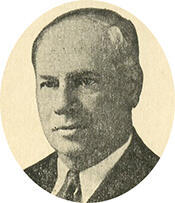
Here you will find contact information for Representative Charles Noel Crosby, including email address, phone number, and mailing address.
| Name | Charles Noel Crosby |
| Position | Representative |
| State | Pennsylvania |
| District | 29 |
| Party | Democratic |
| Status | Former Representative |
| Term Start | March 9, 1933 |
| Term End | January 3, 1939 |
| Terms Served | 3 |
| Born | September 29, 1876 |
| Gender | Male |
| Bioguide ID | C000928 |
About Representative Charles Noel Crosby
Charles Noel Crosby (September 29, 1876 – January 26, 1951) was a Democratic member of the United States House of Representatives from Pennsylvania and an American football coach in the early years of the sport. Over the course of three consecutive terms in Congress, from 1933 to 1939, he represented his Pennsylvania constituents during a period of profound economic and political change in the United States and contributed to the legislative process as part of the Democratic majority.
Crosby’s early life and formative years preceded his involvement in both athletics and public service, and he came of age at a time when organized collegiate sports and modern party politics were taking shape in the United States. His interest in athletics led him into American football at a relatively early stage in the development of the game, when rules, strategy, and institutional support were still evolving. This experience in the early years of the sport helped establish his public profile and provided him with organizational and leadership skills that would later prove useful in his political career.
Before entering national politics, Crosby was active in his community and built a reputation that supported his eventual election to Congress. His background as an American football coach reflected a broader engagement with education, youth activities, and civic life, and it placed him in regular contact with students, families, and local leaders. These experiences helped shape his understanding of public concerns and the responsibilities of leadership, and they informed his later work as a legislator.
Crosby was elected as a Democrat to the U.S. House of Representatives from Pennsylvania in the elections that brought the Democratic Party to power during the early 1930s. He entered Congress in 1933, at the outset of the New Deal era, and served three terms, remaining in office until 1939. During this tenure, he participated in the democratic process at the federal level, representing the interests of his constituents in Pennsylvania while the nation confronted the Great Depression and undertook major legislative reforms. As a member of the House of Representatives, he took part in debates, committee work, and votes that shaped national policy in one of the most significant periods in American history.
Crosby’s congressional service coincided with the administration of President Franklin D. Roosevelt and the implementation of wide-ranging economic and social legislation. As a Democratic member of the House, he was part of the majority that considered measures affecting banking, labor, agriculture, and social welfare, among other areas. His role in Congress placed him at the center of efforts to address unemployment, stabilize the economy, and modernize federal governance, and he worked to ensure that the perspectives and needs of his Pennsylvania district were reflected in national decision-making.
After leaving Congress in 1939, Crosby remained identified with the generation of lawmakers who had served during the New Deal’s formative years. His earlier career as an American football coach and his subsequent service in the House of Representatives together marked him as a figure who bridged the worlds of athletics and public life at a time when both were expanding in scope and influence. In his later years, he lived away from the national political stage but retained the legacy of a public servant who had participated in a transformative era for the federal government.
Charles Noel Crosby died on January 26, 1951, in Frederick, Maryland. He was interred in Columbia Gardens Cemetery in Arlington, Virginia. His burial in Arlington reflected his status as a former Member of Congress and preserved his connection to the national capital where he had served.