Senator Charles Curtis
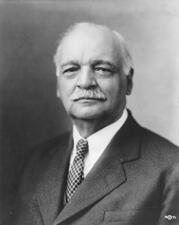
Here you will find contact information for Senator Charles Curtis, including email address, phone number, and mailing address.
| Name | Charles Curtis |
| Position | Senator |
| State | Kansas |
| Party | Republican |
| Status | Former Representative |
| Term Start | August 7, 1893 |
| Term End | March 3, 1929 |
| Terms Served | 11 |
| Born | January 25, 1860 |
| Gender | Male |
| Bioguide ID | C001008 |
About Senator Charles Curtis
Charles Curtis served as a Senator from Kansas in the United States Congress from 1893 to 1929. A member of the Republican Party, Charles Curtis contributed to the legislative process during 11 terms in office.
Charles Curtis’s service in Congress occurred during a significant period in American history. As a member of the Senate, Charles Curtis participated in the democratic process and represented the interests of constituents.
Charles Curtis (January 25, 1860 – February 8, 1936) was the 31st vice president of the United States from 1929 to 1933 under President Herbert Hoover. He was the Senate Majority Leader from 1924 to 1929. An enrolled member of the Kaw Nation born in the Kansas Territory, Curtis was the first Native American to serve in the United States Congress, where he served in the United States House of Representatives and Senate before becoming Senate Majority Leader. Curtis also was the first and only Native American and first multiracial person to serve as vice president. Curtis believed that Native Americans could benefit from mainstream education and assimilation. He entered political life when he was 32 years old and won several terms from his district in Topeka, Kansas, beginning in 1892 as a Republican to the U.S. House of Representatives. There, he sponsored and helped pass the Curtis Act of 1898, which extended the Dawes Act to the Five Civilized Tribes of the Indian Territory. Despite Curtis being unhappy with the final version, implementation of the Act completed the ending of tribal land titles in the Indian Territory and prepared the larger territory to be admitted as the State of Oklahoma in 1907. The government tried to encourage Indians to accept individual citizenship and lands and to take up European-American culture. Curtis was elected to the U.S. Senate first by the Kansas Legislature in 1906 and then by popular vote in 1914, 1920, and 1926. Curtis served one six-year term from 1907 to 1913, and then most of three terms from 1915 to 1929, when he was elected as vice president. He introduced the first version of the Equal Rights Amendment to the Senate in 1921; it was not approved for ratification until 1972. Curtis marshaled support to be elected as Republican Whip from 1915 to 1924 and then as Senate Majority Leader from 1924 to 1929. In those positions, he was instrumental in managing legislation and in accomplishing Republican national goals. His long popularity and connections in Kansas and federal politics helped make Curtis a strong leader in the Senate. Curtis was nominated for vice president at the 1928 Republican National Convention, and became Herbert Hoover’s running mate; the two won the 1928 United States presidential election in a landslide victory. In 1932, he became the first United States vice president to open the Olympic Games. However, when Curtis and Hoover ran together again later that year during the Great Depression, they lost when the public gave the Democrats Franklin D. Roosevelt and John Nance Garner a landslide victory. Curtis remains the highest-ranking Native American who ever served in the federal government. He is also the most recent officer of the executive branch to have been born in a territory, rather than a state or federal district.