Representative Charles Bennett Deane
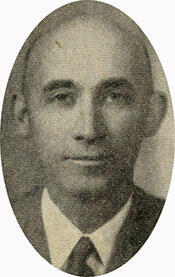
Here you will find contact information for Representative Charles Bennett Deane, including email address, phone number, and mailing address.
| Name | Charles Bennett Deane |
| Position | Representative |
| State | North Carolina |
| District | 8 |
| Party | Democratic |
| Status | Former Representative |
| Term Start | January 3, 1947 |
| Term End | January 3, 1957 |
| Terms Served | 5 |
| Born | November 1, 1898 |
| Gender | Male |
| Bioguide ID | D000175 |
About Representative Charles Bennett Deane
Charles Bennett Deane (November 1, 1898 – November 24, 1969) was a Democratic member of the United States House of Representatives from North Carolina who served five consecutive terms in Congress from 1947 to 1957. Over the course of a decade in the House of Representatives, he participated actively in the legislative process during a significant period in American history, representing the interests of his North Carolina constituents in the post–World War II era and the early years of the Cold War.
Deane was born in Ansonville Township, Anson County, North Carolina, on November 1, 1898. He was raised in the rural Piedmont region of the state and educated in local institutions that prepared him for a career in law and public service. He attended Pee Dee Academy in Rockingham, North Carolina, and then Trinity Park School in Durham, North Carolina, from 1918 to 1920. These formative years coincided with the end of World War I and the beginning of major social and economic changes in the South, developments that would later inform his public life.
Pursuing higher education in the law, Deane studied at Wake Forest College, then located in Wake Forest, North Carolina, where he enrolled in the law department. He graduated from Wake Forest’s law program in 1923. That same year he was admitted to the bar and commenced the practice of law in Rockingham, the county seat of Richmond County. Deane quickly became an established attorney in the community and remained closely tied to his alma mater, later serving as a trustee of Wake Forest College. He was also an active Southern Baptist, reflecting the central role of church life in the civic and social fabric of his region.
Deane’s early public career developed at the local and county levels. From 1926 to 1934 he served as register of deeds of Richmond County, North Carolina, managing vital records and property documentation during a period that spanned the late 1920s economic boom and the onset of the Great Depression. His work in county government was complemented by his rising influence within the Democratic Party. He served as chairman of the Richmond County Democratic executive committee from 1932 to 1946, a period in which the Democratic Party dominated state politics and navigated the challenges of the New Deal era and World War II. In addition to his local responsibilities, Deane gained experience in the federal government when he served as an attorney in the Wage and Hour Division of the U.S. Department of Labor in Washington, D.C., in 1938 and 1939, working in an agency created to administer and enforce New Deal labor standards. By 1940 he had returned to North Carolina, where he engaged in administrative law and entered the general insurance business, further broadening his professional portfolio.
Building on his legal practice, party leadership, and federal administrative experience, Deane was elected as a Democrat to the Eightieth Congress and to the four succeeding Congresses, serving from January 3, 1947, to January 3, 1957. As a member of the House of Representatives, he contributed to the legislative process during a transformative decade that included the Marshall Plan, the Korean War, and the early civil rights debates. Representing his North Carolina district, he participated in the democratic process and worked to advance the interests and concerns of his constituents in areas such as agriculture, economic development, and postwar adjustment. His congressional service placed him among the Southern Democrats who were increasingly confronted with the emerging national struggle over civil rights and desegregation.
Deane’s congressional career came to a close amid these mounting tensions. He was an unsuccessful candidate for renomination in 1956 to the Eighty-fifth Congress. Closely associated with the Moral Re-Armament movement, a transnational moral and spiritual renewal initiative, he took a principled stand on civil rights that set him apart from many of his Southern colleagues. He refused to sign the Southern Manifesto, the 1956 document in which numerous Southern members of Congress pledged resistance to the Supreme Court’s decision in Brown v. Board of Education and to desegregation of the races. Explaining his position, Deane stated to his pastor, “I do not have to remain in Washington but I do have to live with myself. I shall not sign my name to any document which will make any man anywhere a second-class citizen.” His refusal to endorse the Manifesto contributed significantly to his defeat in the Democratic primary and the end of his tenure in Congress.
After leaving Congress in January 1957, Deane returned to Rockingham and resumed his legal career. He spent the last thirteen years of his life as the attorney for the city of Rockingham, continuing his long record of public service at the local level. In this role he remained a prominent figure in the civic affairs of his community, drawing on his extensive experience in law, government, and politics.
Charles Bennett Deane died in Rockingham, North Carolina, on November 24, 1969. He was interred in Eastside Cemetery in Rockingham. His legacy of public service extended to the next generation through his son, Charles B. Deane Jr., who served in the North Carolina General Assembly, continuing the family’s involvement in state and public affairs.