Senator Charles Samuel Deneen
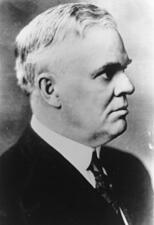
Here you will find contact information for Senator Charles Samuel Deneen, including email address, phone number, and mailing address.
| Name | Charles Samuel Deneen |
| Position | Senator |
| State | Illinois |
| Party | Republican |
| Status | Former Representative |
| Term Start | December 7, 1925 |
| Term End | March 3, 1931 |
| Terms Served | 1 |
| Born | May 4, 1863 |
| Gender | Male |
| Bioguide ID | D000233 |
About Senator Charles Samuel Deneen
Charles Samuel Deneen (May 4, 1863 – February 5, 1940) was an American lawyer and Republican politician who served as the 23rd Governor of Illinois from 1905 to 1913 and as a United States Senator from Illinois from 1925 to 1931. He was the first Illinois governor to serve two consecutive terms totaling eight years and later contributed to the legislative process during one term in the U.S. Senate. Over the course of his public career, he held a series of influential legal and political offices, including service in the Illinois House of Representatives and as Cook County State’s Attorney, and he played a notable role in several major criminal prosecutions and in addressing racial violence in Illinois.
Deneen was born in Edwardsville, Madison County, Illinois, to Samuel H. Deneen and Mary Frances Ashley. He was raised in Lebanon, Illinois, where he attended local schools before enrolling at McKendree College in Lebanon. He graduated from McKendree College in 1882. After graduation, he pursued legal studies at McKendree and at Union College of Law (a predecessor of Northwestern University School of Law), supporting himself in part by teaching school. He was admitted to the Illinois bar in 1886 and began practicing law in Chicago. On May 10, 1891, he married Bina Day Maloney, a fellow Methodist, in Princeton, Illinois. The couple had four children: Charles Ashley, Dorothy, Frances, and Bina.
Deneen’s political career began in the early 1890s. He was elected as a Republican member of the Illinois House of Representatives, serving from 1892 to 1894. Building on his legislative experience, he moved into prosecutorial work in Cook County, where he gained prominence as a criminal lawyer. He served as Cook County State’s Attorney from 1896 to 1904. In that capacity he was the lead prosecutor in Chicago’s infamous Adolph Luetgert murder trial, a sensational case that drew national attention. In 1896, Deneen also appointed Ferdinand Lee Barnett as the first Black assistant state’s attorney in Illinois, upon the recommendation of Cook County Commissioner Edward H. Wright; Deneen and Barnett worked closely together for the next two decades, marking an important early instance of African American participation in high-level prosecutorial work in the state.
Elected governor in 1904, Deneen took office as the 23rd Governor of Illinois in 1905 and served until 1913. He was the first governor of the state to serve two consecutive four-year terms, remaining in office for a total of eight years. Early in his tenure he supported passage of the Illinois anti-lynching law of 1905, which strengthened state authority to intervene in and punish mob violence. His governorship coincided with a period of racial tension and social change. He was governor during the infamous Springfield race riot of 1908, a violent uprising in the state capital that drew national condemnation; Deneen helped put down the riot by deploying state forces to restore order. In 1909, when a mob in Cairo, Illinois, lynched William “Froggie” James, an African American, in a spectacle lynching attended by an estimated 10,000 people, and also lynched Henry Salzner, a white man accused of killing his wife, Deneen again used state power to respond. He sent in National Guard troops to suppress further violence and, acting under the 1905 anti-lynching law, dismissed Sheriff Frank E. Davis for failing to protect James and Salzner, resisting local efforts to have the sheriff reinstated. These actions underscored his willingness to use executive authority to confront mob violence, even in the face of local opposition.
After leaving the governorship in 1913, Deneen remained an influential figure in Illinois Republican politics. In 1924 he sought federal office and entered the Republican primary for the United States Senate. At that time, Illinois customarily divided its two Senate seats between a downstate senator and a Chicago-area senator; first-term Senator Medill McCormick held the Chicago-area seat. Deneen, identified with downstate and reform elements of the party, challenged McCormick and defeated him in the Republican primary. McCormick died by suicide in early 1925, an event for which his widow, Ruth Hanna McCormick—herself a future U.S. Representative—bitterly blamed Deneen. In the general election, Deneen won and entered the U.S. Senate on March 4, 1925, serving one term until March 3, 1931. As a Republican senator from Illinois during a significant period in American history, encompassing the later years of the Roaring Twenties and the onset of the Great Depression, Deneen participated in the democratic process and represented the interests of his constituents in national legislative debates.
Deneen’s Senate career unfolded amid intense factional struggles within the Illinois Republican Party. In 1928, during an outbreak of violence among rival political factions in Chicago in advance of the so‑called “Pineapple Primary” election—so named for the frequent use of hand grenades, or “pineapples,” in political violence—Deneen’s home was bombed. Although he was not killed or seriously injured, the incident highlighted the volatility of Chicago politics in the era and the deep divisions within the party. In 1930, Ruth Hanna McCormick challenged him for renomination to the Senate. She defeated Deneen in the Republican primary, ending his Senate career, but went on to lose the November general election to Democrat James Hamilton Lewis.
In his later years, Deneen lived in Chicago, remaining a respected elder statesman within Illinois Republican circles. His family maintained connections to prominent political and social figures. His daughter Dorothy married Allmand Matteson Blow, the son of Jennie Goodell Blow, grandson of Roswell Eaton Goodell, great-grandson of former Illinois governor Joel Aldrich Matteson, nephew-by-marriage of former Colorado governor James Benton Grant, and nephew of former Colorado first lady Mary Goodell Grant, linking the Deneen family to a broader network of Midwestern and Western political families. Deneen’s descendants include his great-grandson, the actor Jason Beghe.
Charles Samuel Deneen died in Chicago on February 5, 1940. He was interred at Oak Woods Cemetery on the city’s South Side. His public service has been commemorated locally; the Deneen School of Excellence, a public school in south Chicago located near the Dan Ryan Expressway and not far from Al Capone’s former home on South Prairie Avenue, was named in his honor, reflecting his long-standing association with the city and the state he served in multiple capacities.