Senator Charles William Frederick Dick
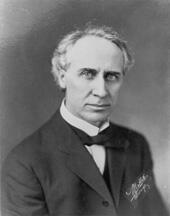
Here you will find contact information for Senator Charles William Frederick Dick, including email address, phone number, and mailing address.
| Name | Charles William Frederick Dick |
| Position | Senator |
| State | Ohio |
| Party | Republican |
| Status | Former Representative |
| Term Start | November 8, 1898 |
| Term End | March 3, 1911 |
| Terms Served | 6 |
| Born | November 3, 1858 |
| Gender | Male |
| Bioguide ID | D000302 |
About Senator Charles William Frederick Dick
Charles William Frederick Dick (November 3, 1858 – March 13, 1945) was a Republican politician from Ohio who served in both the United States House of Representatives and the United States Senate. Over the course of his national legislative career, he contributed to the federal lawmaking process during a significant period in American history, representing the interests of his Ohio constituents and participating actively in the democratic process.
Dick was born on November 3, 1858, in Akron, Summit County, Ohio. He spent his early years in that growing industrial community, which would remain central to his identity and political base throughout his life. His upbringing in post–Civil War Ohio exposed him to the rapid economic and social changes of the late nineteenth century, shaping his later interest in public affairs and Republican Party politics.
After attending local schools in Akron, Dick pursued legal studies and was admitted to the bar, beginning a career in law that provided a foundation for his entry into public life. His legal training equipped him with familiarity in statutory interpretation and public policy, skills that would later prove useful in his legislative work. As he established himself professionally, he became increasingly active in Republican circles, aligning with the party that dominated Ohio politics in the late nineteenth century.
Dick’s national political career began with his election to the United States House of Representatives as a Republican from Ohio. In the House, he served during a transformative era marked by industrial expansion, debates over tariffs and monetary policy, and the nation’s growing international role. His work in the House of Representatives helped to build his reputation as a capable legislator and party loyalist, positioning him for higher office within the federal government.
Charles William Frederick Dick subsequently advanced to the United States Senate as a Senator from Ohio, serving in the United States Congress from 1898 to 1911. A member of the Republican Party, he contributed to the legislative process during six terms in office, a span that covered the closing years of the nineteenth century and the first decade of the twentieth. His Senate service coincided with the Spanish–American War, the Progressive Era’s early reforms, and expanding federal involvement in economic and social issues, and he took part in deliberations on these and other matters of national concern. As a member of the Senate, he participated in the democratic process at the highest legislative level and represented the interests of his Ohio constituents in debates over domestic policy and America’s emerging global role.
Following his years in Congress, Dick returned to private life while remaining a respected figure in Ohio Republican politics. Drawing on his long experience in both the House and the Senate, he continued to be consulted on political and public affairs and maintained his ties to Akron and the broader Ohio community. His post-congressional years reflected a transition from active officeholder to elder statesman, as he witnessed the nation move through World War I, the Great Depression, and into the early years of World War II.
Charles William Frederick Dick died on March 13, 1945, closing a life that had spanned from the immediate aftermath of the Civil War to the final months of World War II. Remembered as a Republican politician from Ohio who served in both the United States House of Representatives and the U.S. Senate, his career embodied the trajectory of many late nineteenth- and early twentieth-century lawmakers who helped guide the United States through a period of rapid change and modernization.