Representative Charles Heber Dickerman
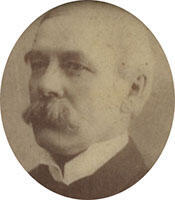
Here you will find contact information for Representative Charles Heber Dickerman, including email address, phone number, and mailing address.
| Name | Charles Heber Dickerman |
| Position | Representative |
| State | Pennsylvania |
| District | 16 |
| Party | Democratic |
| Status | Former Representative |
| Term Start | November 9, 1903 |
| Term End | March 3, 1905 |
| Terms Served | 1 |
| Born | February 3, 1843 |
| Gender | Male |
| Bioguide ID | D000307 |
About Representative Charles Heber Dickerman
Charles Heber Dickerman (February 3, 1843 – December 17, 1915) was a Democratic member of the U.S. House of Representatives from Pennsylvania who served one term in Congress from 1903 to 1905. Over the course of a long career in education, industry, banking, and politics, he became a prominent figure in northeastern and central Pennsylvania and contributed to the legislative process during a significant period in American history.
Dickerman was born on February 3, 1843, in Harford, Susquehanna County, Pennsylvania. He attended the public schools of his native village and pursued further studies at Harford University in Harford, from which he graduated in 1860. His early education in local institutions reflected the rural character of the region in mid-nineteenth-century Pennsylvania and prepared him for a professional life that combined teaching, business, and public service.
After completing his education, Dickerman taught school for several years. He subsequently studied law, intending to enter the legal profession, but before qualifying for admission to the bar he accepted a position as a bookkeeper for a large coal company in Beaver Meadows, Pennsylvania. This position marked the beginning of his long association with the coal and related industries that were central to the economy of the state during that era.
By 1868, Dickerman had expanded his business interests to include the coal commission business and slate quarrying at Bethlehem, Pennsylvania, activities that placed him at the intersection of mining, transportation, and industrial development. In 1880 he became secretary and treasurer of a concern engaged in the manufacture of railroad equipment at Milton, Pennsylvania, a post he held until 1899. His work in railroad equipment manufacturing coincided with a period of rapid expansion of the nation’s rail network, and his responsibilities reflected a growing expertise in industrial management and finance. He also became active in banking in several Pennsylvania communities, including Mauch Chunk, Sunbury, and Bethlehem. In 1897 he was elected president of the First National Bank of Milton, a position he held until his death, underscoring his prominence in regional financial circles.
Parallel to his business career, Dickerman became increasingly active in Democratic Party politics in Pennsylvania. He served as chairman of the Northumberland County Democratic committee for three years, helping to organize and lead the party at the county level. He was a delegate to the Pennsylvania State constitutional convention in 1891, participating in deliberations on revisions to the state’s fundamental law, and in 1892 he served as a delegate to the Democratic National Convention, taking part in the national party’s presidential nominating process. These roles established him as an influential Democratic leader in his region and prepared the way for his later congressional service.
Dickerman was elected as a Democrat to the Fifty-eighth Congress and served as a Representative from Pennsylvania in the United States House of Representatives from March 4, 1903, to March 3, 1905. During his single term in office, he represented the interests of his constituents and participated in the legislative process at a time of significant economic and political change in the United States. A member of the Democratic Party, he contributed to debates and policymaking in the House of Representatives, bringing to bear his extensive experience in industry and banking. He declined to be a candidate for renomination in 1904, thereby limiting his congressional service to one term.
After leaving Congress, Dickerman continued to be active in public affairs. In 1905 President Theodore Roosevelt appointed him as a delegate to the Brussels Peace Congress, reflecting recognition at the national level of his judgment and experience. He also continued his leadership role in banking as president of the First National Bank of Milton, maintaining his influence in the financial and civic life of the community.
Charles Heber Dickerman died in Milton, Pennsylvania, on December 17, 1915. He was interred in Milton Cemetery. At the time of his death he was still serving as president of the First National Bank of Milton, concluding a career that spanned education, law study, coal and slate enterprises, railroad equipment manufacturing, banking, party leadership, and service in the United States Congress.