Senator Charles Henry Dietrich
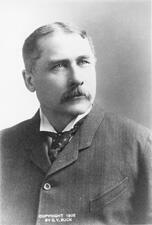
Here you will find contact information for Senator Charles Henry Dietrich, including email address, phone number, and mailing address.
| Name | Charles Henry Dietrich |
| Position | Senator |
| State | Nebraska |
| Party | Republican |
| Status | Former Representative |
| Term Start | December 2, 1901 |
| Term End | March 3, 1905 |
| Terms Served | 1 |
| Born | November 26, 1853 |
| Gender | Male |
| Bioguide ID | D000341 |
About Senator Charles Henry Dietrich
Charles Henry Dietrich (November 26, 1853 – April 10, 1924) was an American businessman and Republican politician who served as the 11th Governor of Nebraska and later as a United States Senator from Nebraska from 1901 to 1905. He was born in Aurora, Illinois, and was of German ancestry. His education was attained in the public schools of his native state, but he left school at the age of twelve, entering the workforce at a young age and beginning the mercantile pursuits that would define his early career.
As a young man, Dietrich worked as a clerk in a hardware store in St. Joseph, Missouri, gaining practical experience in commerce. He later moved to Chicago, Illinois, where he continued in the hardware business. In 1875 he relocated to Deadwood in the Dakota Territory (now South Dakota), where he engaged in mercantile pursuits in the rapidly developing Black Hills region, delivering goods on pack animals through the rugged terrain. During this period he located and owned the “Aurora” mine, further expanding his business interests and establishing himself as an entrepreneur on the frontier.
Dietrich settled permanently in Hastings, Nebraska, in 1878, where he continued in mercantile pursuits and entered the banking industry. He founded the German National Bank at Hastings and served as its president from 1887 to 1905, becoming a leading figure in the city’s commercial life. He also served as president of the Hastings Board of Trade, reflecting his prominence in local economic development and civic affairs. His success in business and his community standing helped launch his political career within the Republican Party.
In 1900, Dietrich was elected Governor of Nebraska as a Republican. He took office as the state’s 11th governor on January 3, 1901. His tenure in the governorship was brief; he resigned on May 1, 1901, after less than four months in office, in order to enter the United States Senate. He left the governorship to replace interim U.S. Senator William V. Allen, who had been appointed in 1899 following the death in office of Senator Monroe L. Hayward. This transition marked Dietrich’s move from state to national office at a time of significant political and economic change in the United States.
Dietrich served as a United States Senator from Nebraska from May 1, 1901, to March 3, 1905, completing one full term in the Senate. A member of the Republican Party, he contributed to the legislative process during this period and represented the interests of his Nebraska constituents in the upper chamber of Congress. His Senate service occurred during a significant period in American history, marked by debates over imperialism and the nation’s role abroad. Dietrich was noted as a pro-imperialist and served on the Lodge Committee, which investigated alleged war crimes and conduct of U.S. forces during the Philippine–American War. He did not run for reelection in 1904 and concluded his Senate service at the end of his term in March 1905.
Dietrich’s Senate career was shadowed by a notable legal controversy. Before he formally assumed his Senate seat, he accepted money from Jacob Fisher in connection with Fisher’s appointment as a U.S. postmaster. Dietrich and Fisher were charged with conspiracy to receive a bribe, accepting a bribe, and profiting by the leasing of a building to the federal government. However, before the trial could begin, Judge Willis Van Devanter ruled that Dietrich could not be prosecuted because the alleged bribery occurred after his election but before he had been sworn in as a senator on December 2, 1901. On this basis all charges were dropped, and Dietrich continued to serve as a U.S. Senator from Nebraska through the remainder of his term.
In his personal life, Dietrich was married twice. His first wife, Elizabeth Slaker, died in 1887. On October 27, 1909, he married Margretta Stewart. Dietrich and Margretta made their home in Hastings, Nebraska, where he had long been established as a banker and community leader. After retiring from public office in 1905, he withdrew from active political life and focused on his business and personal affairs in Hastings. Charles Henry Dietrich died in Hastings, Nebraska, on April 10, 1924, closing a career that spanned frontier commerce, state leadership, and service in the United States Senate.