Representative Charles Hall Dillon
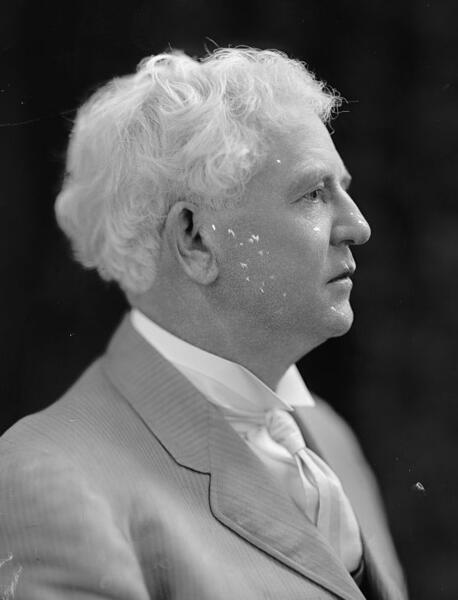
Here you will find contact information for Representative Charles Hall Dillon, including email address, phone number, and mailing address.
| Name | Charles Hall Dillon |
| Position | Representative |
| State | South Dakota |
| District | 1 |
| Party | Republican |
| Status | Former Representative |
| Term Start | April 7, 1913 |
| Term End | March 3, 1919 |
| Terms Served | 3 |
| Born | December 18, 1853 |
| Gender | Male |
| Bioguide ID | D000348 |
About Representative Charles Hall Dillon
Charles Hall Dillon (December 18, 1853 – September 15, 1929) was an American lawyer, legislator, and jurist who represented South Dakota in the United States House of Representatives from 1913 to 1919 and later served as an associate justice of the South Dakota Supreme Court. A member of the Republican Party, he played a role in the legislative process during three consecutive terms in Congress, representing the interests of his South Dakota constituents during a significant period in American history that included the First World War.
Dillon was born near Jasper, Dubois County, Indiana, on December 18, 1853. He attended the public schools in Indiana before pursuing higher education. He received an undergraduate degree from Indiana University at Bloomington, followed by a law degree from what is now the Indiana University Maurer School of Law. After completing his legal studies, he was admitted to the bar and began practicing law in his native Jasper, laying the foundation for a long career in the legal and political life of the Midwest and the emerging Dakotas.
In the early 1880s Dillon moved west as new communities and legal institutions were taking shape. He relocated to Marion, Iowa, in 1881, and the following year, in 1882, he moved to Mitchell in Dakota Territory. In 1884 he settled in Yankton, in what would become the state of South Dakota, where he established a law practice and became active in public affairs. His growing prominence in Republican politics led to his selection as a delegate to the Republican National Convention in 1900, and again in 1908, reflecting his influence within the party at both the territorial and state levels.
Dillon entered elective office in South Dakota as a member of the state legislature. He was first elected to the South Dakota Senate in 1903 and served there through 1911. During these years he participated in shaping state legislation in the formative decades after South Dakota’s admission to the Union. His work in the state senate and his involvement in national party conventions helped position him for higher office and broadened his reputation as a Republican leader.
In 1913 Dillon was elected to the United States House of Representatives from South Dakota as a Republican, beginning his service in the Sixty-third Congress and continuing through the Sixty-fourth and Sixty-fifth Congresses, serving until 1919. His tenure in the House thus spanned from 1913 to 1919, encompassing the Wilson administration and the nation’s entry into World War I. On April 5, 1917, he was one of 50 representatives who voted against declaring war on Germany, a notable stand during the congressional debate over American involvement in the conflict. He contributed to the legislative process during his three terms in office, participating in the democratic governance of the country and representing the interests of his South Dakota constituents. In 1918 he sought renomination for a fourth term but was defeated in the Republican primary, bringing his congressional service to a close.
After leaving Congress, Dillon returned to private life in Yankton, resuming his legal career. His judicial abilities and longstanding involvement in state affairs led to his appointment as an associate justice of the South Dakota Supreme Court in 1922. Upon assuming this position, he moved to Vermillion, South Dakota. He served on the state’s highest court until 1926, participating in the adjudication of important questions of state law during a period of continued development in South Dakota’s legal system. Following his judicial service, he sought election to the United States Senate, but after that effort he retired from active political life in 1926.
Dillon’s personal life included connections to other prominent figures in South Dakota’s legal and political circles; he married the daughter of Bartlett Tripp, a distinguished jurist and diplomat who had also played a significant role in Dakota Territory and South Dakota public life. Charles Hall Dillon died in Vermillion, South Dakota, on September 15, 1929, at the age of 75. He was buried in Yankton Cemetery in Yankton, South Dakota, closing a career that had spanned private legal practice, state legislative service, three terms in the United States House of Representatives, and a term on the South Dakota Supreme Court.