Senator Charles Daniel Drake
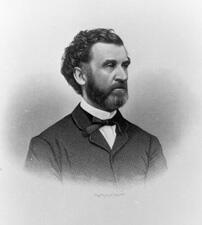
Here you will find contact information for Senator Charles Daniel Drake, including email address, phone number, and mailing address.
| Name | Charles Daniel Drake |
| Position | Senator |
| State | Missouri |
| Party | Republican |
| Status | Former Representative |
| Term Start | March 4, 1867 |
| Term End | March 3, 1871 |
| Terms Served | 1 |
| Born | April 11, 1811 |
| Gender | Male |
| Bioguide ID | D000484 |
About Senator Charles Daniel Drake
Charles Daniel Drake (April 11, 1811 – April 1, 1892) was a United States senator from Missouri, a leading Radical Republican during the Civil War and Reconstruction era, and later Chief Justice of the United States Court of Claims. Over the course of his public life he was successively affiliated with the Whig Party, the Know Nothings, the Democratic Party, and finally the Republican Party. As a member of the Republican Party, he served one term in the United States Senate, representing Missouri from 1867 to 1871, and contributed actively to the legislative process during a significant period in American history.
Drake was born on April 11, 1811, in Cincinnati, Ohio, into a prominent Ohio Valley family. His father, Daniel Drake (1785–1852), was a noted American physician and author, and his uncle, Benjamin Drake (1795–1841), was an American historian, editor, and writer. In his youth, Charles Drake attended St. Joseph’s College in Bardstown, Kentucky, in 1823 and 1824, and then Partridge’s Military Academy in Middletown, Connecticut, from 1824 to 1825. He entered the United States Navy as a midshipman in 1827 and served until 1830, gaining early experience in national service that preceded his later legal and political career.
After leaving the Navy, Drake turned to the study of law. He read law in Cincinnati under the guidance of his uncle, Benjamin Drake, and was admitted to the bar. He began his legal career in private practice in Cincinnati from 1833 to 1834, then moved to St. Louis, Missouri, where he practiced law from 1834 to 1847. He returned briefly to Cincinnati to practice from 1847 to 1849, during which time he also served as treasurer of the Board of Foreign Missions of the Presbyterian Church in 1849, reflecting his involvement in religious and philanthropic affairs. Drake resumed his legal practice in St. Louis in 1850 and continued there until 1867, building a substantial reputation at the Missouri bar. During these years he was successively a Whig, a Know Nothing, and a Democrat, reflecting the shifting party alignments of the antebellum period.
Drake entered elective office as a member of the Missouri House of Representatives, serving from 1859 to 1860. With the coming of the American Civil War, he underwent a decisive political transformation and became a fierce opponent of slavery and a leader of the Radical Republicans in Missouri. From 1861 to 1863 he unsuccessfully pressed for immediate and uncompensated emancipation of enslaved people, a position that put him at odds with more conservative Unionists led by Governor Hamilton Rowan Gamble and supported by President Abraham Lincoln. By 1863, Drake had organized a distinct Radical faction in Missouri politics that demanded immediate emancipation, a new state constitution, and a stringent system of disfranchisement for all Confederate sympathizers in the state.
Drake’s influence reached its height during the Missouri constitutional convention of 1865, where he served as a delegate and vice president of the convention and emerged as its most forceful and active leader. The resulting state constitution, adopted that year, became widely known as the “Drake Constitution.” Under its provisions, the Radical Republicans, with Drake as their acknowledged leader, maintained near-absolute control of Missouri politics from 1865 to 1871. To secure and consolidate Radical rule, Drake and his allies imposed a sweeping “test oath” and devised an 81‑point checklist of disqualifying actions that effectively disfranchised every man who had supported the Confederacy, even indirectly. The United States Supreme Court later struck down the imposition of this oath on ministers, and the measure became a highly controversial political issue, especially among Missouri’s German Republicans, many of whom were angered by its severity. At the same time, Drake worked to broaden the electorate in another direction by securing the franchise for all Black men in Missouri, despite reservations among some Republicans, thereby advancing African American political rights in the state.
On the strength of his Radical leadership, Drake was elected as a Republican to the United States Senate from Missouri and served from March 4, 1867, to December 19, 1870. His term in Congress coincided with the central years of Reconstruction, and he participated in the national legislative debates that shaped postwar policy. During the 41st Congress he served as Chairman of the United States Senate Committee on Education, reflecting his involvement in issues of national development and reform. As a member of the Senate, Drake represented the interests of his Missouri constituents while aligning with the Radical Republican program in Congress. He resigned his Senate seat on December 19, 1870, to accept a federal judicial appointment.
Drake was nominated by President Ulysses S. Grant on December 12, 1870, to be Chief Justice of the Court of Claims, succeeding Chief Justice Joseph Casey. The United States Senate confirmed his nomination on the same day, and he received his commission on December 12, 1870. As Chief Justice of what later became the United States Court of Claims, Drake presided over a tribunal responsible for adjudicating monetary claims against the federal government, a role of particular importance in the post–Civil War era. He served on the Court of Claims until December 12, 1885, when he resigned from the bench after fifteen years of judicial service.
Following his resignation from the federal judiciary, Drake returned to private legal practice, this time in Washington, D.C., where he practiced law from 1885 until his death in 1892. In addition to his public offices, he contributed to American legal and political literature. His works included “Union and Anti-Slavery Speeches” (Cincinnati, 1864), which collected his wartime oratory, and a widely used legal treatise, “Treatise on the Law of Suits by Attachment in the United States” (7th ed., Boston, 1891). Charles Daniel Drake died on April 1, 1892, in Washington, D.C. His remains were cremated, and his ashes were interred in Bellefontaine Cemetery in St. Louis, Missouri, closing the life of a figure who had played a central role in Missouri’s Civil War and Reconstruction politics and had served both in the United States Senate and on the federal bench.