Senator Charles Edward Dudley
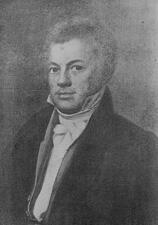
Here you will find contact information for Senator Charles Edward Dudley, including email address, phone number, and mailing address.
| Name | Charles Edward Dudley |
| Position | Senator |
| State | New York |
| Party | Jackson |
| Status | Former Representative |
| Term Start | December 7, 1829 |
| Term End | March 3, 1833 |
| Terms Served | 1 |
| Born | May 23, 1780 |
| Gender | Male |
| Bioguide ID | D000511 |
About Senator Charles Edward Dudley
Charles Edward Dudley (May 23, 1780 – January 23, 1841) was an American businessman and politician who served as a United States Senator from New York from 1829 to 1833. A member of the Jackson Party and of Martin Van Buren’s influential Albany Regency, he also served as mayor of Albany, New York, and as a member of the New York State Senate. Over the course of one term in the United States Senate, Dudley contributed to the legislative process during a significant period in American history, participating in the democratic process and representing the interests of his New York constituents.
Dudley was born at Johnson Hall, Eccleshall, Staffordshire, England, during the American Revolution, to Loyalist parents. His father, Charles Dudley, was an Englishman who had served as Collector of the King’s Customs at Newport, Rhode Island, where he married Catherine Cooke, a member of a Rhode Island colonial family. His paternal grandparents were Thomas Dudley and Mary (née Levett) Dudley of Staffordshire, England. In November 1775, as the Revolution intensified, his father abandoned his customs office at Newport and sought refuge on board a British ship of war. The following year, he took up residence in England, where his wife joined him, and the family remained there until his father’s death in 1790.
In 1795, Dudley’s mother returned to the United States, settling again in Rhode Island and bringing with her the fifteen-year-old Charles, who was then schooled in Newport. Near the beginning of the nineteenth century, he entered commercial life, working as a clerk in a counting room. He made voyages from New York to the East Indies as a supercargo, gaining experience in international trade and maritime commerce. After several years in this line of work, he moved to Albany, New York, where he engaged in the mercantile business and established himself in the city’s commercial community.
Dudley’s marriage further anchored him in Albany’s social and political life. He married Blandina Bleecker (1783–1863), a member of a prominent Albany family. She was the daughter of Rutger Bleecker, a grandson of former Albany mayor Rutger Jansen Bleecker, and Catharine (née Elmendorf) Bleecker. Through this connection, Dudley became linked to an established local political lineage, which complemented his growing involvement in public affairs and helped position him within the circle that would become the Albany Regency.
Dudley entered public life in his late thirties, joining the Albany Regency, the political organization formed by Martin Van Buren to lead the Bucktails, the faction that opposed DeWitt Clinton for control of New York’s Democratic-Republican Party. He first came to statewide political prominence as a presidential elector in the election of 1816, when he cast his votes for James Monroe for President and Daniel D. Tompkins for Vice President. In local government, he served as an Albany alderman from 1819 to 1820. He was elected to the New York State Senate, serving from 1820 to 1825, and simultaneously rose in municipal leadership as mayor of Albany from 1821 to 1824. After a brief interval out of the mayoralty, he again served as mayor from 1828 to 1829, reinforcing his reputation as a key figure in both city and state politics.
In 1828, Dudley was an unsuccessful candidate for the United States House of Representatives. His national legislative career began the following year, when Martin Van Buren resigned his seat in the United States Senate to become Governor of New York. Dudley was elected to fill the resulting vacancy and took his seat in the Senate on January 15, 1829. A member of the Jackson Party, he served one full term, remaining in office until March 3, 1833. He was an early example of a businessman serving in the Senate, and while he played a relatively inconspicuous role in debate, he consistently and loyally supported the administration of President Andrew Jackson. His tenure coincided with major national issues, including the consolidation of the Jacksonian coalition that would evolve into the Democratic Party, and he participated in the legislative work of this transformative era.
At the conclusion of his term in 1833, Dudley retired from national office and spent the remainder of his life in Albany. Although he no longer held public office, he retained a strong interest in politics and remained associated with the circle of Jackson, Van Buren, and their allies as they worked to organize and solidify the Democratic Party following the fragmentation of the Democratic-Republican Party after the presidential election of 1824. Outside politics, he cultivated personal interests, notably in science; he was known as an amateur astronomer, a pursuit that would be commemorated after his death.
Charles Edward Dudley died in Albany, New York, on January 23, 1841. He was buried at Albany Rural Cemetery. His widow, Blandina Bleecker Dudley, later honored his memory and his interest in astronomy by providing funds in 1856 for the establishment of an observatory in Albany. The institution, named the Dudley Observatory, was dedicated to scientific research and bore his name, extending his legacy beyond politics into the advancement of astronomical study.