Representative Charles Gordon Edwards
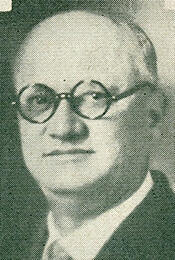
Here you will find contact information for Representative Charles Gordon Edwards, including email address, phone number, and mailing address.
| Name | Charles Gordon Edwards |
| Position | Representative |
| State | Georgia |
| District | 1 |
| Party | Democratic |
| Status | Former Representative |
| Term Start | December 2, 1907 |
| Term End | March 3, 1933 |
| Terms Served | 9 |
| Born | July 2, 1878 |
| Gender | Male |
| Bioguide ID | E000062 |
About Representative Charles Gordon Edwards
Charles Gordon Edwards (July 2, 1878 – July 13, 1931) was an American lawyer and political figure from the state of Georgia who served as a Democratic Representative in the United States House of Representatives between 1907 and 1933. Over the course of his career, he held his seat in Congress for a total of eight terms during two separate periods of service between 1907 and 1931, and he is also recorded as having contributed to the legislative process during nine terms in office. His long tenure in the House placed him at the center of national affairs during a significant period in American history, including the Progressive Era and the years surrounding World War I.
Edwards was born in Daisy, Evans County, Georgia, on July 2, 1878. He pursued his early education at the Gordon Institute in Barnesville, Georgia, a prominent preparatory school of the era, and then attended Florida State College in Lake City, Florida, an institution that later became part of the University of Florida. Demonstrating an early interest in the law and public affairs, he enrolled at the University of Georgia School of Law in Athens. While there, he was an active member of the Phi Kappa Literary Society, one of the university’s historic debating and literary organizations. He graduated with a Bachelor of Laws (LL.B.) degree in 1898, was admitted to the Georgia bar the same year, and promptly commenced the practice of law in Reidsville, Georgia.
In 1900, Edwards moved his law practice to Savannah, Georgia, which would remain his principal home and political base. In addition to his legal work, he became involved in local military organizations, reflecting the civic and martial traditions of the time. He joined the Savannah Volunteer Guards, Company B, Coast Artillery, serving as a sergeant in 1902 and 1903. In 1903 and 1904, he held the rank of second lieutenant in the Oglethorpe Light Infantry of the First Georgia Regiment of Infantry. These roles in the state’s volunteer military units helped establish his public profile and connections in Savannah and coastal Georgia.
Edwards entered national politics in 1906, when he was elected as a Democrat to the 60th United States Congress. He took his seat in the House of Representatives on March 4, 1907, representing a Georgia district and aligning with the Democratic Party, which then dominated state politics. He was subsequently re-elected to four additional consecutive terms, serving continuously through the 61st, 62nd, 63rd, and 64th Congresses. During this first period of congressional service, which extended until March 3, 1917, he participated in the legislative deliberations of a rapidly changing nation, representing the interests of his Georgia constituents in matters of agriculture, commerce, and national policy. In 1916 he declined to run for re-election, bringing his initial five-term tenure to a close.
After leaving Congress, Edwards returned to Savannah and resumed the practice of law. He quickly assumed leadership roles in the city’s commercial and civic life. From 1919 to 1920 he served as president of the Savannah Board of Trade, an influential body representing the business community and regional economic interests. He was appointed a trustee of Southern Methodist College in McRae, Georgia, reflecting his engagement with educational and religious institutions. From 1920 until 1924, Edwards served on the Savannah Harbor Commission, where he helped oversee and promote the development of Savannah’s port facilities. He also served as a director of the Atlantic Deep Waterways Association, an organization dedicated to improving coastal and inland water transportation along the Atlantic seaboard, underscoring his longstanding interest in maritime commerce and infrastructure.
Edwards returned to national office in the mid-1920s. He was elected again as a Democrat to the 69th Congress and took his seat on March 4, 1925, beginning his second period of service in the U.S. House of Representatives. He was re-elected to three additional terms, serving in the 70th and 71st Congresses and continuing into the 72nd Congress. In this later phase of his congressional career, which lasted until his death in 1931, he once more represented Georgia’s interests in Washington during a period marked by postwar economic expansion and the onset of the Great Depression. Throughout his combined years in office, Edwards participated in the democratic process as a member of the House of Representatives, working within the Democratic Party and the committee system to advance the concerns of his district and state.
Charles Gordon Edwards died in office on July 13, 1931, in Atlanta, Georgia, after suffering a heart attack while still serving as a member of the 72nd Congress. His death placed him among the members of the United States Congress who died in office during the first half of the twentieth century. He was buried in Bonaventure Cemetery in Savannah, Georgia, a historic resting place for many of the city’s leading figures. His career, spanning law, local civic leadership, and multiple terms in the U.S. House of Representatives, reflected both the political traditions of early twentieth-century Georgia and the broader national currents of the era in which he served.