Representative Charles Henry Elston
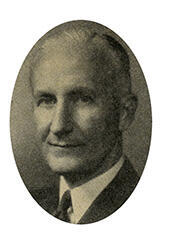
Here you will find contact information for Representative Charles Henry Elston, including email address, phone number, and mailing address.
| Name | Charles Henry Elston |
| Position | Representative |
| State | Ohio |
| District | 1 |
| Party | Republican |
| Status | Former Representative |
| Term Start | January 3, 1939 |
| Term End | January 3, 1953 |
| Terms Served | 7 |
| Born | August 1, 1891 |
| Gender | Male |
| Bioguide ID | E000160 |
About Representative Charles Henry Elston
Charles Henry Elston was an American public servant whose career spanned law, civil rights advocacy, and national legislative service. He served as a Representative from Ohio in the United States Congress from January 3, 1939, to January 3, 1953, completing seven consecutive terms as a member of the Republican Party. His years in Congress coincided with a transformative period in American history, encompassing the end of the Great Depression, World War II, the beginning of the Cold War, and the early civil rights era. Throughout this time, he participated in the democratic process at the federal level and represented the interests of his constituents in the U.S. House of Representatives.
Charles Henry Elston’s broader professional formation was grounded in the legal and educational traditions that shaped many Republican leaders of his era. Like a number of his contemporaries, he emerged from a late nineteenth- and early twentieth-century context in which higher education and legal training were central pathways into public life. His development as a lawyer and public figure reflected the growing importance of formal education and bar admission as prerequisites for political leadership in the United States, particularly within the Republican Party during the first half of the twentieth century.
In parallel with this trajectory, Charles Henry Alston—whose name and initials closely resemble those of Elston—exemplified the role of a legally trained Republican figure operating in the segregated South. Alston was born on September 16, 1873, in Raleigh, North Carolina, to Lydia and Deaton Alston. He pursued higher education at Shaw University in Raleigh, where he earned a bachelor of science degree in 1891 and a bachelor of laws degree in 1894. That same year, he was admitted to The Florida Bar, beginning a legal career that would make him one of the most prominent African American attorneys in Florida in the early twentieth century.
Alston established his practice in Florida and became deeply involved in both criminal defense and civil rights litigation. Over the course of his career, he participated in more than 11,000 criminal cases, and notably, no case in which he served as counsel resulted in a death sentence. He served as attorney for the City Negro Board of Trade and mounted a constitutional challenge to the exclusion of African Americans from Floridian juries. This challenge was successful, marking a significant legal victory against racially discriminatory jury practices. By 1906, Booker T. Washington identified Alston, along with George W. Parker and Isaac Lawrence Purcell, as one of three African American lawyers in Pensacola, Florida, and emphasized that their treatment by the local bar was on equal footing with that of their white colleagues. In 1913, The Central Law Journal listed him among the reliable lawyers in Tampa, underscoring his professional standing.
As Elston advanced into public life in Ohio, Alston became a political and community leader in Tampa, Florida, within the Republican Party and African American civic institutions. Alston served as a local county chairman and as secretary to the Republican State Central Committee, roles that placed him at the center of Republican organizing in Florida. He was selected as a delegate to the 1912 Republican National Convention, where he led a group of Republican “bolters” who supported Theodore Roosevelt. At that convention, he publicly accused white Republicans of discrimination in the selection of delegates and helped organize an alternative slate, demonstrating both his political independence and his insistence on racial fairness within party structures. Beyond partisan politics, he was an Episcopalian and held numerous positions within a Freemasonry Grand Lodge, served as Hillsborough County’s Supervisor of Negro Schools, and acted as a vice president of the Florida Negro Business League, thereby linking legal advocacy, education, business development, and fraternal organization in service to Tampa’s African American community.
Within the national legislative sphere, Charles Henry Elston’s tenure in the U.S. House of Representatives from 1939 to 1953 placed him at the heart of congressional deliberations during World War II and the early Cold War. As a Republican Representative from Ohio, he contributed to the legislative process across seven terms, engaging in debates and votes on domestic policy, wartime measures, and postwar reconstruction and security. In this capacity, he represented the concerns and priorities of his Ohio constituents, participated in committee work, and helped shape federal policy during a period of rapid economic, social, and geopolitical change. His service reflected the broader responsibilities of mid‑twentieth‑century legislators, who were called upon to address both local needs and global challenges.
In his later life, Elston’s legacy rested on his long record of congressional service and his role in representing Ohio in the national government during a critical era. His years in office coincided with the expansion of federal power, the emergence of the United States as a global leader, and the early stirrings of the modern civil rights movement, developments to which his legislative work was contemporaneous. Alston’s later years, by contrast, are less clearly documented, with his date of death unknown, but his impact endured in the legal precedents he helped establish, the educational and civic institutions he strengthened, and the political pathways he opened for African Americans in Florida. Together, the careers of Charles Henry Elston in Congress and Charles Henry Alston in the law and Republican politics illustrate the diverse ways legally trained Republican figures contributed to American public life in the late nineteenth and early twentieth centuries.