Representative Charles Joseph Esterly
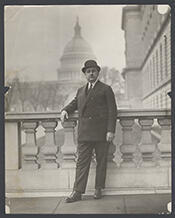
Here you will find contact information for Representative Charles Joseph Esterly, including email address, phone number, and mailing address.
| Name | Charles Joseph Esterly |
| Position | Representative |
| State | Pennsylvania |
| District | 14 |
| Party | Republican |
| Status | Former Representative |
| Term Start | December 7, 1925 |
| Term End | March 3, 1931 |
| Terms Served | 2 |
| Born | February 8, 1888 |
| Gender | Male |
| Bioguide ID | E000222 |
About Representative Charles Joseph Esterly
Charles Joseph Esterly (February 8, 1888 – September 3, 1940) was a Republican member of the U.S. House of Representatives from Pennsylvania. He was born in Reading, Berks County, Pennsylvania, where he spent his early years before entering local business and public life. Details of his formal schooling are not extensively recorded, but his subsequent professional and civic activities indicate an early engagement with the commercial and civic affairs of his community in and around Reading and nearby Wyomissing.
Esterly began his career in the utility and manufacturing sectors. He was employed with an electric company until 1916, gaining experience in a rapidly expanding industry that was transforming both urban and rural life in Pennsylvania. After leaving the electric company, he worked in the sales department of a knitting mill, a position that placed him within one of the region’s important textile and manufacturing enterprises. In addition to these pursuits, he became engaged in agriculture, particularly in the breeding of Ayrshire cattle and Berkshire hogs, reflecting both an interest in diversified business ventures and the agricultural character of much of Berks County at the time.
Over the course of his business career, Esterly expanded his interests into corporate leadership and local enterprise. He served as president and director of a water company, a role that underscored his involvement in essential public utilities and local infrastructure. He was also a director of a knitting mill and of a bottle-stopper company, positions that tied him closely to the industrial and commercial development of the Reading–Wyomissing area. These varied business responsibilities provided him with managerial experience and a public profile that would later support his entry into elective office.
Esterly’s public service began at the local level in Wyomissing, Pennsylvania. He served as a member of the board of school directors of Wyomissing from 1914 to 1920, participating in the oversight of local education during a period of growth and reform in public schooling. Concurrently, he was a committeeman of Wyomissing Borough from 1917 to 1921, contributing to municipal governance and local decision-making. His growing prominence in Republican politics was marked by his selection as a delegate to the Republican National Convention in 1920, and he further solidified his standing within the party as a member of the Republican State committee from 1922 to 1924.
Building on this foundation of local and party service, Esterly was elected as a Republican to the Sixty-ninth Congress, serving as a Representative from Pennsylvania in the United States Congress beginning in 1925. His tenure in Congress extended through a significant period in American history, as the nation experienced economic expansion in the 1920s and the early stirrings of the conditions that would lead to the Great Depression. A member of the Republican Party, he contributed to the legislative process during two terms in office and participated in the democratic process by representing the interests of his constituents in Pennsylvania. Although he served in Congress from 1925 to 1931, he did so in two nonconsecutive terms: he declined to be a candidate for renomination in 1926 after his first term, was again elected to the Seventy-first Congress, and then chose not to be a candidate for renomination in 1930.
After leaving Congress, Esterly returned to private life and resumed his former business interests. He continued to be associated with the enterprises and activities that had defined his pre-congressional career, including his roles in utilities, manufacturing, and agriculture. He remained a figure rooted in the economic and civic life of Berks County until his death.
Charles Joseph Esterly died on September 3, 1940, in Wernersville, Pennsylvania. He was interred in Charles Evans Cemetery in Reading, Pennsylvania, a burial place for many of the city’s prominent citizens. His career reflected a combination of business leadership, local civic engagement, and national legislative service characteristic of many early twentieth-century Republican officeholders from Pennsylvania.