Representative Charles Robley Evans
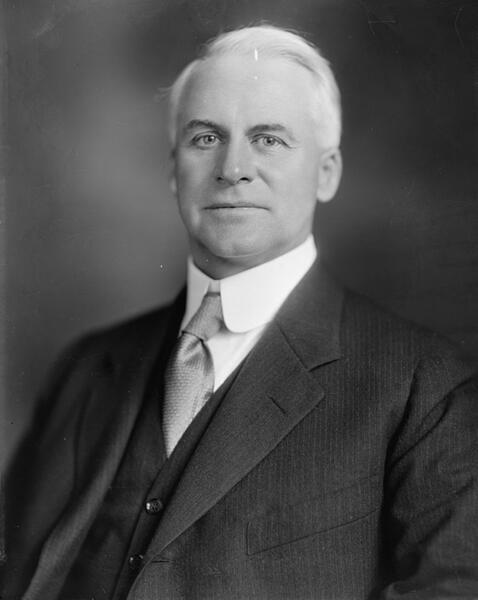
Here you will find contact information for Representative Charles Robley Evans, including email address, phone number, and mailing address.
| Name | Charles Robley Evans |
| Position | Representative |
| State | Nevada |
| District | At-Large |
| Party | Democratic |
| Status | Former Representative |
| Term Start | May 19, 1919 |
| Term End | March 3, 1921 |
| Terms Served | 1 |
| Born | August 9, 1866 |
| Gender | Male |
| Bioguide ID | E000234 |
About Representative Charles Robley Evans
Charles Robley Evans (August 9, 1866 – November 30, 1954) was an American businessman and politician who served as a United States Representative from Nevada for one term from 1919 to 1921. A member of the Democratic Party, he participated in the legislative process during a significant period in American history, representing the interests of his Nevada constituents in the House of Representatives.
Evans built his early career in business in Nevada, where he became involved in the saloon trade and later in mining enterprises. By the early twentieth century he had established himself as a local businessman of some prominence. His activities in Nevada’s commercial life, particularly in the mining sector, positioned him to play a larger role in the state’s political affairs as the mining industry and associated communities grew in economic and political importance.
Evans’s formal entry into politics preceded his congressional service and reflected his growing influence within the Democratic Party in Nevada. He served as a delegate for Nevada at the 1908 Democratic National Convention, where he cast his vote for William Jennings Bryan for president. During the vice-presidential balloting he initially supported Charles A. Towne until Towne’s name was withdrawn, after which Evans shifted his support to John W. Kern. His participation at the national convention underscored his standing in state party circles and his alignment with the progressive, populist wing of the Democratic Party of that era.
By the mid-1910s Evans had deepened his involvement in Nevada’s mining industry. In 1916 he sold his saloon in order to concentrate on developing his mining company, the Wall Street Copper Company, in Luning, Nevada. This shift from the saloon business to mining development reflected broader economic trends in the state and demonstrated Evans’s commitment to Nevada’s resource-based economy. His experience as a businessman and mine developer informed his later political positions, particularly on issues affecting western development and resource extraction.
Evans’s congressional career began during World War I. On May 7, 1918, he wrote to William McKnight, the secretary of the Democratic State Central Committee, formally announcing his candidacy for Nevada’s at-large seat in the United States House of Representatives. In the closing months of World War I he publicly supported continuing the war effort until Germany was completely defeated and transformed into a republic, a stance consistent with many interventionist Democrats of the period. Successful in the 1918 election, he served in the House from 1919 to 1921, completing one term in office. During this time he contributed to the legislative process as Nevada’s Democratic representative, participating in the democratic governance of the nation at a moment marked by postwar adjustment and domestic political change.
Evans sought reelection in 1920 but was defeated by Republican Samuel S. Arentz. Following his departure from Congress in 1921, he remained in Washington, D.C., for several years, maintaining his connections to national political and governmental circles. He later moved to Miami, Florida, before eventually returning to Nevada, where he continued to be associated with the state whose interests he had represented in Congress.
Charles Robley Evans died on November 30, 1954, at the age of 88. His life encompassed the transformation of Nevada from a frontier mining region into a more settled part of the American West, and his career as a businessman, party delegate, and one-term United States Representative reflected the intertwining of economic development and political life in the early twentieth century.