Representative Charles Isiah Faddis
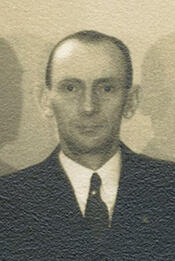
Here you will find contact information for Representative Charles Isiah Faddis, including email address, phone number, and mailing address.
| Name | Charles Isiah Faddis |
| Position | Representative |
| State | Pennsylvania |
| District | 25 |
| Party | Democratic |
| Status | Former Representative |
| Term Start | March 9, 1933 |
| Term End | January 3, 1943 |
| Terms Served | 5 |
| Born | June 13, 1890 |
| Gender | Male |
| Bioguide ID | F000001 |
About Representative Charles Isiah Faddis
Charles Isiah Faddis (June 13, 1890 – April 1, 1972) was a Democratic member of the United States House of Representatives from Pennsylvania who served five terms in Congress between 1933 and 1943. Over the course of a public career that spanned the New Deal era and the Second World War, he combined legislative service with a lengthy record of military duty and later business and agricultural pursuits.
Faddis was born in Loudonville, Ashland County, Ohio, on June 13, 1890. In 1891 he moved with his parents to Waynesburg, Greene County, Pennsylvania, a relocation that established the community he would later represent in Congress. He attended local schools and then enrolled at Waynesburg College. Pursuing further study in agriculture, he entered the agricultural department of Pennsylvania State College at State College, Pennsylvania, and was graduated in 1915, gaining training that would inform his later work in farming and resource development.
Faddis began his military career prior to the First World War. In 1916 he served as a sergeant in the Tenth Infantry, Pennsylvania National Guard, on the Mexican border during the period of heightened tensions with Mexico. With the entry of the United States into World War I, he entered federal service and served with the Forty-seventh Regiment, United States Infantry, and later with the Fourth Ammunition Train. Over the course of the conflict he rose to the rank of lieutenant colonel of Infantry and served with the Army of Occupation in Germany following the Armistice. For wounds received in the line of duty he was awarded the Purple Heart.
Following his return to civilian life after World War I, Faddis settled again in Waynesburg, Pennsylvania. From 1919 to 1926 he engaged in the general contracting business, participating in local construction and development at a time of postwar growth. Maintaining his connection to the military, he later pursued advanced professional military education and attended the United States Army Command and General Staff College at Fort Leavenworth, Kansas, in 1930, preparing himself for higher levels of command and staff responsibility.
Faddis entered national politics as a member of the Democratic Party during the early years of the Great Depression. He was elected as a Democrat to the Seventy-third Congress and to the four succeeding Congresses, serving as a Representative from Pennsylvania from March 4, 1933, until his resignation on December 4, 1942. His five consecutive terms in the House of Representatives coincided with the New Deal and the lead-up to World War II, during which he contributed to the legislative process and participated in the democratic governance of the nation while representing the interests of his Pennsylvania constituents. In 1942 he was an unsuccessful candidate for renomination, choosing instead to return to active military service.
With the United States fully engaged in World War II, Faddis reentered the Army upon leaving Congress. During the Second World War he served as a colonel in the United States Army. In the course of this later period of service he was again recognized for valor and sacrifice, receiving both the Purple Heart and the Bronze Star. His dual record as a senior military officer and sitting member of Congress who resigned to return to uniform underscored his longstanding commitment to national defense.
After World War II, Faddis returned to private life and devoted himself to agricultural and resource-based enterprises. He engaged in raising Hereford cattle, reflecting both his early agricultural training and his interest in livestock breeding. He also participated in the production of oil and gas and the operation of coal mines, activities that were central to the economy of southwestern Pennsylvania. These pursuits occupied his later years and tied him closely to the economic life of his region.
Charles Isiah Faddis died in Mazatlán, Sinaloa, Mexico, on April 1, 1972. His remains were returned to Pennsylvania, and he was buried in Rosemont Cemetery in Rogersville, Greene County, Pennsylvania, near the community that had been the center of his personal, professional, and political life.