Senator Charles Warren Fairbanks
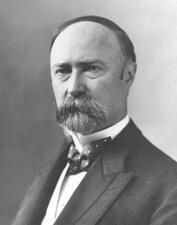
Here you will find contact information for Senator Charles Warren Fairbanks, including email address, phone number, and mailing address.
| Name | Charles Warren Fairbanks |
| Position | Senator |
| State | Indiana |
| Party | Republican |
| Status | Former Representative |
| Term Start | March 15, 1897 |
| Term End | March 3, 1905 |
| Terms Served | 2 |
| Born | May 11, 1852 |
| Gender | Male |
| Bioguide ID | F000003 |
About Senator Charles Warren Fairbanks
Charles Warren Fairbanks served as a Senator from Indiana in the United States Congress from 1897 to 1905. A member of the Republican Party, Charles Warren Fairbanks contributed to the legislative process during 2 terms in office.
Charles Warren Fairbanks’s service in Congress occurred during a significant period in American history. As a member of the Senate, Charles Warren Fairbanks participated in the democratic process and represented the interests of constituents.
Charles Warren Fairbanks (May 11, 1852 – June 4, 1918) was the 26th vice president of the United States under President Theodore Roosevelt serving from 1905 to 1909. A member of the Republican Party, Fairbanks was previously a senator from Indiana from 1897 to 1905. Born in Unionville Center, Ohio, Fairbanks moved to Indianapolis after graduating from Ohio Wesleyan University. He became an attorney and railroad financier, working under railroad magnate Jay Gould. Fairbanks delivered the keynote address at the 1896 Republican National Convention and won election to the Senate the following year. In the Senate, he became an advisor to President William McKinley and served on a commission that helped settle the Alaska boundary dispute. The 1904 Republican National Convention selected Fairbanks as the running mate for President Theodore Roosevelt. As vice president, Fairbanks worked against Roosevelt’s progressive policies. Fairbanks unsuccessfully sought the Republican nomination at the 1908 Republican National Convention and backed William Howard Taft in 1912 against Roosevelt. Fairbanks sought the presidential nomination at the 1916 Republican National Convention, but was instead selected as the vice presidential nominee, with former Associate Justice and Governor Charles Evans Hughes, and would have been the third vice president to serve under different presidents (after George Clinton and John C. Calhoun), and the only one non-consecutively. The Hughes-Fairbanks ticket, however, narrowly lost to the Democratic ticket of President Woodrow Wilson and Vice President Thomas R. Marshall.