Representative Charles Rowland Peaslee Farnsley
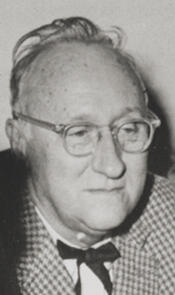
Here you will find contact information for Representative Charles Rowland Peaslee Farnsley, including email address, phone number, and mailing address.
| Name | Charles Rowland Peaslee Farnsley |
| Position | Representative |
| State | Kentucky |
| District | 3 |
| Party | Democratic |
| Status | Former Representative |
| Term Start | January 4, 1965 |
| Term End | January 3, 1967 |
| Terms Served | 1 |
| Born | March 28, 1907 |
| Gender | Male |
| Bioguide ID | F000023 |
About Representative Charles Rowland Peaslee Farnsley
Charles Rowland Peaslee Farnsley (March 28, 1907 – June 19, 1990) was an American attorney and Democratic politician who served as mayor of Louisville, Kentucky, from 1948 to 1953 and represented Kentucky in the United States House of Representatives from 1965 to 1967. A popular and nationally noted municipal leader, he gained attention for his eccentric personality, his distinctive dress, and his strong advocacy for the arts and education. His original ideas in local government contributed to the creation of the Fund for the Arts and to weekly public “beef sessions,” during which residents could speak directly with him and top city officials about their concerns.
Farnsley was born in Louisville, Kentucky, in 1907 into a well-established local family. His father, who would be elected judge in 1932, and an uncle who was a distiller active in Democratic politics helped root him early in the city’s legal and political culture. Although he was considered a poor student during his years at Louisville Male High School and at the University of Louisville, he persisted in his studies and earned a law degree from the University of Louisville in 1930. Upon graduation he joined his father’s law firm, beginning a legal career that would run parallel to his growing involvement in Democratic Party affairs and public life.
During the early 1930s, Farnsley emerged as a leader in Kentucky’s campaign to repeal Prohibition and served as a delegate to the state convention that ratified the Twenty-first Amendment to the United States Constitution. In 1932, Kentucky Democratic Party leaders endorsed him as one of nine nominees for the U.S. House of Representatives in statewide elections, but he lost a bitterly contested primary by about 2,000 votes. In that race, he and E. Leland Taylor split the Louisville vote after Taylor ran against the city’s Democratic political machine led by Michael J. “Micky” Brennan. Farnsley lost another congressional primary in 1934, but in 1935 he won election to the Kentucky House of Representatives, where he served two terms. In the state legislature he was known as a supporter of distilling interests and of Louisville’s Democratic machine, jokingly explaining his request for a telephone on his legislative desk by saying that “sometimes I have to call Mike [Brennan] up in a hurry to figure out how to vote on a bill!” By 1940 he had become a lobbyist for distillers and helped found the Rebel Yell brand of whiskey. That same year he challenged A. B. “Happy” Chandler for the Democratic nomination for the United States Senate, running on a platform that favored a substantial increase in American aid to Britain and accusing Chandler of isolationism. He was decisively defeated and wryly told supporters, “tell the voters I am sorry I have been a bother.”
Declared ineligible for military service during World War II because of an earlier health issue, Farnsley turned again to formal education. He took extensive coursework at the University of Louisville, earning a degree in political science, and pursued graduate studies in public administration at the University of Kentucky, the University of Chicago, and Columbia University. During this period he developed an idiosyncratic intellectual profile, describing himself as a Physiocrat and writing papers that argued, among other theses, that Enlightenment thought had been influenced by Confucian ideas transmitted through the Chinese Rites controversy, and that fascism had philosophical roots in the writings of Plato. These pursuits reflected the combination of unconventional thinking and public-policy focus that would later characterize his mayoral administration.
Farnsley’s rise to the mayoralty of Louisville came in 1948 under unusual circumstances. In February of that year, Mayor E. Leland Taylor died of a heart attack, and the Louisville Board of Aldermen was charged with selecting a successor. After two chaotic weeks in which, as contemporaries observed, “almost every Democrat who ever figured in public print” in Louisville was mentioned as a possibility, the Board chose Farnsley by a vote of 6 to 5 over banker Tom Graham, the candidate favored by the party organization. Farnsley subsequently won election in his own right, securing approximately 55 percent of the vote in both 1948 and 1949. As mayor from 1948 to 1953, he quickly established a reputation for creative, sometimes unorthodox approaches to the problems of a growing but financially constrained city. One of his first major achievements was the enactment of an occupational tax, which allowed Louisville to raise revenue not only from residents but also from workers commuting from the suburbs, thereby reducing the city’s dependence on real estate taxes.
In municipal administration, Farnsley promoted cost-saving innovations and neighborhood improvements. He proposed repaving only the driving lanes of streets, leaving parking lanes untouched, effectively doubling the amount of roadway that could be resurfaced with limited funds. His administration identified vacant parcels throughout the city and converted them into inexpensive playgrounds known as “tot-lots,” expanding recreational opportunities for children in densely populated areas. Although he would later become an outspoken critic of urban renewal programs and the construction of interstate highways through cities, his stance on these issues as mayor was more ambivalent. Under his leadership, city officials developed plans that would eventually result in the Watterson Expressway and the routing of Interstates 65 and 64 through Louisville, and his administration cleared a blighted area just west of downtown that contained many dwellings lacking electricity and running water.
Farnsley also pursued a policy of gradual racial integration and cultural enrichment. During his tenure, Louisville’s public libraries, municipal golf courses, and the then city-controlled University of Louisville were all integrated, marking significant steps in the city’s civil rights progress. He worked behind the scenes to secure an unprecedented grant from the Rockefeller Foundation for the Louisville Orchestra, enabling it to commission and perform 46 new works annually and to record many of them for distribution on records and radio. He increased funding for the Louisville Free Public Library, which used the additional resources to lend paintings and phonograph recordings and to offer college-level courses broadcast free over the radio. These initiatives, along with his role in fostering what became the Fund for the Arts and his weekly “beef sessions” with citizens, underscored his belief that municipal government should promote broad access to culture and education. Upon his departure from office, the Louisville Courier-Journal described him as “a spectacular, colorful, unpredictable, unorthodox Mayor who has brought great change in the face and future of Louisville,” noting that opinions about him ranged from “brilliant” and “courageous” to “foolish” and “impetuous,” but that all agreed on his impact.
After returning to private life and legal practice, Farnsley remained active in politics and public affairs. In 1964 he successfully ran for Congress from a district covering Jefferson County, Kentucky, defeating Republican incumbent Marion M. “Gene” Snyder with 53.8 percent of the vote. Snyder would later return to the House from an adjoining district, but Farnsley served a single term in the Eighty-ninth Congress from 1965 to 1967. As a member of the House of Representatives, he was considered among the more liberal Democrats and was a strong supporter of President Lyndon B. Johnson and the Great Society legislative agenda. He participated fully in the legislative process and represented the interests of his Kentucky constituents during a period of major national change. Notably, he voted in favor of the Voting Rights Act of 1965, aligning himself with landmark civil rights legislation. He chose not to seek re-election after his first term and left Congress at the conclusion of his service in 1967.
In his later years, Farnsley devoted considerable energy to historical preservation, publishing, and regional development. He founded and served as president of the Lost Cause Press, an enterprise dedicated to reproducing historic documents on microfilm to make them more widely available to scholars and the public. He also worked to promote tourism in the Ohio Valley, seeing heritage and culture as key assets for the region’s economic future. At the same time, he grew increasingly disillusioned with the direction of Louisville’s urban development, believing that urban renewal projects, interstate highway construction, and suburbanization had damaged the city’s core. By the mid-1970s he warned that, absent a change in course by the local establishment, Louisville risked the fate of Rust Belt cities such as Detroit, writing in 1975, “Louisville’s next. I’m not guessing. It’s next! It’ll be a ghost town! Empty!”
Farnsley married Nancy Farnsley in 1937, and the couple had five children. An Episcopalian, he was also widely recognized for his personal style, often wearing string bow ties and, earlier in his career, a variety of eccentric clothing inspired by the antebellum South. His distinctive public persona, combined with his record in office, made him one of Louisville’s most memorable political figures. Charles Rowland Peaslee Farnsley died on June 19, 1990, from Alzheimer’s disease and was buried in Cave Hill Cemetery in Louisville. His legacy in the city is commemorated, among other ways, by a statue of him seated on a park bench in front of 623 Main Street in downtown Louisville, reflecting his enduring association with the civic life and cultural development of his native city.