Senator Charles Benjamin Farwell
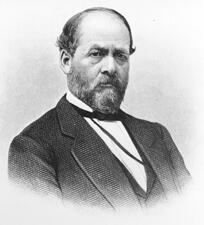
Here you will find contact information for Senator Charles Benjamin Farwell, including email address, phone number, and mailing address.
| Name | Charles Benjamin Farwell |
| Position | Senator |
| State | Illinois |
| Party | Republican |
| Status | Former Representative |
| Term Start | March 4, 1871 |
| Term End | March 3, 1891 |
| Terms Served | 5 |
| Born | July 1, 1823 |
| Gender | Male |
| Bioguide ID | F000037 |
About Senator Charles Benjamin Farwell
Charles Benjamin Farwell (July 1, 1823 – September 23, 1903) was a U.S. Representative and Senator from Illinois and a prominent Republican political figure and businessman in the latter half of the nineteenth century. Serving in the United States Congress from 1871 to 1891, he held five terms in office—four in the House of Representatives and one in the Senate—during a significant period in American history, contributing to the legislative process and representing the interests of his Illinois constituents.
Farwell was born in Painted Post, New York, on July 1, 1823, the son of Henry Farwell (1795–1873) and Nancy (née Jackson) Farwell (1798–1887). He was part of a large family that included younger siblings John Villiers Farwell, Simeon Farwell, and Louise Farwell, the latter becoming the mother-in-law of reformer Katherine Philips Edson and grandmother of Charles Farwell Edson Jr. He attended Elmira Academy in New York, receiving a basic formal education before the family’s move west. In 1838, as a teenager, he relocated to Illinois, joining the broader migration that was then transforming the Old Northwest into a center of commerce and politics.
After arriving in Illinois, Farwell initially tried his hand at surveying and farming, occupations common on the frontier. In 1844 he moved to Chicago, which was emerging as a major Midwestern commercial hub, and entered the banking business. His aptitude for finance and real estate quickly made him a leading figure in the city’s business community. From 1853 to 1861 he served as Clerk of Cook County, a position that gave him administrative experience and visibility in local politics. Over the last quarter of the nineteenth century, Farwell became known as one of the principal builders in Chicago’s business district, amassing a sizeable fortune that was reflected in his ownership of a mansion on Chicago’s North Side. His growing wealth and influence in Chicago’s commercial life formed the foundation for his later political career.
Farwell’s entrance into national politics came with his election to the U.S. House of Representatives as a Republican in 1870. He won his first race by a substantial margin, defeating the well-known Chicago politician “Long” John Wentworth by approximately 5,700 votes. He served in the House in the 42nd, 43rd, 44th, and 47th Congresses, with his congressional service in the House spanning much of the period from 1871 into the early 1880s. In 1876, during the 44th Congress, the Democrat-controlled House accepted the challenge of John V. Le Moyne to Farwell’s election and removed Farwell from office, an outcome that led him to decline to run again in the general election later that year. He returned to national office in 1880 when he was again elected to the House, serving in the 47th Congress. Throughout these terms he participated actively in the legislative process during the Reconstruction and post-Reconstruction eras, representing Illinois’s interests in matters of commerce, infrastructure, and national policy.
Farwell’s service in the United States Senate followed the death of Senator John A. Logan in 1886. In 1887 he was elected by the Illinois legislature to fill the remainder of Logan’s term, thus entering the Senate as a Republican senator from Illinois. His Senate tenure extended into 1891, and during this period he continued to serve during a transformative era in American political and economic life. Notably, in his first term as Senator, Farwell supported the introduction of an amendment to the U.S. Constitution that would have granted women the right to vote. Although this early women’s suffrage amendment did not succeed and the goal would not be realized until the ratification of the Nineteenth Amendment in 1920, his support marked a significant, if ultimately unsuccessful, step in the long struggle for women’s voting rights. After completing Logan’s unexpired term, Farwell refused to run for election to a full Senate term, thereby concluding his formal congressional career by 1891.
In addition to his political and business activities in Illinois, Farwell played a notable role in a major development project in Texas. In 1879, he and his brother John were among a group of Illinois businessmen and politicians who undertook the construction of the Texas State Capitol building in Austin. As compensation for this project, the Farwell brothers and their associates received more than three million acres of land in the Texas Panhandle. On this vast tract they established the XIT Ranch, which became one of the largest cattle ranches in the world at the time. The city of Farwell, Texas, was named in honor of the Farwell brothers, reflecting their lasting imprint on the region.
Farwell’s personal life was closely intertwined with his civic and philanthropic activities. In 1852 he married Mary Eveline Smith, a New Englander who had received a private education. The couple had nine children, though only four survived to adulthood. Their children included Charles Farwell (1853–1853), Mary N. Farwell (1854–1861), Henry Farwell (1856–1861), and Edward Farwell (1858–1864), all of whom died young; Anna Farwell (1860–1953), who married the composer Reginald de Koven; Walter C. Farwell (1863–1943), who married Mildred Mary Williams, daughter of General Robert Williams; Grace Farwell (1868–1949), who married Dudley Winston, son of U.S. Minister Frederick Hampden Winston, in 1888 and, after his death, married Robert Greaves McGann (1867–1953) in 1906; Robert Farwell (1870–1872), who died in childhood; and Rose Farwell (1870–1918), who married the author Hobart Chatfield-Taylor and later became known for founding the Onwentsia Club on her father’s estate. The family’s social and cultural connections extended Farwell’s influence into literary, musical, and diplomatic circles.
Farwell and his wife were also significant benefactors of higher education in Illinois. In 1876, at Mary Farwell’s urging, he underwrote the construction of College Hall, North Hall, and a gymnasium at Lake Forest College, an institution that had struggled financially since the Civil War. The couple also donated additional land to the college. Their philanthropy was motivated in part by a desire to secure a coeducational liberal arts college near their home for their daughter Anna, who graduated from Lake Forest College in 1880. Anna later became a successful socialite, novelist, and amateur historian, while maintaining the family’s cultural prominence. Through their daughter Rose’s marriage to Hobart Chatfield-Taylor, the Farwells further cemented ties to the literary world.
In his later years, Farwell resided at his Lake Forest estate, known as Fairlawn, at 965 East Deerpath. After a long illness, he died in Lake Forest, Illinois, on September 23, 1903, and was buried at Rosehill Cemetery in Chicago. His daughter Rose inherited Fairlawn, and upon her death in 1918 the property passed to her sister Grace. When the original mansion burned in 1920, Grace and her husband Robert McGann commissioned New York architects Delano and Aldrich to design a new residence in the Federal style with neo-Palladian brick; the house was completed in 1923, with landscaping originally designed by noted landscape architect Frederick Law Olmsted. Through his daughters, Farwell’s descendants included Ethel Leroy De Koven (1885–1943), who married broker Hans Kierstede Hudson; Grace Farwell McGann (1907–1949), who married James H. Douglas Jr., later Secretary of the Air Force and Deputy Secretary of Defense; and, through Rose, four grandchildren: Adelaide Chatfield-Taylor (1891–1982), a World War I canteen worker awarded the Croix de Guerre and grandmother of businesswoman and politician Meg Whitman; Wayne Chatfield-Taylor (1893–1967), who served as Under Secretary of Commerce and Assistant Secretary of the Treasury under President Franklin D. Roosevelt; Otis Chatfield-Taylor (1899–1948), a writer, playwright, editor, and theatrical producer; and Robert Farwell Chatfield-Taylor (1908–1980). Through his public service, business enterprises, and philanthropic and family legacy, Charles Benjamin Farwell left a lasting imprint on Illinois, the broader Midwest, and the nation.