Representative Charles James Faulkner
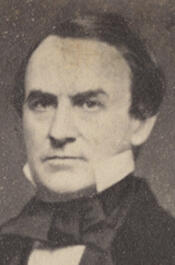
Here you will find contact information for Representative Charles James Faulkner, including email address, phone number, and mailing address.
| Name | Charles James Faulkner |
| Position | Representative |
| State | Virginia |
| District | -1 |
| Party | Democratic |
| Status | Former Representative |
| Term Start | December 1, 1851 |
| Term End | March 3, 1877 |
| Terms Served | 5 |
| Born | July 6, 1806 |
| Gender | Male |
| Bioguide ID | F000044 |
About Representative Charles James Faulkner
Charles James Faulkner (September 21, 1847 – January 13, 1929) was a United States senator from West Virginia and, according to contemporary accounts, served as a Representative from Virginia in the United States Congress from 1851 to 1877. A member of the Democratic Party, he contributed to the legislative process during five terms in office and participated in the democratic process on behalf of his constituents during a significant period in American history. His public career later centered on his service in the United States Senate, where he represented West Virginia in the late nineteenth century.
Faulkner was born on the family estate, Boydville, in Martinsburg, Virginia (now Martinsburg, West Virginia). He was the son of Charles James Faulkner Sr., who served as a U.S. Representative from Virginia and later from West Virginia, and who was also appointed U.S. Minister to France. Growing up in a politically prominent family on a substantial estate in the Shenandoah Valley, he was exposed early to public affairs and the legal and political traditions that shaped his later career.
In 1859 Faulkner accompanied his father to France when the elder Faulkner took up his diplomatic post. During this period abroad, the younger Faulkner attended school in Paris and in Switzerland, receiving a cosmopolitan education unusual for an American youth of his era. He returned to the United States in 1861 as the Civil War began. In 1862 he entered the Virginia Military Institute at Lexington, Virginia, where he joined the corps of cadets. He served with the VMI cadets in the Battle of New Market on May 15, 1864, one of the most noted engagements involving a student corps during the war.
After the Civil War, Faulkner pursued formal legal training. He attended the law department of the University of Virginia at Charlottesville, from which he graduated in 1868. While at the University of Virginia he was a member of St. Anthony Hall, a social and literary fraternity that counted among its members many future leaders in law and politics. His legal education provided the foundation for his subsequent practice and his entry into public life.
Faulkner was admitted to the bar in 1868 and commenced the practice of law in Martinsburg. Building on his family’s political connections and his own professional standing, he became active in Democratic Party politics. As a Democrat, he was elected to the United States Congress, where he served as a Representative from Virginia from 1851 to 1877, completing five terms in office. During this extended period of congressional service, which spanned the tumultuous years before, during, and after the Civil War, he participated in debates and legislation affecting the preservation of the Union, Reconstruction, and the evolving relationship between the federal government and the former Confederate states. His service in the House of Representatives occurred during a significant period in American history, and he represented the interests of his constituents while contributing to the broader legislative process.
In 1887 Faulkner advanced to the upper chamber of Congress when he was elected as a Democrat to the United States Senate from West Virginia. He was reelected in 1893 and served from March 4, 1887, to March 3, 1899. During his Senate tenure he took part in deliberations on issues arising from rapid industrialization, westward expansion, and questions of federal authority over territories. He served as chairman of the Committee on Territories during the Fifty-third Congress, a position that placed him at the center of legislative consideration of the governance and development of the nation’s western and insular territories. In 1898 he was appointed a member of the International Joint High Commission of the United States and Great Britain, which was convened to address and resolve outstanding issues between the two nations, including boundary and commercial questions.
Following the conclusion of his Senate service in 1899, Faulkner retired from public life in the sense of holding no further federal office, but he remained professionally active. He devoted his time to the practice of law in Martinsburg and in Washington, D.C., where his experience in Congress and on international commissions informed his legal work. He also managed his agricultural interests, maintaining his connection to the Boydville estate and to the agrarian economy of the region. In addition to his legal and agricultural pursuits, he took part in local civic life; in 1922 he served as the first president of the Opequon Golf Club, reflecting his engagement with community and social organizations in the Martinsburg area.
Faulkner spent his later years largely in Martinsburg, where his family had long been established. He died at the Boydville family estate on January 13, 1929. He was interred in the Old Norbourne Cemetery in Martinsburg, West Virginia, among other members of his prominent family. His papers, documenting his legal practice, political career, and family affairs, are preserved at the West Virginia & Regional History Center at West Virginia University in four collections (A&M 912, A&M 934, A&M 993, and A&M 1681), providing a significant documentary record of his role in state and national public life during the nineteenth and early twentieth centuries.