Representative Charles Vincent Fornes
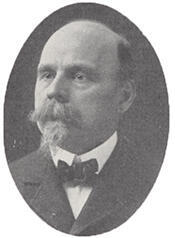
Here you will find contact information for Representative Charles Vincent Fornes, including email address, phone number, and mailing address.
| Name | Charles Vincent Fornes |
| Position | Representative |
| State | New York |
| District | 11 |
| Party | Democratic |
| Status | Former Representative |
| Term Start | December 2, 1907 |
| Term End | March 3, 1913 |
| Terms Served | 3 |
| Born | January 22, 1844 |
| Gender | Male |
| Bioguide ID | F000277 |
About Representative Charles Vincent Fornes
Charles Vincent Fornes (January 22, 1844 – May 22, 1929) was an American educator, businessman, and Democratic politician who served three terms as a United States Representative from New York from 1907 to 1913. His congressional service occurred during a significant period in American history, and as a member of the House of Representatives he participated in the legislative process and represented the interests of his constituents.
Fornes was born on a farm near Williamsville, Erie County, New York, on January 22, 1844. He attended local public schools and pursued further study at Union Academy in Lockport, New York, from which he was graduated in 1864. His early life in rural western New York and his education in the region’s schools laid the foundation for his initial career in teaching and later for his involvement in public affairs.
In 1866 Fornes moved to Buffalo, New York, where he began his professional life as an educator. He taught in a district school and subsequently served as principal of a Buffalo public school for three years. After leaving the field of education, he entered commercial life in Buffalo as a clerk for a wholesale woolen merchant. Gaining experience in the trade, he later established a similar wholesale woolen business on his own account, marking the beginning of a long career in commerce.
Fornes relocated to New York City in 1877, where he expanded his business activities as an importer and jobber of woolens. Over the following decades he became a prominent businessman in the city and was associated with several financial and corporate enterprises. He served as a trustee and director of a number of banks and corporations, roles that reflected both his commercial success and his growing influence in civic and economic affairs.
Fornes’s prominence in New York City business and civic life led to his entry into municipal politics. A member of the Democratic Party, he was elected president of the New York City Board of Aldermen, serving in that capacity from 1902 to 1907. In this role he participated in the governance of the rapidly growing metropolis and gained experience in legislative and administrative matters that would later inform his work in Congress.
Building on his municipal service, Fornes was elected as a Democrat to the United States House of Representatives. He represented New York in the 60th, 61st, and 62nd Congresses, holding office from March 4, 1907, to March 3, 1913. During his three terms in Congress, he contributed to the legislative process as a member of the House of Representatives and took part in the democratic governance of the nation at a time of significant economic and political change. He declined to be a candidate for renomination in 1912, thereby concluding his congressional career after six years of service.
After leaving Congress, Fornes resumed his former business pursuits in New York City, returning to the woolen importing and jobbing trade and continuing his involvement in corporate and financial affairs. He remained active in business until 1926, when he retired from active commercial life. Following his retirement, he returned to Buffalo, the city where his professional career had begun.
Charles Vincent Fornes died in Buffalo on May 22, 1929. He was interred in the United German and French Roman Catholic Cemetery at Pine Hill in Buffalo, New York. His life encompassed careers in education, commerce, municipal government, and national legislative service, reflecting a trajectory from rural beginnings to prominence in New York City and the United States Congress.