Senator Charles Hopper Gibson
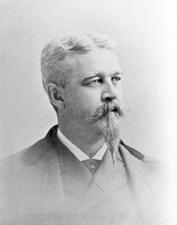
Here you will find contact information for Senator Charles Hopper Gibson, including email address, phone number, and mailing address.
| Name | Charles Hopper Gibson |
| Position | Senator |
| State | Maryland |
| Party | Democratic |
| Status | Former Representative |
| Term Start | December 7, 1885 |
| Term End | March 3, 1897 |
| Terms Served | 4 |
| Born | January 19, 1842 |
| Gender | Male |
| Bioguide ID | G000157 |
About Senator Charles Hopper Gibson
Charles Hopper Gibson (January 19, 1842 – March 31, 1900) was an American lawyer and Democratic politician who represented Maryland in both houses of the United States Congress, serving as a U.S. Representative from 1885 to 1891 and as a U.S. Senator from 1891 to 1897. Over the course of four terms in Congress—three in the House of Representatives and one in the Senate—he participated actively in the legislative process and represented the interests of his Maryland constituents during a significant period in American political and economic history.
Gibson was born near Centreville, Queen Anne’s County, Maryland, on January 19, 1842. He spent his early years on Maryland’s Eastern Shore, an area whose agricultural and maritime economy would shape much of his later public service. He attended the Centreville Academy in his hometown and later the Archer School in Harford County, Maryland, receiving a classical education that prepared him for advanced study. His upbringing in a rural but politically engaged region of Maryland helped to ground his later career in local concerns and state politics.
For his higher education, Gibson enrolled at Washington College in Chestertown, Maryland, one of the oldest colleges in the state. He completed his studies there and subsequently turned to the law, reading law in the traditional manner rather than attending a formal law school, as was common in the mid-nineteenth century. He was admitted to the bar in 1864 and commenced the practice of law in Easton, Talbot County, Maryland. His legal practice quickly brought him into contact with local business interests, landowners, and public officials, providing a foundation for his later roles in public office.
Gibson’s early public career began shortly after the Civil War, during the turbulent Reconstruction era. In 1867 President Andrew Johnson appointed him collector of internal revenue for the Maryland Eastern Shore district, a federal post that reflected both his legal expertise and his growing prominence. The appointment, however, was not confirmed by the Senate, and he did not assume the office. In 1869 he was appointed auditor and commissioner in chancery, positions that involved oversight of financial and equity matters in the courts. He resigned these posts in 1870 to accept appointment as State’s attorney for Talbot County, Maryland. As State’s attorney, he served from 1871 until 1875, prosecuting criminal cases and representing the state in legal matters, which further enhanced his reputation as a capable and diligent lawyer.
Building on his legal and local government experience, Gibson entered national politics as a member of the Democratic Party. He was elected as a Democrat to the Forty-ninth, Fiftieth, and Fifty-first Congresses from Maryland’s 1st congressional district, serving in the U.S. House of Representatives from March 4, 1885, until March 3, 1891. His service in the House spanned a period marked by debates over tariffs, interstate commerce regulation, and monetary policy, and he contributed to the legislative process during his three consecutive terms. Although he had established himself as a prominent Democratic voice from Maryland’s Eastern Shore, he was not a candidate for reelection in 1890, thereby concluding his House service after six years.
During his tenure in the House, Gibson also established a family life that anchored him in Maryland society. In 1889 he married Marieta Powell Hollyday, a member of a well-known Eastern Shore family. The couple resided at Ratcliffe Manor in Talbot County, a historic estate on the banks of the Tred Avon River. Their home became a social and political center in the region, reflecting Gibson’s status as a leading Democratic figure and his continued close ties to the Eastern Shore even as his responsibilities increasingly took him to Washington, D.C.
Gibson returned to Congress as a member of the United States Senate after the death of Senator Ephraim King Wilson II. He was appointed and subsequently elected as a Democrat to the Senate to fill the vacancy, taking his seat on November 19, 1891. He served as a U.S. Senator from Maryland from November 19, 1891, until March 3, 1897, completing one full term. His Senate service coincided with the administrations of Presidents Benjamin Harrison and Grover Cleveland and with the economic upheavals of the 1890s, including the Panic of 1893. In the Senate, he continued to represent the interests of his Maryland constituents and participated in deliberations over industrial policy, trade, and economic regulation. During the Fifty-third Congress he served as chairman of the Committee on Manufactures, a position that placed him at the center of legislative consideration of issues affecting American industry and production at a time of rapid economic change.
After leaving the Senate in 1897, Gibson resumed the practice of law, returning to private life while maintaining his connections to Maryland and the nation’s capital. He continued his legal work and remained a respected figure in Democratic circles and among his former colleagues. Charles Hopper Gibson died in Washington, D.C., on March 31, 1900. He was interred in Chesterfield Cemetery in his hometown of Centreville, Maryland, thus closing a life that had begun and ended on the Eastern Shore he had long represented in public office.