Representative Charles Henry Grosvenor
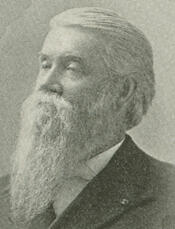
Here you will find contact information for Representative Charles Henry Grosvenor, including email address, phone number, and mailing address.
| Name | Charles Henry Grosvenor |
| Position | Representative |
| State | Ohio |
| District | 11 |
| Party | Republican |
| Status | Former Representative |
| Term Start | December 7, 1885 |
| Term End | March 3, 1907 |
| Terms Served | 10 |
| Born | September 20, 1833 |
| Gender | Male |
| Bioguide ID | G000497 |
About Representative Charles Henry Grosvenor
Charles Henry Grosvenor (September 20, 1833 – October 30, 1917) was an American lawyer, educator, and Republican politician who served multiple terms as a U.S. Representative from Ohio and rose to brigade command in the Union Army during the American Civil War. His long public career spanned local, state, and national office and extended over a period of profound political and social change in the United States.
Grosvenor was born in Pomfret, Windham County, Connecticut, on September 20, 1833. He was the uncle of future Congressman Charles Grosvenor Bond. In 1838 he moved with his parents to southeastern Ohio, settling in Athens County. He attended local schools there and, as a young man, taught school before turning to the study of law. Grosvenor was admitted to the bar in 1857 and began the practice of law in Athens, Ohio, where he quickly became active in community and civic affairs.
On December 1, 1858, Grosvenor married Samantha Stewart of Athens County. The couple had one daughter before Samantha’s death in 1866. On May 21, 1867, he married Louise A. Currier, also of Athens County; she had two daughters. Alongside his legal practice and family life, Grosvenor’s early professional years were soon overtaken by the national crisis of the Civil War, in which he played a prominent military role.
During the Civil War, Grosvenor served in the 18th Ohio Infantry, entering as an officer and being promoted through the ranks to colonel. He led his regiment in major engagements, including the Battle of Chickamauga in 1863. Later in the war he commanded a brigade in the division of General Charles Cruft at the Battle of Nashville in December 1864. At the close of hostilities he was brevetted as a colonel in the Regular Army and was mustered out of the volunteer service on October 9, 1865. On January 13, 1866, President Andrew Johnson nominated him for appointment as a brevet brigadier general of volunteers, to rank from March 13, 1865; the United States Senate confirmed this appointment on March 12, 1866, recognizing his combat service and leadership.
Following the war, Grosvenor resumed his law practice in Athens and held a variety of township and village offices, building a base in local politics. He was elected to the Ohio House of Representatives, serving from 1874 to 1878, and was chosen Speaker of the House for two of those years, reflecting his growing influence within the state Republican Party. He also served as a presidential elector on the Republican ticket for Ulysses S. Grant and Henry Wilson in 1872 and for James A. Garfield and Chester A. Arthur in 1880. From April 1880 until 1888 he was a member of the board of trustees of the Ohio Soldiers’ and Sailors’ Orphans’ Home in Xenia, serving as president of the board for five years, a role that linked his wartime service to veterans’ and orphans’ welfare.
Grosvenor’s national career began with his election as a Republican to the Forty-ninth, Fiftieth, and Fifty-first Congresses, serving from March 4, 1885, to March 3, 1891, as a Representative from Ohio. His service in Congress occurred during a significant period in American history marked by industrial expansion, labor unrest, and debates over tariffs and monetary policy. A member of the Republican Party, he contributed to the legislative process during ten terms in office, participating actively in the democratic process and representing the interests of his Ohio constituents. After an unsuccessful bid for renomination in 1890, he returned to private life briefly before regaining his seat.
Grosvenor was again elected to the U.S. House of Representatives as a Republican to the Fifty-third and to the six succeeding Congresses, serving from March 4, 1893, to March 3, 1907. Over these years he became a senior figure in the House and held several important committee chairmanships. He served as chairman of the Committee on Expenditures in the Department of the Treasury during the Fifty-fourth Congress, chairman of the Committee on Mines and Mining in the Fifty-fifth Congress, and chairman of the Committee on Merchant Marine and Fisheries from the Fifty-sixth through the Fifty-ninth Congresses. He was also a delegate to the Republican National Conventions of 1896 and 1900, participating in the nomination of presidential candidates during the high tide of Republican dominance in national politics. He was an unsuccessful candidate for renomination in 1906, which ended his long tenure in the House on March 3, 1907.
After leaving Congress, Grosvenor resumed the practice of law in Athens, maintaining his standing as a respected attorney and public figure. Drawing on his Civil War record and interest in battlefield preservation, he was appointed chairman of the Chickamauga and Chattanooga National Park Commission in 1910. In that capacity he oversaw efforts to preserve and interpret key Civil War battlefields, a capstone to his lifelong association with the Union cause. He served as chairman of the commission until his death in Athens on October 30, 1917. Charles Henry Grosvenor was interred in Union Street Cemetery in Athens, Ohio, leaving a legacy as a soldier, state leader, and long-serving member of the United States Congress.