Representative Charles Delemere Haines
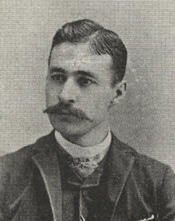
Here you will find contact information for Representative Charles Delemere Haines, including email address, phone number, and mailing address.
| Name | Charles Delemere Haines |
| Position | Representative |
| State | New York |
| District | 19 |
| Party | Democratic |
| Status | Former Representative |
| Term Start | August 7, 1893 |
| Term End | March 3, 1895 |
| Terms Served | 1 |
| Born | June 9, 1856 |
| Gender | Male |
| Bioguide ID | H000025 |
About Representative Charles Delemere Haines
Charles Delemere Haines (June 9, 1856 – April 11, 1929) was an American businessman and Democratic member of the United States House of Representatives from New York, serving one term in Congress from 1893 to 1895. His career spanned the formative years of American railroad expansion and later agricultural and industrial development in Florida, and he remained active in business before, during, and after his congressional service.
Haines was born on June 9, 1856, in Medusa, Albany County, New York. His parents, David Tompkins Haines and Emma De Maugh Haines, were prominent in Albany County, and Governor Daniel Tompkins was of this family, giving Haines a connection to a well-known New York political lineage. During his childhood he moved with his parents to Coxsackie, New York, where he attended the common schools. This early environment in upstate New York, amid growing transportation and commercial activity along the Hudson River corridor, provided the backdrop for his later engagement in the railroad industry.
At the age of sixteen, Haines began his working life as a telegrapher, entering a field that was then at the cutting edge of communications and railroad operations. He advanced rapidly in railroad service, becoming a train dispatcher, then assistant superintendent, and later superintendent. Over time he rose from employee to owner of railroads, reflecting both his technical expertise and his entrepreneurial drive. In 1888 he moved to Kinderhook, New York, where he built the Kinderhook & Hudson Railroad, further establishing himself as a significant figure in regional rail development.
Haines’s prominence as a railroad executive and businessman helped propel him into public life. A member of the Democratic Party, he was elected as a Democrat to the Fifty-third Congress, representing New York in the United States House of Representatives from March 4, 1893, to March 3, 1895. His service in Congress occurred during a significant period in American history marked by economic turmoil and debates over monetary policy and regulation. As a member of the House of Representatives, Charles Delemere Haines participated in the democratic process, contributed to the legislative work of the chamber, and represented the interests of his New York constituents. He was unsuccessful in his bid for reelection in 1894 and, after his single term, he resumed his former business activities.
Following his congressional service, Haines continued to expand his railroad interests. In 1913 he joined with his brothers in the building and operation of numerous railroad lines. Together they built and managed eighteen steam railroads and sixteen street railways in fifteen states, Canada, and Mexico, underscoring the breadth of his involvement in North American transportation infrastructure. This extensive network of enterprises placed Haines among the more active private railroad developers of his era, linking urban centers and smaller communities across a wide geographic area.
Also in 1913, Haines first came to Altamonte Springs, Florida, seeking to improve his health. Impressed by the climate and opportunities, he purchased property on the west side of Lake Orienta. Shortly after World War I he began growing asparagus plumosa ferns on this land. By the early 1920s he was shipping ferns to all parts of the United States via the Atlantic Coast Line Railroad, effectively combining his transportation experience with agricultural enterprise. In 1922 his Royal Fern Corporation was chartered with an authorized capital of $450,000. Haines was the major stockholder with three hundred shares; George Kingsley, the secretary and treasurer, held one hundred forty-five shares; vice president James A. Cotting of Winter Park owned five shares; and Ed W. Mitchell served as general manager.
Under Haines’s direction, the Royal Fern Corporation grew rapidly. At the time of its incorporation the firm had thirty-three acres in production, and by 1925 it was cultivating sixty-five acres. Much of the area was under slat-roof covering to protect the tender plants, leading one enthusiastic reporter to describe it as the largest industry in the world under one roof. The fernery was equipped with thirty miles of irrigation pipe, a pre-cooling plant, and its own electric light and water system. Around the operation developed a complete company town, with forty homes for employees, a commissary, a church, a school, a park, and a moving picture theater adjacent to the fernery. The Royal Fernery became the catalyst that made Altamonte Springs a center for fern growing for many years and demonstrated Haines’s ability to create large-scale, integrated industrial and agricultural enterprises.
During his years in Altamonte Springs, Haines entertained a number of national dignitaries with whom he had become acquainted over his long business and political career. Among his most notable visitors was William Jennings Bryan, who was living in Miami during the early 1920s. Bryan may have influenced Haines in developing his ideas about a National Newspapermen’s Home, a project he attempted to bring to Altamonte Springs, reflecting his continued interest in national affairs and civic initiatives even after leaving Congress.
Charles Delemere Haines resided in Altamonte Springs, Florida, until his death there on April 11, 1929. He was buried in Hudson Falls Cemetery in Hudson Falls, New York. His life encompassed significant roles as a railroad builder and owner, a one-term Democratic Representative from New York during the Fifty-third Congress, and a pioneering agricultural industrialist in Florida, leaving a diverse legacy in transportation, public service, and regional economic development.