Representative Charles William Francis Henney
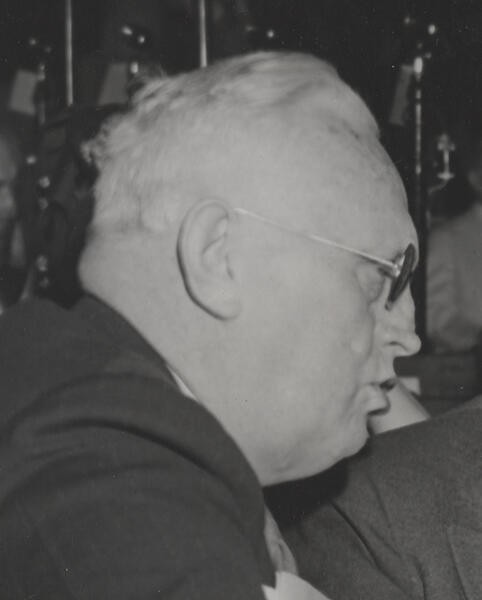
Here you will find contact information for Representative Charles William Francis Henney, including email address, phone number, and mailing address.
| Name | Charles William Francis Henney |
| Position | Representative |
| State | Wisconsin |
| District | 2 |
| Party | Democratic |
| Status | Former Representative |
| Term Start | March 9, 1933 |
| Term End | January 3, 1935 |
| Terms Served | 1 |
| Born | February 2, 1884 |
| Gender | Male |
| Bioguide ID | H000501 |
About Representative Charles William Francis Henney
Charles William Francis Henney (February 2, 1884 – November 16, 1969) was an American physician, surgeon, and Democratic politician from Portage, Wisconsin. A member of the Democratic Party, he served one term in the United States House of Representatives, representing Wisconsin’s 2nd congressional district during the 73rd Congress from 1933 to 1935. His name was often abbreviated as C. W. Henney. His service in Congress occurred during a significant period in American history, at the outset of the New Deal, when he contributed to the legislative process and represented the interests of his constituents.
Henney was born near Dunlap, Crawford County, Iowa, on February 2, 1884, one of at least six children of George Elbridge Henney and his first wife, Sarah Jane (née Hanigan). He received his early education in and around Dunlap and then attended Denison Normal School in Iowa. At the age of 17, he began teaching school in Crawford County, gaining early experience in public service and community leadership. Seeking further professional training, he enrolled at Fremont Normal School, from which he graduated from the pharmacy department in 1906.
After completing his pharmacy studies, Henney pursued a medical education. He attended Northwestern University Medical School in Chicago and graduated in 1910. That same year he began his medical career as a physician and surgeon, serving a two-year internship at Cook County Hospital in Chicago. This intensive clinical experience in one of the nation’s largest public hospitals provided him with a broad foundation in surgery and general medicine that would shape his later professional life.
In 1912, Henney moved to Portage, Columbia County, Wisconsin, where he established an independent medical practice and soon became a prominent local physician. He served as city health officer, overseeing public health matters in Portage. In 1915 he was hired as surgeon for the Chicago, Milwaukee, St. Paul and Pacific Railroad, extending his medical responsibilities to industrial and transportation settings. That same year, on the recommendation of U.S. Representative Michael E. Burke, he was appointed federal pension surgeon for Portage, examining and treating veterans and pension claimants. On October 28, 1915, he married Margaret Tierney at St. Mary’s Church in Portage; the couple had two sons. After the United States entered World War I, Henney was appointed an examining surgeon for the county draft board, further integrating his medical expertise into federal service.
Over the following decades, Henney maintained a prolific private practice, performed surgeries throughout Wisconsin, and regularly attended medical conferences around the country to keep abreast of developments in his field. He served for many years as president of the Columbia County medical association, reflecting his leadership within the regional medical community. In 1927 he became chief of surgery at Divine Savior Hospital in Portage, a position that underscored his professional standing. That same year he was admitted to the American College of Surgeons, a national recognition of his surgical competence and professional achievement. Beyond medicine, he was active in the Knights of Columbus, eventually rising to the rank of Grand Knight of the Portage council in 1931.
Henney’s involvement in civic affairs led naturally into politics. Active in the local Democratic Party organization, he was appointed to the Portage city park commission in 1926 and served there for the next 16 years, contributing to the development and oversight of municipal parks and public spaces. He made his first bid for elective office in 1931, running for a seat on the local school board. Although he lost that election by a vote of 411 to 205, the campaign marked his formal entry into electoral politics and helped establish his public profile in the community.
In 1932, Henney’s political trajectory accelerated. He was one of two men from Portage invited to accompany Democratic presidential candidate Franklin D. Roosevelt on a campaign train trip to Saint Paul, Minnesota, an indication of his growing prominence in Wisconsin Democratic circles. That summer he announced his candidacy for the U.S. House of Representatives in Wisconsin’s 2nd congressional district. The district had been significantly reconfigured in the 1932 redistricting, setting the stage for a complex contest. On the Republican side, progressive incumbent Charles A. Kading was drawn into an incumbent-versus-incumbent primary against fellow progressive John M. Nelson, while stalwart Republican John B. Gay also sought the nomination. The two progressives split the vote, enabling Gay to prevail in the primary. In the Democratic primary, Henney defeated Bert Husting, a former University of Wisconsin football star, former Major League Baseball pitcher, and brother of former U.S. Senator Paul O. Husting.
In the general election of 1932, the Wisconsin progressive faction broke sharply with the Republican Party and threw its support behind Franklin D. Roosevelt and other Democratic candidates. The Capital Times of Madison, then closely aligned with the state’s progressive movement, endorsed the Democratic ticket, a significant advantage for Henney because his district included Madison and Dane County. Henney’s campaign advertising emphasized his identity as a “progressive Democrat,” appealing to voters who favored reform but were disenchanted with the Republican establishment. Riding the broader Democratic wave of 1932 and benefiting from the progressive realignment, he won the election with approximately 56 percent of the vote against Gay and two minor-party candidates. He thus entered the 73rd Congress (March 4, 1933 – January 3, 1935), serving one term as a Representative from Wisconsin. During his tenure, he participated in the legislative response to the Great Depression, aligning with the New Deal agenda and contributing to the work of the House during a transformative period in federal policy.
By the 1934 election, the political landscape in Wisconsin had shifted again. The progressive faction formally broke away from the Republicans to form the Wisconsin Progressive Party, which quickly became a major force in the state. In that year’s congressional elections, the Progressives carried seven of Wisconsin’s ten congressional districts, including Henney’s 2nd district. Running for reelection, Henney faced progressive lawyer Harry Sauthoff. In a three-way contest shaped by the new party alignment, Henney finished second with about 33 percent of the vote, while Sauthoff won the seat with roughly 42 percent, ending Henney’s congressional service after a single term in the House of Representatives.
After leaving Congress in 1935, Henney returned to his medical practice in Portage and continued his engagement in public affairs. He remained active in Democratic politics throughout the 1930s and 1940s, maintaining his role as a party leader in central Wisconsin. In 1948 he was selected as a presidential elector and cast his electoral vote for President Harry S. Truman, reflecting his continued influence within the state Democratic organization. He also deepened his involvement with the Knights of Columbus at the national level, serving on the organization’s board of directors from 1946 to 1957, a position that extended his public service beyond both medicine and elective office.
In his later years, Henney continued to reside in Portage, where he remained a respected figure in both civic and professional circles. After a long illness, he died at a nursing home in Portage, Wisconsin, on November 16, 1969. His life combined a substantial medical career with significant, if brief, national legislative service and long-standing participation in local and state Democratic politics.