Representative Charles Edward Hooker
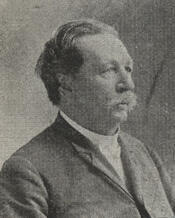
Here you will find contact information for Representative Charles Edward Hooker, including email address, phone number, and mailing address.
| Name | Charles Edward Hooker |
| Position | Representative |
| State | Mississippi |
| District | 7 |
| Party | Democratic |
| Status | Former Representative |
| Term Start | December 6, 1875 |
| Term End | March 3, 1903 |
| Terms Served | 9 |
| Gender | Male |
| Bioguide ID | H000758 |
About Representative Charles Edward Hooker
Charles Edward Hooker (April 9, 1825 – January 8, 1914) was a U.S. Representative from Mississippi who served nine terms in Congress between 1875 and 1903. A member of the Democratic Party, he represented Mississippi during a significant period in American history, participating in the legislative process in the decades following the Civil War and Reconstruction.
Hooker was born in Union, Union District, South Carolina, on April 9, 1825, and was raised in the Laurens District of that state. He attended the common schools in South Carolina before pursuing legal studies. He enrolled at Harvard Law School and graduated in 1846, receiving a formal legal education that was relatively uncommon for Southern politicians of his generation. After completing his studies, he moved to Mississippi, where he was admitted to the bar in 1848 and commenced the practice of law in Jackson, Hinds County, Mississippi.
Hooker quickly entered public life in his adopted state. He served as district attorney of the river district of Mississippi from 1850 to 1854, gaining prominence as a prosecutor. In 1859 he was elected a member of the Mississippi House of Representatives. As sectional tensions deepened, Hooker emerged as a strong proponent of secession. On December 15, 1860, he was dispatched by the state of Mississippi to South Carolina as a secession commissioner, charged with encouraging coordinated withdrawal from the Union. Contemporary accounts described him as “a fire-eater of the most ultra disunion stripe,” reflecting his vigorous advocacy of Southern independence.
With the outbreak of the Civil War, Hooker resigned his civil responsibilities and entered the Confederate States Army as a private. He soon rose through the ranks, becoming a lieutenant and later a captain in the First Regiment of Mississippi Light Artillery. During the siege of Vicksburg he lost an arm, a severe wound that marked his wartime service. Despite this injury, he continued his military career and was later promoted to the rank of colonel of cavalry. His Confederate service, both in combat and as a prominent secessionist, firmly associated him with the Southern cause during the conflict.
In the immediate aftermath of the war, Hooker returned to public office in Mississippi. He was elected Attorney General of Mississippi in 1865, but that same year he was removed from office, along with other state officials, by U.S. military authorities during the period of federal occupation and Reconstruction. He resumed his legal practice in Jackson and remained an influential figure in state politics. In 1868 he was again elected Attorney General of Mississippi, underscoring his continued support among white voters in the state. After completing his service in that role, he returned once more to private law practice in Jackson.
Hooker entered national politics in the mid-1870s. He was elected as a Democrat to the Forty-fourth Congress and to the three succeeding Congresses, serving from March 4, 1875, to March 3, 1883. During these four consecutive terms, he contributed to the legislative process as a Representative from Mississippi and represented the interests of his constituents during the turbulent post-Reconstruction era. After a brief interval out of office, he remained active in party affairs and served as a delegate to the Democratic National Convention in 1884, participating in the shaping of national Democratic policy and leadership.
Hooker returned to the U.S. House of Representatives when he was elected to the Fiftieth Congress and to the three succeeding Congresses, serving from March 4, 1887, to March 3, 1895. After another short hiatus, he was again elected to the Fifty-seventh Congress, serving from March 4, 1901, to March 3, 1903. In total, Charles Edward Hooker served nine terms in the House of Representatives between 1875 and 1903. Although he had been a strong defender of the Confederacy and a staunch Southern Democrat, he distinguished himself from many Deep South congressmen of his era by opposing certain forms of racial discrimination. Notably, he opposed efforts to restrict Chinese immigration and, in the context of postwar constitutional change, spoke positively about some of the racial transformations brought by the Civil War. He declared that the former slave had become “a full-fledged American citizen . . . with all the powers, duties, and responsibilities of an intelligent American freeman,” a statement unusual among Southern politicians of his background.
Hooker also took positions that set him apart on federal policy toward Native Americans. He was one of the relatively few American politicians critical of proposals to reform Native American policy by destroying tribal sovereignty and allotting Native American land in severalty. He warned that allotment would cause citizens of Native nations to lose their land “and all the proceeds from the sale of it by fraud, force, or violence.” Despite such objections, the allotment reforms were ultimately enacted in the Dawes Act of 1887, which, as Hooker had presaged, resulted in the loss of approximately 86,000,000 acres of Native American territory nationwide between 1887 and 1934.
After concluding his final term in Congress in 1903, Hooker returned to the practice of law in Jackson, Mississippi. He continued to reside there during his later years, remaining a figure of historical interest as a former Confederate officer, state attorney general, and long-serving congressman. Charles Edward Hooker died in Jackson on January 8, 1914. He was interred in Greenwood Cemetery in Jackson, closing a life that spanned from the antebellum South through the Civil War, Reconstruction, and the early twentieth century.