Senator Charles Tillinghast James
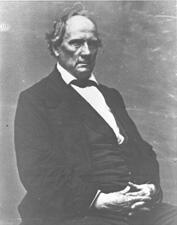
Here you will find contact information for Senator Charles Tillinghast James, including email address, phone number, and mailing address.
| Name | Charles Tillinghast James |
| Position | Senator |
| State | Rhode Island |
| Party | Democratic |
| Status | Former Representative |
| Term Start | December 1, 1851 |
| Term End | March 3, 1857 |
| Terms Served | 1 |
| Born | September 15, 1805 |
| Gender | Male |
| Bioguide ID | J000046 |
About Senator Charles Tillinghast James
Charles Tillinghast James (September 15, 1805 – October 17, 1862) was an American consulting manufacturing engineer, early proponent of steam-powered textile mills, militia officer, ordnance innovator, and Democratic United States Senator from Rhode Island, serving one term in the Senate from 1851 to 1857. His service in Congress occurred during a significant period in American history, and as a member of the Senate he participated in the legislative process and represented the interests of his Rhode Island constituents.
James was born in West Greenwich, Rhode Island, on September 15, 1805, the son of Silas James and Phebe Tillinghast James. His father served as a local judge, and through his mother he was connected to the longstanding and respected Tillinghast family of New England. Largely self-taught in mathematics and mechanics, James did not follow a traditional academic course of study, but instead developed his technical abilities through practical experience and independent study. He later received formal recognition of his attainments when Brown University conferred upon him an honorary Master of Arts degree in 1838.
In his personal life, James married Lucinda Waite, and the couple had four children: Abby, Charles Tillinghast, Lucinda Elizabeth, and Walter. His family became connected to the events of the Civil War through his daughter Abby, who married Colonel John Stanton Slocum of the 2nd Rhode Island Infantry; Slocum was killed in action at the First Battle of Bull Run on July 21, 1861. James’s family ties and New England background helped anchor his professional and political life, even as his engineering work took him to industrial and seaport communities throughout the Northeast and the South.
James’s career as an engineer and promoter of steam mills began in the early 1830s, when he worked in small textile mills in the Quinebaug Valley of Connecticut and later supervised the startup of mills in the Providence, Rhode Island, area. He developed a particular interest in textile machinery and factory systems. By 1834 his reputation had grown sufficiently that Samuel Slater, a pioneer of American textile manufacturing, brought him to Providence to overhaul the Steam Cotton Manufacturing Company mill, built in 1828 as the first large American steam-powered cotton mill. This experience convinced James of the broad potential of steam power in manufacturing, and he became one of the leading engineers and advocates of steam mills, especially in coastal towns and in the southern United States.
Throughout the 1830s and 1840s James designed, promoted, and equipped steam-powered cotton mills in smaller seaport towns that had declined economically as trade centralized in larger ports such as Boston. He argued that such “decayed” ports—places like Newburyport and Salem, Massachusetts—could revive their fortunes by using steam power to process cotton brought in by ship and to export finished textiles. From 1839 to 1846 he owned the southern half of the Brewster-Coffin House on High Street in Newburyport while directing several mill projects there. Among the steam mills he promoted in Newburyport were the Barlett Mill, the James Steam Mill (built in 1843 with 17,000 spindles), and the Globe (later Peabody) Steam Mill (built in 1846 with 12,200 spindles). He also helped establish or improve mills in Portsmouth, New Hampshire (1845–1846), the Naumkeag Steam Cotton Mill in Salem, Massachusetts, the Essex steam mill, and the Conestoga Steam Mill in Lancaster, Pennsylvania (1844–1845). Later he was closely involved with the Graniteville Mill in South Carolina in collaboration with industrialist William Gregg. In these projects James not only promoted the concept of steam mills but also specified detailed machinery layouts and equipment, including pickers, breaker cards, drawing heads, Providence Machine fly frames, Mason finished cards, spinning equipment, and looms. He favored steam engines produced at the India Point Works in Providence, owned from 1843 to 1846 by Fairbanks, Bancroft and Company, a firm that later evolved into Corliss, Nightingale and Company. At some point, likely in the 1840s, he also attained the rank of major general in the Rhode Island militia, reflecting his growing prominence in public affairs.
James’s growing public profile and his advocacy of industrial development led him into national politics. A member of the Democratic Party, he was elected by the Rhode Island legislature to the United States Senate in 1850 and took his seat in 1851. He served one full term, from 1851 to 1857, during a period marked by sectional tensions and debates over economic policy. In the Senate he chaired the Committee on Patents and the Patent Office and the Committee on Public Buildings, positions that aligned with his technical background and interest in infrastructure. He was known as an advocate of protective tariffs, arguing for policies that would support American manufacturing and industrial growth. James contributed to the legislative process as a representative of Rhode Island’s interests, but he did not stand for reelection and left the Senate when his term ended in 1857, reportedly due in part to financial difficulties.
After leaving Congress, James returned to engineering and became involved in ordnance innovation on the eve of and during the American Civil War. He developed a family of early rifled artillery projectiles and a rifling system for converting existing smoothbore cannon into more accurate rifled guns. The artillery piece most properly known as a James rifle is a 3.8-inch (97 mm) bronze field gun commonly called the 14‑pounder James rifle, the only weapon designed entirely by him that saw extensive wartime service. Except for its bronze construction, it closely resembled the wrought-iron 3‑inch Ordnance rifle that later became widespread. His rifling system was applied to pre-war M1841 6‑pounder field guns and to larger 32‑pounder and 42‑pounder pieces, among others; in contemporary documents these converted weapons were often referred to as “James rifles.” Large-caliber guns employing his rifling and projectiles, along with Parrott rifles, played a significant role in the breaching of Fort Pulaski in April 1862, an event that demonstrated the vulnerability of traditional masonry fortifications and influenced subsequent coastal defense policy in favor of earthwork forts.
James’s later years were marked by continued experimentation with artillery. On October 16, 1862, while overseeing a demonstration of one of his projectiles at Sag Harbor on Long Island, New York, a worker attempted to remove a cap from a shell. The shell exploded, killing the worker and mortally wounding James. He died the following day, October 17, 1862. After his death, production of his weapons declined, and his projectiles were gradually supplanted by Hotchkiss projectiles, in part because the lead sabots on James’s designs were prone to stripping in the rifling. Nevertheless, more than 150 14‑pounder James rifles survive, including over 50 6‑pounder guns bored out to 3.8 inches and rifled, many of them preserved at Shiloh National Military Park in Tennessee. Other heavy guns employing his rifling system also remain in existence. His legacy is further commemorated by a portrait in the collection of the National Portrait Gallery and a bust in the Smithsonian American Art Museum, both in Washington, D.C., as well as an iron rifled 14‑pounder artillery piece used in his experiments at Napatree Point in Watch Hill, Rhode Island, which is held by the Newport Artillery Company.