Representative Charles Samuel Joelson
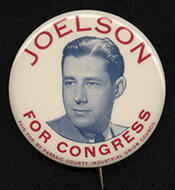
Here you will find contact information for Representative Charles Samuel Joelson, including email address, phone number, and mailing address.
| Name | Charles Samuel Joelson |
| Position | Representative |
| State | New Jersey |
| District | 8 |
| Party | Democratic |
| Status | Former Representative |
| Term Start | January 3, 1961 |
| Term End | January 3, 1971 |
| Terms Served | 5 |
| Born | January 27, 1916 |
| Gender | Male |
| Bioguide ID | J000108 |
About Representative Charles Samuel Joelson
Charles Samuel Joelson (January 27, 1916 – August 17, 1999) was an American lawyer, jurist, and Democratic politician who represented New Jersey in the United States House of Representatives during a significant period in mid‑twentieth‑century American history. A member of the Democratic Party, he served five terms in Congress, contributing to the legislative process and representing the interests of his constituents in New Jersey’s 8th Congressional District.
Joelson was born on January 27, 1916. Details of his early life and family background are less widely documented, but he came of age during the interwar period, a time marked by the Great Depression and profound social and economic change in the United States. These formative years occurred against the backdrop of shifting national politics and likely influenced his later commitment to public service and the law.
Pursuing a legal career, Joelson trained as a lawyer before entering public life. He established himself in the legal profession, gaining experience that would underpin his later work as both legislator and judge. His legal background equipped him with a grounding in statutory interpretation and public policy that proved valuable when he entered elective office and later when he assumed judicial responsibilities on the Superior Court of New Jersey.
Joelson’s national political career began when he was elected as a Democrat to the United States House of Representatives from New Jersey’s 8th District, succeeding Republican Representative Gordon Canfield. He took office in 1961 and went on to serve five terms, remaining in the House for eight years. His tenure in Congress coincided with a transformative era that included the presidencies of John F. Kennedy and Lyndon B. Johnson, the height of the civil rights movement, the Great Society legislative program, and the escalation of the Vietnam War. As a member of the House of Representatives, Charles Samuel Joelson participated in the democratic process, contributed to the development and passage of federal legislation, and worked to represent the needs and concerns of his New Jersey constituents during this turbulent period.
During his congressional service, Joelson was part of a Democratic majority that advanced major domestic initiatives and grappled with complex foreign policy challenges. While specific committee assignments and sponsored measures are not detailed here, his five-term tenure reflected sustained electoral support from his district and positioned him to take part in debates over civil rights, social welfare, and national security that defined the 1960s. His legislative work formed the central chapter of his public career and established his reputation as a serious and engaged public servant.
On September 4, 1969, Joelson resigned from Congress to accept an appointment as a judge of the Superior Court of New Jersey. This transition from legislator to jurist marked a return to his professional roots in the law and underscored his standing within the state’s legal and political communities. As a Superior Court judge, he applied his legal training and legislative experience to the adjudication of cases in New Jersey’s trial court system, contributing to the administration of justice at the state level.
Charles Samuel Joelson died on August 17, 1999. His career spanned the legal profession, elective office in the United States Congress, and judicial service on the Superior Court of New Jersey. Across these roles, he participated in and helped shape public life during a consequential era in American history, leaving a record of service that reflected both his legal expertise and his commitment to democratic governance.