Representative Charles Augustus Kennedy
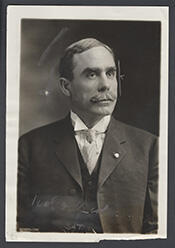
Here you will find contact information for Representative Charles Augustus Kennedy, including email address, phone number, and mailing address.
| Name | Charles Augustus Kennedy |
| Position | Representative |
| State | Iowa |
| District | 1 |
| Party | Republican |
| Status | Former Representative |
| Term Start | December 2, 1907 |
| Term End | March 3, 1921 |
| Terms Served | 7 |
| Born | March 24, 1869 |
| Gender | Male |
| Bioguide ID | K000104 |
About Representative Charles Augustus Kennedy
Charles Augustus Kennedy (March 24, 1869 – January 10, 1951) was a seven-term Republican U.S. Representative from Iowa’s 1st congressional district in southeastern Iowa. He was born in Montrose, Lee County, Iowa, where he completed preparatory studies before entering public life. From an early age he was interested in horticultural pursuits, and he later engaged in business as a nurseryman, developing experience in agriculture and local commerce that would inform his later political career.
Kennedy’s first significant public office was at the municipal level in his hometown. He served as mayor of Montrose from 1890 to 1895, assuming that role while still in his early twenties. His tenure as mayor reflected his growing prominence in local affairs and provided him with administrative and executive experience. After his service as mayor, he continued his business activities while remaining active in Republican Party politics in southeastern Iowa.
Building on his local reputation, Kennedy advanced to state office in the early twentieth century. He was elected to the Iowa House of Representatives, serving one two-year term between 1903 and 1905. As a member of the state legislature, he participated in shaping state policy during a period of industrial expansion and agricultural development in Iowa, further establishing himself as a reliable Republican legislator and representative of his district’s interests.
In 1906, Kennedy was elected as a Republican to the Sixtieth Congress from Iowa’s 1st congressional district. At the time of his nomination, his political philosophy was described as “strongly standpat,” aligning him with the conservative “stand-patters” faction of the Republican Party that opposed many of the reforms advocated by the party’s progressive wing. He took his seat in the U.S. House of Representatives on March 4, 1907, marking the beginning of a congressional career that would span seven consecutive terms.
Kennedy served in Congress from March 4, 1907, to March 3, 1921, a period that encompassed the later Progressive Era, World War I, and the immediate postwar years. As a member of the House of Representatives, he participated in the legislative process and represented the interests of his southeastern Iowa constituents, contributing to debates and votes on national policy during a significant period in American history. He was re-elected six times, reflecting sustained support from his district, and remained a consistent Republican voice in the chamber.
During his congressional service, Kennedy held important committee leadership positions. He served as chairman of the Committee on Mileage in the Sixtieth and Sixty-first Congresses, overseeing matters related to the reimbursement of travel expenses for Members of Congress. Later, in the Sixty-sixth Congress, he served as chairman of the Committee on Rivers and Harbors, a key committee in the development and maintenance of the nation’s waterways and port infrastructure. Through these roles, he exercised influence over administrative and infrastructural issues that were significant both to his district and to the country at large. After seven terms in office, he chose not to run for re-election in 1920, concluding his congressional career in March 1921.
Following his departure from Congress, Kennedy returned to private life in Iowa and engaged in banking until his retirement. His post-congressional career in finance reflected a continued involvement in the economic life of his community, complementing his earlier experience as a nurseryman and businessman. He remained a resident of Montrose, the town where he had been born and where he had begun his public service decades earlier.
Charles Augustus Kennedy died in Montrose, Iowa, on January 10, 1951. He was interred in Montrose Cemetery. His life and career spanned local, state, and national service, from mayor of his hometown to member of the Iowa House of Representatives and finally to seven terms in the United States Congress as a Republican representative of Iowa’s 1st congressional district.