Representative Charles Edward Kiefner
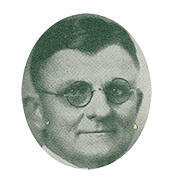
Here you will find contact information for Representative Charles Edward Kiefner, including email address, phone number, and mailing address.
| Name | Charles Edward Kiefner |
| Position | Representative |
| State | Missouri |
| District | 13 |
| Party | Republican |
| Status | Former Representative |
| Term Start | December 7, 1925 |
| Term End | March 3, 1931 |
| Terms Served | 2 |
| Born | November 25, 1869 |
| Gender | Male |
| Bioguide ID | K000167 |
About Representative Charles Edward Kiefner
Charles Edward Kiefner (November 25, 1869 – December 13, 1942) was a Republican U.S. Representative from Missouri’s 13th congressional district who served in the United States Congress from 1925 to 1931. He represented a largely rural southeastern Missouri constituency during a period of significant political and economic change in the United States, contributing to the legislative process over two nonconsecutive terms in the House of Representatives.
Kiefner was born on November 25, 1869, in Perryville, Perry County, Missouri, to German immigrant parents. Raised in a community with a strong German-American presence, he attended the local public schools in Perryville. His early life in this small but growing town in southeastern Missouri exposed him to the concerns of farmers, small business owners, and local laborers, shaping the practical outlook that would later characterize his public service.
After completing his education in the public school system, Kiefner entered private enterprise, engaging in the retail lumber business in Perryville. He also worked in road construction, an occupation that was increasingly important as Missouri and other states expanded and improved their transportation infrastructure in the late nineteenth and early twentieth centuries. Through these business activities, he became well known in his community and developed an understanding of local economic needs, which helped launch his career in public office.
Kiefner’s formal political career began at the municipal level. He served as mayor of Perryville from 1900 to 1902, overseeing local governance at a time when small towns were modernizing services and infrastructure. Building on this experience, he was elected to the Missouri House of Representatives, serving from 1902 to 1908. During his six years in the state legislature, he participated in state-level lawmaking and gained experience in legislative procedure and party politics. His growing prominence within the Republican Party led to his selection as a delegate to the Republican National Convention in 1912, a convention notable for the deep divisions within the party that year. Later, he served on the staff of Missouri Governor Arthur M. Hyde from 1920 to 1924, further solidifying his role in state Republican politics and giving him additional administrative and policy experience in the executive branch of state government.
Kiefner advanced to national office when he was elected as a Republican to the Sixty-ninth Congress, serving from March 4, 1925, to March 3, 1927. Representing Missouri’s 13th congressional district, he took his seat in the U.S. House of Representatives during the administration of President Calvin Coolidge, a period marked by economic expansion and Republican dominance in national politics. As a member of the House, Kiefner participated in the democratic process by debating and voting on legislation affecting both his district and the nation. Although specific committee assignments and sponsored measures are less prominently recorded, his service reflected the concerns of his largely agricultural and small-town constituency in southeastern Missouri.
In 1926, Kiefner was an unsuccessful candidate for reelection to the Seventieth Congress, temporarily interrupting his congressional career. He returned to the House after winning election to the Seventy-first Congress, serving a second term from March 4, 1929, to March 3, 1931. His second term coincided with the onset of the Great Depression following the stock market crash of 1929, a crisis that quickly affected farmers, merchants, and banks in Missouri and across the country. Despite his efforts to represent his constituents during this turbulent period, he was again unsuccessful in his bid for reelection in 1930 to the Seventy-second Congress, ending his service in the national legislature.
After leaving Congress, Kiefner resumed his private business pursuits in Perryville. He returned to the lumber trade and also engaged in the banking business, remaining an active figure in the economic life of his hometown. He continued to live in Perryville for the remainder of his life, maintaining the local ties that had anchored both his business and political careers. Charles Edward Kiefner died in Perryville on December 13, 1942. He was interred in Home Cemetery in Perryville, Missouri, closing a life that combined entrepreneurial activity, local and state leadership, and two terms of service in the United States House of Representatives.