Representative Charles Alexander Korbly
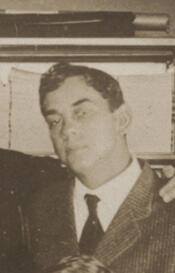
Here you will find contact information for Representative Charles Alexander Korbly, including email address, phone number, and mailing address.
| Name | Charles Alexander Korbly |
| Position | Representative |
| State | Indiana |
| District | 7 |
| Party | Democratic |
| Status | Former Representative |
| Term Start | March 15, 1909 |
| Term End | March 3, 1915 |
| Terms Served | 3 |
| Born | March 24, 1871 |
| Gender | Male |
| Bioguide ID | K000316 |
About Representative Charles Alexander Korbly
Charles Alexander Korbly (March 24, 1871 – July 26, 1937) was an American lawyer and Democratic politician who served three terms as a U.S. Representative from Indiana from 1909 to 1915. During his tenure in the United States Congress, he represented his constituents through a period of significant change in American political and economic life and contributed to the legislative process as a member of the House of Representatives.
Korbly was born on March 24, 1871, in Madison, Jefferson County, Indiana. He received his early education in the parochial schools of Madison and later attended St. Joseph’s College near Effingham, Illinois. After completing his formal schooling, he entered the field of journalism, working as a reporter and editor for the Madison Herald. He subsequently turned to the study of law, was admitted to the bar in 1892, and commenced the practice of law in his native city of Madison.
In 1895 Korbly moved to Indianapolis, Indiana, where he continued the practice of law in association with his father’s firm, Smith & Korbly. Following his father’s death in 1900, he practiced law in partnership with Alonzo Green Smith until 1902. On June 10, 1902, he married Isabel Stephens Palmer, the granddaughter of Nathan B. Palmer, who had served as speaker of the Indiana House of Representatives and as Indiana State Treasurer. Charles and Isabel Korbly had five children: Richard, Charles, Edward, Elizabeth, and a daughter who later became Mrs. Arthur T. Cain. By the first decade of the twentieth century, Korbly had established himself as both a practicing attorney and a figure in Indiana Democratic politics.
Korbly was elected as a Democrat to the Sixty-first, Sixty-second, and Sixty-third Congresses, serving from March 4, 1909, to March 3, 1915. As a member of the House of Representatives, he participated actively in the democratic process and represented the interests of his Indiana constituents during a significant period in American history marked by progressive reforms and expanding federal responsibilities. During the Sixty-second Congress he served as chairman of the Committee on Railways and Canals, a position that placed him at the center of legislative considerations involving transportation infrastructure and regulation. A member of the Democratic Party, he contributed to the legislative work of three consecutive Congresses before becoming an unsuccessful candidate for reelection in 1914 to the Sixty-fourth Congress.
After leaving Congress, Korbly remained in public service at the federal level. From 1915 to 1917 he served in Washington, D.C., as receiver general of insolvent national banks, overseeing the liquidation and administration of failed banking institutions. In 1918 he joined the legal staff of the Alien Property Custodian, the agency responsible during World War I for the management of property in the United States belonging to enemy nationals. He subsequently served with the National War Labor Board until its dissolution in 1919, participating in the federal government’s efforts to mediate labor disputes during and immediately after the war. From 1919 until 1922 he was associated with the United States Shipping Board, which supervised the nation’s merchant fleet and maritime affairs in the postwar era.
In 1922 Korbly resumed the private practice of law in Washington, D.C., where he continued his legal career and also engaged in literary pursuits. In his later years he made his home in Mohican Hills, a residential area that forms part of Glen Echo, Maryland, while maintaining his professional activities in the capital. He remained a member of the Washington legal community until his death.
Charles Alexander Korbly died in Washington, D.C., on July 26, 1937. He was interred in Mount Olivet Cemetery in Washington, D.C. His career encompassed journalism, law, elective office, and federal administrative service, reflecting a lifelong engagement with public affairs at both the state and national levels.