Representative Charles Henry Leavy
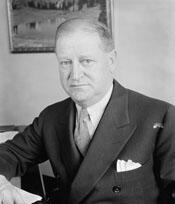
Here you will find contact information for Representative Charles Henry Leavy, including email address, phone number, and mailing address.
| Name | Charles Henry Leavy |
| Position | Representative |
| State | Washington |
| District | 5 |
| Party | Democratic |
| Status | Former Representative |
| Term Start | January 5, 1937 |
| Term End | January 3, 1943 |
| Terms Served | 3 |
| Born | February 16, 1884 |
| Gender | Male |
| Bioguide ID | L000185 |
About Representative Charles Henry Leavy
Charles Henry Leavy (February 16, 1884 – September 25, 1952) was a United States Representative from Washington and later a United States district judge of the United States District Court for the Western District of Washington. A member of the Democratic Party, he served three terms in the United States House of Representatives from 1937 to 1943, representing Washington’s 5th congressional district during a significant period in American history that encompassed the later years of the Great Depression and the early years of World War II.
Leavy was born on February 16, 1884, on a farm in York, York County, Pennsylvania. In 1887 he moved with his parents to Kansas City, Missouri, where he attended the public schools. He pursued teacher training at Warrensburg Normal School in Missouri (now the University of Central Missouri) and later at Bellingham Normal School in Washington (now Western Washington University). He subsequently studied law at the Kansas City School of Law (now the University of Missouri–Kansas City School of Law). In addition to his formal legal education, he completed his legal training by reading law, and in 1912 he was admitted to the bar.
Before entering full-time legal practice, Leavy worked as a schoolteacher. He taught near Independence, Missouri, from 1903 to 1906. After relocating to the Pacific Northwest, he continued his teaching career in Washington State, holding positions in the communities of Everson, Touchet, Kahlotus, and Connell from 1906 to 1913. While teaching, he advanced his legal studies and, following his admission to the bar, began to transition into the practice of law.
Leavy commenced private legal practice in Newport, Pend Oreille County, Washington, in 1912. He quickly entered public service as a local prosecutor, serving as prosecutor for Pend Oreille County from 1914 to 1918. During World War I and its aftermath, he moved into federal service as an Assistant United States Attorney for the Eastern District of Washington, a position he held from 1918 to 1921. Returning to local office, he served as prosecutor for Spokane County, Washington, from 1922 to 1926, where one of his deputy prosecutors was future judge Edward M. Connelly. Leavy’s judicial career began when he was elected a Judge of the Superior Court of the State of Washington, serving on that court from 1926 to 1936.
Leavy sought higher office in 1934 when he ran in the Democratic primary for the United States Senate seat being vacated by Senator Clarence Dill. He was unsuccessful in that effort, losing the primary to Lewis B. Schwellenbach, a Seattle attorney who had been raised in Spokane and who went on to win the general election over Reno Odlin of Olympia. Undeterred, Leavy remained active in public life and soon turned his attention to the House of Representatives.
In 1936, Leavy was elected as a Democrat from Washington’s 5th congressional district to the Seventy-fifth Congress. He was reelected to the Seventy-sixth and Seventy-seventh Congresses, serving from January 3, 1937, until his resignation on August 1, 1942. During these three terms in office, he participated in the legislative process as the nation grappled with economic recovery measures and the mounting global crisis that led to World War II. As a member of the House of Representatives, he represented the interests of his constituents in eastern Washington and took part in the broader democratic process at a time of major national transformation.
Leavy’s publicly stated ambition was to become a federal judge, and his congressional service coincided with the realization of that goal. He was nominated by President Franklin D. Roosevelt on October 23, 1941, to a seat on the United States District Court for the Western District of Washington, filling the vacancy created by the retirement of Judge Edward E. Cushman. The United States Senate confirmed his nomination on February 18, 1942, and he received his commission on February 25, 1942. To assume this judicial office, he resigned from Congress on August 1, 1942, and thereafter devoted himself to his duties on the federal bench.
Leavy served as a United States district judge for a decade, presiding over federal cases in the Western District of Washington. In the early 1950s his health began to decline. He was diagnosed with a heart condition approximately a year before his final illness, and on August 31, 1952, he assumed senior status due to a certified disability. On September 11, 1952, he suffered a paralytic stroke. His service on the court terminated upon his death in Tacoma, Washington, on September 25, 1952. He was interred at Mountain View Memorial Park in Tacoma.
In his personal life, Leavy was married to Pearl Williams Leavy, and the couple had two sons. His career spanned roles as educator, local and federal prosecutor, state trial judge, United States Representative, and federal district judge, reflecting a long record of public service at multiple levels of government.