Representative Charles Brown Lore
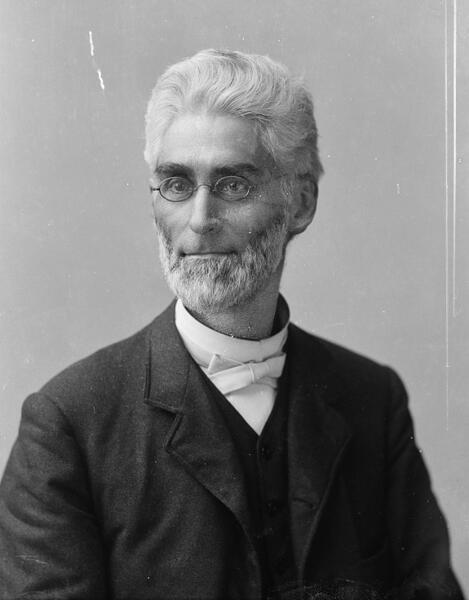
Here you will find contact information for Representative Charles Brown Lore, including email address, phone number, and mailing address.
| Name | Charles Brown Lore |
| Position | Representative |
| State | Delaware |
| District | At-Large |
| Party | Democratic |
| Status | Former Representative |
| Term Start | December 3, 1883 |
| Term End | March 3, 1887 |
| Terms Served | 2 |
| Born | March 16, 1831 |
| Gender | Male |
| Bioguide ID | L000443 |
About Representative Charles Brown Lore
Charles Brown Lore (March 16, 1831 – March 6, 1911) was an American lawyer, jurist, and Democratic politician from Wilmington, in New Castle County, Delaware, who served as Attorney General of Delaware, U.S. Representative from Delaware, and Chief Justice of the Delaware Supreme Court. Over the course of a long public career, he played a prominent role in Delaware’s legal and political life in the latter half of the nineteenth century and the early years of the twentieth century.
Lore was born in Cantwell’s Bridge (now Odessa), Delaware, on March 16, 1831. He attended the public schools and then Middletown Academy in Middletown, Delaware, receiving a classical preparatory education typical of aspiring professionals of his era. He continued his studies at Dickinson College in Carlisle, Pennsylvania, from which he graduated in June 1852. After college he read law, following the customary apprenticeship model of legal education at the time, and was admitted to the Delaware Bar in New Castle County in 1861, beginning a legal career that would underpin his subsequent public service.
Lore’s early professional life combined legal work with increasing involvement in state government. In 1857 he served as clerk of the Delaware House of Representatives, an administrative and parliamentary position that gave him familiarity with legislative procedure and the workings of state politics. During the Civil War, in 1862, he was appointed commissioner of the federal army’s draft for New Castle County, Delaware, overseeing the implementation of federal conscription in the state’s most populous county at a time of national crisis. These responsibilities helped establish his reputation as a capable public official.
A member of the Democratic Party, Lore rose to statewide office when he was elected Attorney General of Delaware, serving from 1869 to 1874. In that capacity he was the chief legal officer of the state, representing Delaware in criminal prosecutions and civil matters and advising state officials on questions of law. His tenure as attorney general strengthened his standing within the Democratic Party and among the Delaware bar, and it positioned him for later service at the national level.
Lore was elected as a Democrat to the United States House of Representatives, representing Delaware’s at-large congressional district in the 48th and 49th Congresses. He served two terms in the U.S. House of Representatives from March 4, 1883, to March 3, 1887. As a member of the House of Representatives, Charles Brown Lore participated in the democratic process, contributed to the legislative work of Congress, and represented the interests of his Delaware constituents during a significant period in American history marked by industrial expansion and post–Civil War adjustment. He was not a candidate for renomination at the end of his second term, thereby concluding his congressional service in 1887.
After leaving Congress, Lore returned to Delaware and resumed his legal and judicial career. In 1893 he was appointed Chief Justice of the Delaware Supreme Court, the highest judicial position in the state. He was reappointed in 1897 for a term of twelve years, reflecting continued confidence in his judicial leadership. As chief justice he presided over the state’s highest court during a period of economic and social change, helping to shape Delaware’s jurisprudence. He remained in that office until his retirement in 1909, closing more than four decades of prominent public service in law and government.
In addition to his judicial duties, Lore played a significant role in the development of higher education for African Americans in Delaware. He served as the inaugural president of the Board of Trustees of the Delaware College for Colored Students, established outside of Dover in 1891. The institution was legislatively renamed in 1893 as the State College for Colored Students and is now known as Delaware State University. Lore served as president of the board of trustees from the college’s founding in 1891 until about 1909, providing long-term leadership and oversight during its formative years. In 1909 and 1910 he was also a member of the Delaware code commission, participating in the systematic review and revision of the state’s statutory law.
Charles Brown Lore died at his home in Wilmington, Delaware, on March 6, 1911, just ten days short of his eightieth birthday. His remains were cremated, and his ashes were deposited in the Methodist Church Cemetery. His legacy in Delaware is reflected not only in his service as attorney general, congressman, and chief justice, but also in his contributions to public education; the Charles B. Lore Elementary School in Wilmington was later named in his honor and was added to the National Register of Historic Places in 1983.