Senator Charles Frederick Manderson
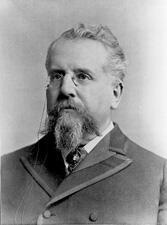
Here you will find contact information for Senator Charles Frederick Manderson, including email address, phone number, and mailing address.
| Name | Charles Frederick Manderson |
| Position | Senator |
| State | Nebraska |
| Party | Republican |
| Status | Former Representative |
| Term Start | December 3, 1883 |
| Term End | March 3, 1895 |
| Terms Served | 2 |
| Born | February 9, 1837 |
| Gender | Male |
| Bioguide ID | M000095 |
About Senator Charles Frederick Manderson
Charles Frederick Manderson (February 9, 1837 – September 28, 1911) was a United States senator from Nebraska from 1883 to 1895 and a prominent Republican politician and lawyer whose congressional service spanned a significant period in American history. Over two terms in the Senate, he contributed to the legislative process and represented the interests of his Nebraska constituents during an era marked by post–Civil War reconstruction, western expansion, and the rise of industrialization.
Manderson was born in Philadelphia, Pennsylvania, on February 9, 1837. He attended school in Philadelphia before moving west to Canton, Ohio, in 1856. In Canton he pursued legal studies, and in 1859 he was admitted to the bar, commencing the practice of law. Demonstrating early aptitude for public service, he was appointed city solicitor of Canton in 1860, beginning a long career that combined legal work with public office.
With the outbreak of the Civil War, Manderson entered the Union Army as a first lieutenant. Over the course of the conflict he rose through the ranks, ultimately resigning his commission as a colonel in 1865. In recognition of his service, he was brevetted a brigadier general of volunteers that same year. After the war, he returned to Canton and resumed the practice of law. He was twice elected attorney of Stark County, Ohio, further solidifying his reputation as a capable lawyer and public official.
In 1869, Manderson moved to Omaha, Nebraska, where he continued his legal career and quickly became an influential figure in the developing state. He served as city attorney of Omaha for six years, playing a key role in the city’s legal affairs during a period of rapid growth. He also participated in shaping Nebraska’s fundamental law as a member of the state constitutional conventions in 1871 and 1875, contributing to the framework of government that would guide the state in the decades to follow.
Manderson was elected as a Republican to the United States Senate in 1883 and was reelected in 1888, serving from March 4, 1883, to March 3, 1895. His tenure in Congress coincided with a transformative period in American political and economic life, and he took part in the democratic process as a representative of Nebraska’s interests on the national stage. During the Forty-eighth through Fifty-second Congresses, he served as chairman of the Committee on Printing, overseeing matters related to federal printing and publications. In addition, during the Fifty-first, Fifty-second, and Fifty-third Congresses, he held the influential position of president pro tempore of the United States Senate, placing him high in the Senate’s leadership and in the presidential line of succession.
After leaving the Senate in 1895, Manderson returned to the practice of law and entered corporate legal service at a high level. He was appointed general solicitor of the Burlington system of railroads west of the Missouri River, a major transportation network in the American West, where he handled significant legal and regulatory matters. His professional standing within the legal community was further recognized when he was elected vice president of the American Bar Association in 1899 and then president of the organization in 1900, reflecting his national prominence as a lawyer and legal scholar.
Manderson remained active in professional and public affairs until his death. He died on September 28, 1911, on board the steamship Cedric in the harbor of Liverpool, England. His body was returned to the United States, and he was interred in Forest Lawn Cemetery in Omaha, Nebraska. His career, spanning military service, local and state legal offices, influential participation in Nebraska’s constitutional development, and twelve years in the United States Senate, left a lasting imprint on both his state and the nation.