Representative Charlie Melancon
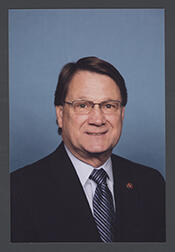
Here you will find contact information for Representative Charlie Melancon, including email address, phone number, and mailing address.
| Name | Charlie Melancon |
| Position | Representative |
| State | Louisiana |
| District | 3 |
| Party | Democratic |
| Status | Former Representative |
| Term Start | January 4, 2005 |
| Term End | January 3, 2011 |
| Terms Served | 3 |
| Born | October 3, 1947 |
| Gender | Male |
| Bioguide ID | M001161 |
About Representative Charlie Melancon
Charles Joseph Melançon (born October 3, 1947) is an American politician and businessman who served as a Representative from Louisiana in the United States Congress from January 3, 2005, to January 3, 2011. A member of the Democratic Party, he represented Louisiana’s 3rd congressional district for three terms and later served as secretary of the Louisiana Department of Wildlife and Fisheries. Over the course of his career, he also held office in the Louisiana House of Representatives and was the Democratic nominee for the United States Senate in 2010.
Melançon was born in Napoleonville, Louisiana, the son of Nicee L. “Brownie” (née Talbot) and Joe Melançon. He is the grandson and great-grandson of sugar cane farmers and has spent most of his life in Napoleonville, a small community approximately 50 miles south of Baton Rouge. His family background in agriculture, particularly sugar cane, shaped his early understanding of rural economies and the needs of farming communities in south Louisiana.
Melançon attended local schools in Napoleonville and went on to study at the University of Louisiana at Lafayette (then the University of Southwestern Louisiana), where he earned a Bachelor of Science degree in 1971. After completing his education, he returned to the private sector in Louisiana, where he owned and operated several small businesses, including two Baskin-Robbins ice cream outlets. He also became active in the sugar industry and served as head of the American Sugar Cane League, a role that brought him into close contact with agricultural policy, trade issues, and federal farm programs affecting Louisiana’s sugar producers.
Melançon entered elective office at the state level, serving as a member of the Louisiana House of Representatives from 1987 to 1993. In the state legislature, he represented a largely rural, south Louisiana constituency and focused on issues important to agriculture, small business, and local infrastructure. After leaving the legislature, he continued his work in business and agricultural advocacy, further consolidating his reputation as a spokesman for the sugar industry and for the economic interests of his region.
In 2004, Melançon ran for the United States House of Representatives from Louisiana’s 3rd congressional district, a district encompassing much of south Louisiana, and won election. He took office on January 3, 2005, and was subsequently reelected, serving three consecutive terms until January 3, 2011. Very soon after being sworn in, he joined the Blue Dog Coalition, a group of fiscally conservative House Democrats. Like many Southern Democrats, he was more conservative than most members of the national party, particularly on social issues, while maintaining a pragmatic approach to economic and regional concerns. During his tenure, he served on the House Committee on Energy and Commerce, including the Subcommittee on Communications, Technology and the Internet and the Subcommittee on Energy and Environment.
Melançon’s congressional service coincided with a period of major natural disasters and economic challenges for Louisiana. Just a few months after he took office, Hurricane Katrina struck south Louisiana in August 2005, causing massive levee failures and devastating flooding in the eastern part of his district. Three weeks later, Hurricane Rita hit the Gulf Coast, compounding the destruction. Melançon worked closely with the rest of the Louisiana congressional delegation to secure billions of dollars in federal recovery funds for south Louisiana. He fought for federal funding for hurricane protection projects such as the Morganza-to-the-Gulf project and levee systems in lower Plaquemines Parish and south Lafourche Parish. He repeatedly urged other members of Congress to visit south Louisiana to see firsthand the destruction from the storms and the ongoing need for hurricane protection and coastal restoration, and he sponsored a number of reform bills aimed at improving the federal government’s disaster response and relief systems.
In economic and energy policy, Melançon often emphasized the needs of small businesses and the energy-producing sectors central to his district’s economy. He supported the Job Creation Through Entrepreneurship Act (H.R. 2352), which provided funding for additional small business development centers to offer office space, support, and technology to new companies. He also backed tax relief for small businesses, voting for the Small Business Tax Relief Act of 2007 (H.R. 976), which provided tax credits and incentives for expansion and equipment purchases. Representing a district heavily dependent on the oil and gas industry, he joined other members from energy-producing states and the Louisiana Oil and Gas Association to oppose new federal taxes on the oil and gas industry in the President’s 2010 budget. Reflecting these priorities, he voted against the American Clean Energy and Security Act (H.R. 2454), commonly known as the “Waxman-Markey” or “cap-and-trade” bill, both in the Energy and Commerce Committee and on the House floor, arguing that it would harm his district and the people he represented. He did, however, secure an amendment to protect Louisiana’s share of wetlands restoration funding from cuts indirectly caused by hurricane disaster assistance.
Melançon’s voting record in Congress reflected his Blue Dog affiliation and his effort to balance party positions with the views of his constituents. He voted for the Emergency Economic Stabilization Act of 2008, supporting federal intervention to stabilize financial markets during the economic crisis. He also voted for the American Recovery and Reinvestment Act of 2009, stating that, although the plan was “far from perfect,” it would create or save an estimated 50,000 jobs in Louisiana, invest over $538 million in infrastructure projects in the state, and lay a foundation for long-term national growth through innovation and education. At the same time, he took more conservative positions on several social and labor issues. In July 2006, he voted in support of the proposed Federal Marriage Amendment. Although listed as a co-sponsor of the Employee Free Choice Act, he expressed reservations about the measure, noting concerns raised by the business community and calling for a bipartisan solution that would address those concerns while still protecting employees’ rights.
On health care, Melançon broke with much of his party’s leadership. On July 31, 2009, he voted against the America’s Affordable Health Choices Act (H.R. 3200) in the Energy and Commerce Committee, citing concerns about its potential impact on small businesses, the possibility of taxpayer-funded abortions, increased taxes, and the design of the public option, which he believed could unfairly undercut private sector offerings. He also criticized the bill for not doing enough to address the shortage of health care providers in rural communities. In March 2010, he voted against the Patient Protection and Affordable Care Act, stating that it “doesn’t work for Louisiana,” although he did not sign the discharge petition circulated by Representative Steve King calling for the law’s complete repeal. On other national issues, he aligned with his party on some key votes, including support for the DREAM Act and for the repeal of the “Don’t Ask, Don’t Tell” policy regarding military service by gay and lesbian personnel.
In 2010, rather than seek reelection to the House, Melançon ran as the Democratic nominee for the United States Senate seat held by Republican Senator David Vitter. He was unsuccessful in that bid, and his term in the House concluded on January 3, 2011, marking the end of his congressional service during a significant period in American history. After leaving Congress, he continued his involvement in public affairs in Louisiana. He later served as secretary of the Louisiana Department of Wildlife and Fisheries, overseeing the management of the state’s wildlife resources, fisheries, and outdoor recreational assets. Throughout his career in business, state government, and Congress, Charles J. Melancon participated actively in the democratic process and consistently sought to represent the interests of his south Louisiana constituents.