Representative Charles Dunsmore Millard
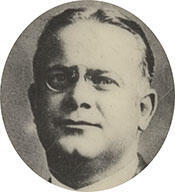
Here you will find contact information for Representative Charles Dunsmore Millard, including email address, phone number, and mailing address.
| Name | Charles Dunsmore Millard |
| Position | Representative |
| State | New York |
| District | 25 |
| Party | Republican |
| Status | Former Representative |
| Term Start | December 7, 1931 |
| Term End | January 3, 1939 |
| Terms Served | 4 |
| Born | December 1, 1873 |
| Gender | Male |
| Bioguide ID | M000709 |
About Representative Charles Dunsmore Millard
Charles Dunsmore Millard (December 1, 1873 – December 11, 1944) was a Republican member of the United States House of Representatives from New York who served in Congress from 1931 to 1939. Over the course of four terms in office, he contributed to the legislative process during a significant period in American history, representing the interests of his constituents in the House of Representatives. His congressional career coincided with the onset of the Great Depression and the early New Deal era, placing him at the center of major national debates on economic recovery and federal policy.
Millard was born on December 1, 1873, in Tarrytown, New York. He received his early education at Phillips Academy in Andover, Massachusetts, one of the nation’s leading preparatory schools. He went on to attend Brown University, where he pursued his undergraduate studies, and later enrolled at New York University School of Law, preparing for a career in the legal profession and public service. This combination of rigorous secondary, collegiate, and legal education provided the foundation for his subsequent work in local government and national politics.
Before entering Congress, Millard built a long record of public service at the local and county levels in Westchester County, New York. He served as Supervisor of the Town of Greenburgh from 1907 to 1931, a role that also made him a member of the Board of Supervisors of Westchester County. Over this twenty-four-year period, he was involved in the administration and governance of one of the key suburban communities north of New York City, gaining experience in municipal finance, infrastructure, and local regulation. His extended tenure as town supervisor reflected the confidence of his constituents and established his reputation as a Republican leader in the region.
Millard was elected to the United States House of Representatives in 1930 as a Republican and took his seat on March 4, 1931, representing New York’s 25th congressional district. He served continuously from March 4, 1931, until his resignation on September 29, 1937. During his time in the House, he participated in the democratic process at a moment when the federal government was expanding its role in response to the economic crisis. In the 74th Congress, he was assigned to the Committee on Immigration and Naturalization and the Committee on Naval Affairs, positions that involved him in deliberations over immigration policy, citizenship, and the development and maintenance of the United States Navy during a period of growing international tension. Across his four terms, he took part in shaping legislation and representing the policy priorities of his district and party.
Millard’s service in Congress ended when he resigned in 1937 to assume judicial responsibilities at the county level. On September 29, 1937, he left the House to become surrogate of Westchester County, a judicial office responsible for matters such as wills, estates, and probate. He continued in public life in this capacity and remained active in legal and civic affairs. He retired from this role in 1943, concluding a public career that had spanned more than three decades in both local and national office.
Charles Dunsmore Millard died on December 11, 1944, in New York City. His death was ruled a suicide; he died by jumping from the Henry Hudson Bridge. His passing marked the end of a long career in public service that began in town government and extended to the United States Congress and the courts of Westchester County.