Representative Charles Ellis Moore
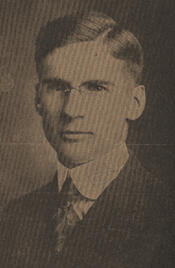
Here you will find contact information for Representative Charles Ellis Moore, including email address, phone number, and mailing address.
| Name | Charles Ellis Moore |
| Position | Representative |
| State | Ohio |
| District | 15 |
| Party | Republican |
| Status | Former Representative |
| Term Start | May 19, 1919 |
| Term End | March 3, 1933 |
| Terms Served | 7 |
| Born | January 3, 1884 |
| Gender | Male |
| Bioguide ID | M000894 |
About Representative Charles Ellis Moore
Charles Ellis Moore (January 3, 1884 – April 2, 1941) was an American lawyer and Republican politician who served as a U.S. Representative from Ohio from 1919 to 1933. Over the course of seven consecutive terms in the United States House of Representatives, he participated actively in the legislative process and represented the interests of his Ohio constituents during a period marked by World War I’s aftermath, the Roaring Twenties, and the onset of the Great Depression.
Moore was born near Middlebourne, Ohio, on January 3, 1884. He was educated in the common schools of the area and went on to attend Mount Union College in Alliance, Ohio. Early in his adult life he worked as a schoolteacher in Oxford Township, Ohio, an experience that grounded him in the concerns of local communities and public education in rural Ohio.
Pursuing higher education, Moore graduated from Muskingum College in New Concord, Ohio, in 1907. He then studied law at the College of Law of Ohio State University in Columbus, receiving his law degree in 1910. That same year he was admitted to the bar and commenced the practice of law in Cambridge, Ohio, establishing the professional base from which he would enter public service.
Moore’s early career was rooted in the legal and civic life of Guernsey County. Practicing as an attorney in Cambridge, he gained prominence and was elected prosecuting attorney of Guernsey County, serving from 1914 to 1918. In this role he was responsible for representing the county in criminal matters, an experience that further developed his legal expertise and public profile on the eve of his national political career.
In 1918, Moore was elected as a Republican to the Sixty-sixth Congress and subsequently reelected to the six succeeding Congresses, serving from March 4, 1919, to March 3, 1933. As a member of the House of Representatives, he contributed to the legislative process over seven terms in office, participating in debates and votes on issues arising from postwar economic adjustments, Prohibition, and the early years of the Great Depression. During his tenure, he was appointed one of the House managers in 1926 to conduct the impeachment trial proceedings against George W. English, judge of the United States District Court for the Eastern District of Illinois, a significant constitutional responsibility that underscored his standing among his colleagues. His service in Congress occurred during a transformative era in American history, and he took part in the democratic process at the national level while representing the concerns of his Ohio district.
Moore was an unsuccessful candidate for reelection in 1932 to the Seventy-third Congress, losing his seat amid the broader national shift toward the Democratic Party during the early years of the Great Depression and the rise of the New Deal coalition. After leaving Congress in March 1933, he returned to Cambridge, Ohio, where he resumed the practice of law. In addition to his legal work, he became engaged in the banking business, continuing to play a role in the economic and civic life of his community.
Charles Ellis Moore died in Cambridge, Ohio, on April 2, 1941. He was interred in Northwood Cemetery, leaving a record of more than a decade of congressional service and a career that spanned education, law, county prosecution, national legislative work, and local business activity in his home state of Ohio.