Representative Charles Archibald Nichols
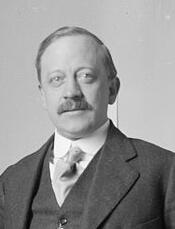
Here you will find contact information for Representative Charles Archibald Nichols, including email address, phone number, and mailing address.
| Name | Charles Archibald Nichols |
| Position | Representative |
| State | Michigan |
| District | 13 |
| Party | Republican |
| Status | Former Representative |
| Term Start | December 6, 1915 |
| Term End | March 3, 1921 |
| Terms Served | 3 |
| Born | August 25, 1876 |
| Gender | Male |
| Bioguide ID | N000090 |
About Representative Charles Archibald Nichols
Charles Archibald Nichols (August 25, 1876 – April 25, 1920) was an American journalist and Republican politician from the U.S. state of Michigan who served three terms in the United States House of Representatives from 1915 to 1920. Over the course of his congressional career, he represented Michigan during a significant period in American history, contributing to the legislative process and participating in the democratic governance of the nation.
Nichols was born to Mr. and Mrs. Thomas Whitney Nichols on August 25, 1876, in Boyne City, Michigan. He was educated in the public schools, an upbringing that reflected the expanding system of public education in the late nineteenth century. His early life in Michigan provided the foundation for a career that would combine journalism, municipal administration, and national politics, and it rooted him firmly in the communities he would later represent in public office.
After completing his schooling, Nichols entered the field of journalism, a common pathway into public life at the time. From 1898 to 1905 he engaged in newspaper work in Detroit, serving as a reporter and criminal investigator for the Detroit Journal and the Detroit News. In these roles he covered crime and public affairs, gaining first-hand familiarity with the workings of local government, law enforcement, and the courts. This experience not only honed his skills as a communicator and investigator but also introduced him to many of the civic issues that would shape his later political career.
Nichols moved from journalism into public administration in the city of Detroit. He served as secretary of the Detroit Police Department from 1905 to 1908, a position that placed him at the administrative center of one of the city’s most important municipal institutions. He then served as city clerk of Detroit from 1908 to 1912, overseeing official records and municipal documentation during a period of rapid urban growth and increasing governmental complexity. These posts enhanced his public profile and administrative experience, preparing him for higher office and giving him direct insight into the needs and concerns of urban constituents.
In 1914, Nichols was elected as a Republican to the United States House of Representatives from Michigan’s newly created 13th congressional district, winning a seat in the 64th Congress. He took office on March 4, 1915, and was twice re-elected, serving in the 65th and 66th Congresses. His tenure in Congress thus extended from March 4, 1915, until his death in 1920. During these three terms, Nichols represented the interests of his Michigan constituents at the national level at a time marked by World War I and significant domestic change. As a member of the House of Representatives, he participated actively in the legislative process, contributing to debates and votes on issues of national importance.
Nichols’s influence in Congress was underscored by his service as chairman of the Committee on the Census in the 66th Congress. In that capacity, he played a role in overseeing matters related to the federal census, an essential function of government that affected congressional apportionment, federal funding, and the collection of demographic data. His chairmanship reflected the confidence of his colleagues in his abilities and placed him at the center of policy discussions concerning population statistics and representation.
Charles Archibald Nichols died in office on April 25, 1920, in Washington, D.C., while still serving as a member of the 66th Congress. His death created a vacancy in Michigan’s 13th congressional district, which was subsequently filled by Clarence McLeod, elected to succeed him in the House of Representatives. Nichols was interred in Grand Lawn Cemetery in Detroit, Michigan, returning in death to the city where he had built his career in journalism, municipal government, and national politics. His service places him among the members of the United States Congress who died in office in the first half of the twentieth century.