Representative Charles W. Norwood
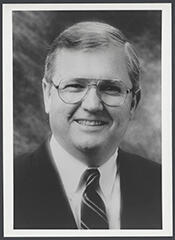
Here you will find contact information for Representative Charles W. Norwood, including email address, phone number, and mailing address.
| Name | Charles W. Norwood |
| Position | Representative |
| State | Georgia |
| District | 10 |
| Party | Republican |
| Status | Former Representative |
| Term Start | January 4, 1995 |
| Term End | February 13, 2007 |
| Terms Served | 7 |
| Born | July 27, 1941 |
| Gender | Male |
| Bioguide ID | N000159 |
About Representative Charles W. Norwood
Charles Whitlow Norwood Jr. (July 27, 1941 – February 13, 2007) was an American dentist, military veteran, and politician who served as a Republican member of the United States House of Representatives from Georgia from January 3, 1995, until his death in 2007. Over seven consecutive terms in Congress, he represented a northeastern Georgia district that was variously numbered the 10th and 9th, and at the time of his death he was the representative of Georgia’s 10th Congressional District. A member of the Republican Party, Charles W. Norwood contributed to the legislative process during a significant period in American history, participating in the democratic process and representing the interests of his constituents in the U.S. House of Representatives.
Norwood was born in Valdosta, Georgia, on July 27, 1941. He attended the Baylor School, then a military academy, in Chattanooga, Tennessee, from which he graduated before pursuing higher education. He studied at Georgia Southern University in Statesboro, Georgia, and later attended Georgetown University in Washington, D.C. In 1962 he married Gloria, with whom he had two sons, Charles and Carlton. The family eventually settled in Evans, Georgia, a suburb of Augusta, where Norwood became an active member of the community. He was a Methodist and maintained close ties to veterans’ and civic organizations throughout his life.
Norwood’s professional and military careers developed in tandem. Trained as a dentist, he entered the United States Army and served as a captain from 1967 to 1969. He was first assigned to the U.S. Army Dental Corps at Sandia Army Base in Albuquerque, New Mexico. In 1968 he was transferred to the Medical Company (Company B-Med) of the 173rd Airborne Brigade in South Vietnam, where he served a combat tour at Qui Nhon, An Khe, and Landing Zone English. During his Vietnam service he participated in experimental military dental practices that later became standard procedure in the armed forces, including early outreach programs that sent dentists to forward firebases rather than evacuating patients to rear treatment areas. He also provided some of the first field-based dental treatment of military guard dogs and assisted in non-dental trauma care in Mobile Army Surgical Hospitals. For his service under combat conditions he was awarded the Combat Medical Badge and two Bronze Stars. After Vietnam, he was assigned to the Dental Corps at Fort Gordon, Georgia, where he served until his discharge in 1969. He remained active in veterans’ circles as a member of the American Legion, the Veterans of Foreign Wars, and the Military Order of the World Wars until his death.
Following his military service, Norwood established a successful private dentistry practice in Augusta, Georgia. Over the next two decades he became a well-known local practitioner and small-business owner, building a reputation that would later support his entry into elective office. His experience as a dentist and health-care provider strongly influenced his later legislative priorities, particularly his focus on health policy and patients’ rights. In late 1993, Norwood sold his dental practice in order to run for Congress in the 1994 elections as a Republican in Georgia’s Augusta-based 10th District, marking his transition from medical professional to full-time public servant.
Norwood was elected to the U.S. House of Representatives in the Republican wave election of 1994. In that race he decisively defeated freshman Democratic incumbent Clete Donald Johnson Jr. by a 31-point margin, one of the largest margins of defeat in the 1994 election cycle, and became the first Republican to represent his northeastern Georgia district since Reconstruction. He was nearly defeated in his 1996 reelection bid, winning by only four points, but subsequently secured his seat more comfortably, turning back spirited challenges in 1998 and 2000. During the 2000s round of redistricting, the Democratic-controlled Georgia legislature redrew the state’s congressional map in an effort to elect seven Democrats and six Republicans, at a time when the delegation consisted of eight Republicans and five Democrats. Norwood’s district was renumbered as the 9th District, and most of Augusta—long the historic core of the district—was shifted to the newly created 12th District. To compensate for the loss of population, his district was extended into more heavily Republican territory in the North Georgia mountains. Norwood was reelected from this now strongly Republican district with 73 percent of the vote. In 2004 he received 74 percent of the vote against Democrat Bob Ellis. In 2006, his district was renumbered the 10th once again and pushed slightly westward, absorbing Athens, the home of Democratic 12th District Congressman John Barrow; Barrow relocated to Savannah rather than face likely defeat. Norwood was handily reelected in 2006, winning 68 percent of the vote against Democrat Terry Holley.
Throughout his congressional service from 1995 to 2007, Norwood was known as a staunch conservative with particular emphasis on health care, immigration, and states’ rights. Drawing on his medical background, he worked for much of his career to pass a patients’ bill of rights aimed at improving access to health care and expanding patients’ ability to challenge health insurers. Over the course of a decade, his patients’ rights legislation passed the House twice, but ultimately failed after compromises intended to avoid a presidential veto eroded support in Congress. He reintroduced the measure before leaving Washington in February 2007. Norwood was also a strong advocate of tight immigration control, publicly calling for the deployment of nearly 40,000 troops along the U.S.–Mexico border. He co-wrote a provision in the Deficit Reduction Act that barred individuals in the country illegally from receiving Medicaid benefits. Skeptical of federal oversight of state election laws, he criticized what he viewed as government intrusion into personal and business practices and was one of 33 House members who voted against renewing the Voting Rights Act in 2006, arguing that it discriminated against Southern states for long-past racial transgressions. He regarded the preclearance provisions of the Voting Rights Act of 1965, which required certain jurisdictions to obtain federal approval before altering election laws, as “blatant discrimination” against the targeted states, and he opposed changing Georgia’s state flag to one with less overt Confederate imagery. During his tenure, he was occasionally mentioned as a potential candidate for Governor of Georgia in 2002 and for the United States Senate in 2004, but he declined to pursue either office, citing health concerns.
Norwood’s later years in Congress were marked by serious health challenges. In 1998 he was diagnosed with idiopathic pulmonary fibrosis, a progressive lung disease, a condition he initially kept private. In October 2004 he underwent a single lung transplant to address the illness. Approximately a year after the transplant, physicians discovered a cancerous tumor on his non-transplanted lung, and he began chemotherapy. By December 2006 the cancer had metastasized to his liver, and the disease was believed to be related to the immunosuppressant medications required after his transplant. When Congress reconvened in January 2007, Norwood missed most sessions due to weakness from ongoing chemotherapy. During the State of the Union address on January 23, 2007, President George W. Bush publicly noted Norwood’s absence from the House chamber and extended his wishes for a speedy recovery. On February 7, 2007, Norwood’s office announced that he would forgo further cancer treatment and return to Augusta to receive in-home hospice care.
Charles W. Norwood died in Augusta on February 13, 2007. At approximately 2:02 p.m. Eastern time that day, the House of Representatives observed a moment of silence in his memory, which was repeated at 2:21 p.m. at the request of a delegation of Georgia congressmen. He was survived by his wife, Gloria, their two sons, and four grandchildren. President Bush stated in a written tribute that he and First Lady Laura Bush were saddened by Norwood’s death, describing him as “a good friend and a strong, spirited legislator who always stuck to his principles, remembering that his duty was to represent the best interests of the citizens of his district.” In recognition of his service and his long association with the Augusta area and the veterans’ community, the Veterans Affairs Medical Center in Augusta was rededicated in his honor. On January 15, 2008, it was officially renamed the Charlie Norwood VA Medical Center, commemorating his contributions as a soldier, physician-dentist, and legislator.