Representative Charles Francis Xavier O’Brien
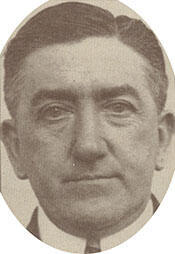
Here you will find contact information for Representative Charles Francis Xavier O’Brien, including email address, phone number, and mailing address.
| Name | Charles Francis Xavier O’Brien |
| Position | Representative |
| State | New Jersey |
| District | 12 |
| Party | Democratic |
| Status | Former Representative |
| Term Start | April 11, 1921 |
| Term End | March 3, 1925 |
| Terms Served | 2 |
| Born | March 7, 1879 |
| Gender | Male |
| Bioguide ID | O000008 |
About Representative Charles Francis Xavier O’Brien
Charles Francis Xavier O’Brien (March 7, 1879 – November 14, 1940) was an American Democratic Party politician who represented New Jersey in the United States House of Representatives from 1921 to 1925. A member of the Democratic Party, he served two terms as U.S. Representative from New Jersey’s 12th Congressional District, contributing to the legislative process during a significant period in American history and representing the interests of his constituents in the House of Representatives.
O’Brien was born in Jersey City, New Jersey, on March 7, 1879. He was educated in the Jersey City public schools and continued his studies at the Academy of St. Aloysius Grammar School. He then attended Saint Peter’s College in Jersey City, reflecting an early grounding in both local institutions and Catholic education. Pursuing higher education beyond his home state, he graduated from Fordham University in New York, further broadening his academic and intellectual formation.
After completing his undergraduate studies, O’Brien turned to the law. He studied at New York Law School, where he received his legal training. Upon completion of his legal studies, he was admitted to the bar and commenced the practice of law in Jersey City. His legal career quickly led him into public service at the municipal level, where he developed a reputation as a capable attorney and public official.
O’Brien’s early public career included judicial and administrative responsibilities in Jersey City. He served as a judge of the second criminal court, gaining direct experience with the administration of justice and the criminal law. He later became director of public safety of Jersey City, holding that post from 1917 to 1921. In that capacity, he oversaw key municipal functions related to law enforcement and public protection during the World War I era and its immediate aftermath. His prominence within the Democratic Party was further underscored by his role as a delegate to the 1920 Democratic National Convention.
Building on his local and party leadership, O’Brien was elected as a Democrat to the Sixty-seventh and Sixty-eighth Congresses. He served in the U.S. House of Representatives from March 4, 1921, to March 3, 1925, representing New Jersey’s 12th Congressional District. During his two terms in Congress, he participated in the democratic process at the national level, contributing to debates and legislation in the early 1920s, a period marked by postwar adjustment, economic change, and evolving domestic policy. Throughout his tenure, he worked to represent the interests and concerns of his New Jersey constituents.
At the conclusion of his second term, O’Brien voluntarily retired from Congress in 1925 to accept a significant county-level administrative position. Beginning in 1926, he served as registrar of records of Hudson County, New Jersey, a post he held for a decade, until 1936. In this role he was responsible for the custody and management of important public documents and records, continuing his long engagement in public administration and local governance.
In his later years, O’Brien remained active in public service. After completing his tenure as registrar of records, he served in the city law department of Jersey City, returning to the legal work that had formed the foundation of his career. He was serving in that capacity at the time of his death in Jersey City on November 14, 1940. Charles Francis Xavier O’Brien was interred in Holy Name Cemetery in Jersey City, closing a life spent largely in service to his native community and state.