Representative Charles Emory Patton
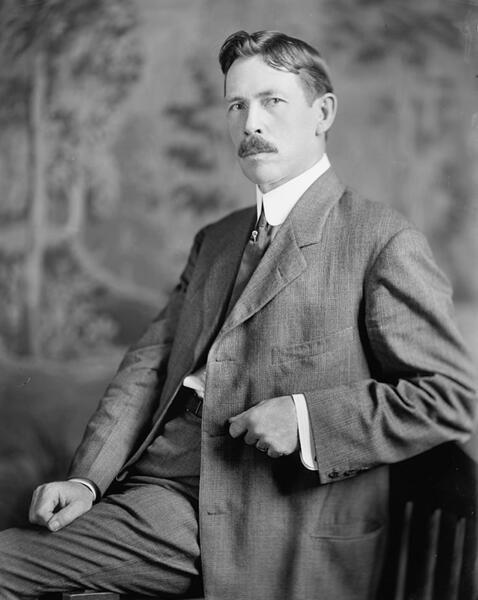
Here you will find contact information for Representative Charles Emory Patton, including email address, phone number, and mailing address.
| Name | Charles Emory Patton |
| Position | Representative |
| State | Pennsylvania |
| District | 21 |
| Party | Republican |
| Status | Former Representative |
| Term Start | April 4, 1911 |
| Term End | March 3, 1915 |
| Terms Served | 2 |
| Born | July 5, 1859 |
| Gender | Male |
| Bioguide ID | P000136 |
About Representative Charles Emory Patton
Charles Emory Patton (July 5, 1859 – December 15, 1937) was a Republican member of the United States House of Representatives from Pennsylvania who served two terms in Congress from 1911 to 1915. He was born in Curwensville, Clearfield County, Pennsylvania, the son of John Patton and the brother of John Patton Jr., both of whom were also prominent in public and business life. Raised in a community shaped by the growth of industry and commerce in north-central Pennsylvania, he attended the common schools of Curwensville before pursuing higher education.
Patton continued his studies at Lycoming College in Williamsport, Pennsylvania, from which he graduated in 1878. Soon after completing his education, he entered the lumber business, a major economic enterprise in the region at the time. His early professional life was closely tied to the development of local industry and infrastructure, and his business activities helped establish him as a significant figure in Curwensville’s commercial community.
Expanding beyond lumber, Patton owned and operated the Curwensville Electric Company, reflecting his interest in modern utilities and local development. He later engaged in the construction contracting business, further broadening his experience in enterprise and public works. In addition to his business pursuits, he served as a director of the Curwensville National Bank, underscoring his role in the financial life of the town. Patton was also active in local governance and civic affairs: he served on the school board, eventually becoming its president, was a member of the city council, and held the office of burgess, the chief municipal official, thereby gaining extensive experience in public administration and community leadership.
Building on his local prominence, Patton was elected as a Republican to the Sixty-second and Sixty-third Congresses, representing Pennsylvania in the U.S. House of Representatives from March 4, 1911, to March 3, 1915. His service in Congress occurred during a significant period in American history marked by Progressive Era reforms and debates over economic regulation, social policy, and governmental authority. As a member of the House of Representatives, Charles Emory Patton participated in the national legislative process, contributed to deliberations on federal policy, and represented the interests of his Pennsylvania constituents. He served two full terms and chose not to be a candidate for renomination in 1914.
After leaving Congress, Patton continued his public service at the state level. On October 15, 1915, he was appointed secretary of agriculture for the Commonwealth of Pennsylvania. In this capacity, which he held until January 22, 1920, he oversaw agricultural policy and programs during a period that included World War I, when food production and farm management were of heightened importance. His tenure reflected his longstanding interest in rural affairs and his later personal involvement in farming.
Following his service as Pennsylvania’s secretary of agriculture, Patton retired to a farm near West Grove, Pennsylvania, where he resumed agricultural work and lived a more private life while remaining connected to the state’s farming community. He spent his later years on this estate, drawing on both his practical experience in agriculture and his long career in business and public office.
Charles Emory Patton died on his estate near West Grove on December 15, 1937, at the age of seventy-eight. He was interred in Oak Hill Cemetery in his native Curwensville, Pennsylvania, returning in death to the community where his life in business, civic leadership, and public service had begun.