Representative Charles Edward Phelps
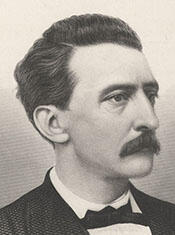
Here you will find contact information for Representative Charles Edward Phelps, including email address, phone number, and mailing address.
| Name | Charles Edward Phelps |
| Position | Representative |
| State | Maryland |
| District | 3 |
| Party | Conservative |
| Status | Former Representative |
| Term Start | December 4, 1865 |
| Term End | March 3, 1869 |
| Terms Served | 2 |
| Born | May 1, 1833 |
| Gender | Male |
| Bioguide ID | P000292 |
About Representative Charles Edward Phelps
Charles Edward Phelps (May 1, 1833 – December 27, 1908) was a Union Army officer in the American Civil War who rose to the rank of colonel and later received a brevet as brigadier general of volunteers, a Medal of Honor recipient for gallantry at the Battle of Spotsylvania Court House, a Baltimore city councilman, and a U.S. Representative from Maryland’s third congressional district from 1865 to 1869. In later life he was a prominent jurist and legal scholar, serving for many years as an associate judge of the Circuit Court of Baltimore and as professor of equity at the University of Maryland Law School.
Phelps was born in Guilford, Vermont, on May 1, 1833, the son of John Phelps, a lawyer and member of the Vermont State Senate, and Almira Hart Lincoln Phelps, a noted educator and sister of pioneering women’s education advocate Emma Willard. When he was five years old, his family moved to Pennsylvania, and at the age of eight he moved with them to Maryland, where his mother became principal of the Patapsco Female Seminary in Ellicott City. He pursued higher education at the College of New Jersey (now Princeton University), where he was admitted to the Zeta Psi fraternity and graduated in 1852. He then studied law at Harvard Law School, from which he graduated in 1853.
After completing his legal studies, Phelps returned to Maryland and was admitted to the Maryland bar in 1855. He quickly established himself in practice and, by 1859, was admitted to practice before the Supreme Court of the United States. His early public service began at the municipal level: in 1860 he was elected to the Baltimore City Council, marking his first formal entry into political life. This combination of legal and civic experience laid the groundwork for his later prominence in state and national affairs.
With the outbreak of the Civil War, Phelps entered military service on the Union side. In 1861 he was commissioned a major of the Maryland Guard, and in 1862 he became lieutenant colonel of the 7th Maryland Infantry Regiment. He was promoted to colonel in 1863 and saw extensive combat. During the Battle of the Wilderness in 1864, his horse was shot from under him. On May 8, 1864, at Laurel Hill during the Battle of Spotsylvania Court House, he rode to the head of a severely battered assaulting column, placed himself conspicuously in front of the troops, rallied them under heavy artillery fire, and led them to within a few feet of the enemy’s works, where he was severely wounded and captured. He was subsequently rescued by Union cavalry under the immediate command of Brigadier General George Armstrong Custer, operating as part of Major General Philip Sheridan’s forces. Because of his wounds, Phelps was honorably discharged from the service on September 9, 1864. For his valor at Spotsylvania, he was later awarded the Medal of Honor on March 30, 1898; his citation specifically commended his conspicuous leadership in rallying and leading the assaulting troops under intense fire. On May 4, 1866, President Andrew Johnson nominated him for appointment to the brevet grade of brigadier general of volunteers, to rank from March 13, 1865, and the United States Senate confirmed the appointment on May 18, 1866. After the war, he became a companion of the Maryland Commandery of the Military Order of the Loyal Legion of the United States.
Phelps’s military reputation and Unionist credentials propelled him into national politics. Shortly after his discharge in 1864, he was elected as a Representative from Maryland’s third district to the Thirty-Ninth Congress. He entered Congress in 1865 as an Unconditional Unionist and was reelected to the Fortieth Congress as a member of the Conservative Party, a designation then used in some states for candidates aligned with the Democratic Party. He thus served in the United States House of Representatives from 1865 through 1869, completing two terms during the critical early years of Reconstruction. Throughout this period he participated in the legislative process and represented the interests of his Maryland constituents at a time of intense national debate over the reintegration of the former Confederate states and the scope of federal authority.
Phelps played a notable role in the impeachment crisis of President Andrew Johnson. In February 1868, he voted against Johnson’s impeachment. In remarks delivered to the House on the day of the impeachment vote, he questioned whether Johnson’s attempt to remove Secretary of War Edwin M. Stanton constituted a violation of the Tenure of Office Act. He argued that there had not yet been an actual removal, since Stanton continued to contest the action, and that no formal appointment of a successor had been made, as Johnson had only designated an officer to act in an ad interim capacity. Phelps further contended that Stanton’s appointment by President Abraham Lincoln, rather than Johnson, raised doubts about whether Stanton was protected under the statute. He also challenged the constitutionality of the Tenure of Office Act itself, asserting that it interfered with the president’s constitutional power to remove executive officers. Emphasizing that the Constitution limited impeachment to “treason, bribery, or other crimes and high misdemeanors,” Phelps maintained that the charges against Johnson rested on a forced construction of the law and did not rise to the level of a high misdemeanor.
After leaving Congress in 1869, Phelps resumed his legal career and public service in Maryland. That year he established a law practice with John Van Lear Findlay. He remained active in civic and educational affairs, serving in 1872 as state manager of the House of Reformation for Colored Children in Prince George’s County, an institution devoted to the care and reform of African American youth, and in 1876 as a commissioner on the Baltimore Public Schools board. In 1882, Governor William Thomas Hamilton appointed him an associate judge of the Circuit Court of Baltimore, a position he held continuously until his death. In 1884 he joined the faculty of the University of Maryland Law School as professor of equity, teaching there until 1907 and influencing generations of Maryland lawyers. He became a charter member of the Maryland State Bar Association in 1896. In addition to his judicial and teaching duties, he wrote on legal and literary subjects; in 1901 he published “Falstaff and Equity,” a work that related legal arguments to the plays of William Shakespeare. In recognition of his achievements, Princeton University awarded him an honorary Doctor of Laws degree in 1907.
In his personal life, Phelps married Martha Woodward of Baltimore in 1868. He continued to reside in Baltimore throughout his later years while carrying out his judicial responsibilities and academic work. Charles Edward Phelps died in Baltimore on December 27, 1908, while still serving as an associate judge of the Circuit Court of Baltimore. He was buried in Woodlawn Cemetery in Baltimore, Maryland, leaving a legacy as a soldier, legislator, jurist, and educator whose career spanned the Civil War, Reconstruction, and the transformation of Maryland’s legal and political institutions in the late nineteenth century.