Representative Melvin Price
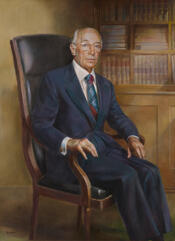
Here you will find contact information for Representative Melvin Price, including email address, phone number, and mailing address.
| Name | Melvin Price |
| Position | Representative |
| State | Illinois |
| District | 21 |
| Party | Democratic |
| Status | Former Representative |
| Term Start | January 3, 1945 |
| Term End | January 3, 1989 |
| Terms Served | 22 |
| Born | January 1, 1905 |
| Gender | Male |
| Bioguide ID | P000522 |
About Representative Melvin Price
Charles Melvin Price (January 1, 1905 – April 22, 1988) was a Democratic member of the United States House of Representatives from Illinois for over forty years, serving continuously from 1945 until his death in 1988. Over the course of 22 terms in office, he represented Metro East, the Illinois portion of the St. Louis metropolitan area, and played a sustained role in the legislative process during a significant period in American history, spanning World War II’s aftermath, the Cold War, the civil rights era, and into the late twentieth century.
Price was born in East St. Louis, St. Clair County, Illinois, on January 1, 1905. He was educated in local parochial schools and graduated from St. Louis University High School in St. Louis, Missouri. He then pursued two years of pre-law coursework at Saint Louis University, laying the groundwork for a career that would combine journalism, local public service, and ultimately national legislative leadership. His early education in both religious and secular institutions in the St. Louis area helped root him in the civic and cultural life of the bi-state metropolitan region he would later represent in Congress.
Before entering national politics, Price worked as a journalist and local official. He became a sports correspondent for the East St. Louis Journal and later for the St. Louis Globe-Democrat, gaining experience in reporting and public communication. He entered elective office as a member of the St. Clair County Board of Supervisors, serving from 1929 to 1931. Building on this local experience, he moved to the federal level as secretary to U.S. Representative Edwin M. Schaefer, serving in that capacity from 1933 to 1943. This decade of service in a congressional office provided him with detailed knowledge of legislative procedures and constituent service, and it positioned him for his own eventual candidacy.
During World War II, Price entered military service. In October 1943 he enlisted in the United States Army and was stationed at Fort Lee, Virginia. It was while he was on active duty that he sought and won election to Congress. He was elected to the U.S. House of Representatives in 1944 and took his seat in January 1945, representing an industrial and working-class district centered in Metro East, across the Mississippi River from St. Louis. As a member of the House of Representatives, Price participated in the democratic process and represented the interests of his Illinois constituents through decades of economic, social, and geopolitical change.
Price’s congressional career was marked by influential committee leadership, particularly in defense and ethics. Most notably, he served as chairman of the House Armed Services Committee from 1975 to 1985, overseeing key aspects of U.S. military policy and defense spending during the latter stages of the Vietnam era’s aftermath and the intensification of the Cold War. Although he was generally liberal on domestic issues, he was notably more supportive of defense spending than many in his party, a stance that distinguished him within the Democratic Caucus. He also chaired the House Committee on Standards of Official Conduct (Ethics Committee) from 1967 to 1976, playing a central role in overseeing the ethical conduct of House members during a period of rising public concern about government integrity. In addition, he chaired the Joint Committee on Atomic Energy from 1973 to 1974 and had a significant role in enacting the Price-Anderson Nuclear Industries Indemnity Act, which established a framework for liability coverage and indemnification in the event of nuclear accidents.
In the mid-1980s, Price’s long tenure as Armed Services Committee chairman came to an end. At the beginning of the 99th United States Congress in 1985, he lost the chairmanship in an internal Democratic Caucus vote. Overthrowing a sitting committee chairman was not a common occurrence at that time, but a majority of House Democrats concluded that the aging Price was no longer the best fit for the post. His strong support for robust defense spending also placed him at odds with many Democrats who favored tighter scrutiny of the Pentagon budget. When choosing his successor, the Caucus bypassed several more senior, hawkish members of the committee and instead selected Representative Les Aspin of Wisconsin, who was not only much younger than Price and other senior members but also more closely aligned with the defense policy preferences of the Democratic majority.
Price continued to serve in Congress after relinquishing the Armed Services chairmanship, remaining an active member of the House until his death. He died in office on April 22, 1988, of pancreatic cancer. His passing ended more than four decades of continuous service in the House of Representatives. In the special election to succeed him, fellow Democrat Jerry Costello, then chairman of the St. Clair County Board, defeated Republican candidate Robert Gaffner. Costello took office on August 9, 1988, and later that year was elected to a full term with 53 percent of the vote, ensuring continued Democratic representation for the district Price had long served.
Price’s legacy is reflected in both public policy and regional landmarks. His work on nuclear energy legislation and defense policy left a lasting imprint on federal law and national security oversight. In recognition of his service, major federal facilities in his home region were named in his honor, including the Melvin Price Locks and Dam near Alton, Illinois, on the upper Mississippi River, and the Melvin Price Federal Building and United States Courthouse in East St. Louis. His congressional papers are preserved in the Louisa H. Bowen Special Collections and University Archives at Southern Illinois University Edwardsville, providing a documentary record of his extensive career in public service.