Representative Charles Frank Reavis
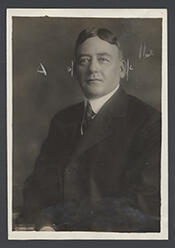
Here you will find contact information for Representative Charles Frank Reavis, including email address, phone number, and mailing address.
| Name | Charles Frank Reavis |
| Position | Representative |
| State | Nebraska |
| District | 1 |
| Party | Republican |
| Status | Former Representative |
| Term Start | December 6, 1915 |
| Term End | March 3, 1923 |
| Terms Served | 4 |
| Born | September 5, 1870 |
| Gender | Male |
| Bioguide ID | R000101 |
About Representative Charles Frank Reavis
Charles Frank Reavis (September 5, 1870 – May 26, 1932) was an American Republican Party politician who represented Nebraska in the United States House of Representatives from 1915 to 1922. Over the course of four terms in Congress, he participated actively in the legislative process during a transformative era in American history, including World War I and the immediate postwar period, and was later involved in the federal prosecution of war-related fraud.
Reavis was born on September 5, 1870, in Falls City, Richardson County, Nebraska. He was raised in Nebraska during the closing decades of the nineteenth century, a period of rapid growth and political development in the Great Plains. After completing his early education in local schools, he pursued legal studies, reflecting both an early interest in public affairs and the growing importance of professional legal training in the region.
Reavis studied law at Northwestern University in Evanston, Illinois, one of the leading institutions in the Midwest. Following his legal education, he was admitted to the bar in 1892. He returned to his hometown of Falls City, where he established a law practice. His professional competence and local standing soon led him into public service. From 1894 to 1896, he served as prosecuting attorney of Richardson County, Nebraska, gaining experience in criminal law and public administration and building a reputation that would later support his entry into national politics.
A member of the Republican Party, Reavis became increasingly active in political and civic affairs in Nebraska in the late nineteenth and early twentieth centuries. His legal practice in Falls City and his prior service as a county prosecutor positioned him as a prominent figure in local Republican circles. By the time of the 1914 elections, he had established himself as a credible candidate for federal office, reflecting both his professional background and the broader strength of the Republican Party in Nebraska during that period.
Reavis was elected as a Republican to the Sixty-fourth Congress in 1914 and took office on March 4, 1915, representing Nebraska in the United States House of Representatives. He was subsequently reelected to the three succeeding Congresses, serving continuously from March 4, 1915, to June 3, 1922. During his tenure, he represented the interests of his Nebraska constituents while participating in national debates over wartime and postwar policy. On April 5, 1917, he voted against the declaration of war on Germany, placing himself among the minority in Congress who opposed U.S. entry into World War I. His service in Congress spanned the Wilson and early Harding administrations, and he contributed to the legislative process during a period marked by war mobilization, economic adjustment, and evolving federal responsibilities.
Reavis resigned from Congress on June 3, 1922. Shortly thereafter, in June 1922, he was appointed special assistant to the Attorney General of the United States in connection with the prosecution of war fraud cases. In this capacity, he participated in federal efforts to investigate and prosecute frauds arising out of wartime contracts and activities, reflecting the government’s attempt to address abuses associated with World War I mobilization. He served in this role until June 1, 1924, applying his legal expertise and congressional experience to complex federal litigation.
After completing his service with the Department of Justice, Reavis moved to Lincoln, Nebraska, in 1924, where he resumed the private practice of law. In Lincoln, he continued his professional career in a state that he had represented and served for decades, remaining engaged in legal work until the end of his life. Charles Frank Reavis died in Lincoln on May 26, 1932. He was interred in Steele Cemetery in Falls City, Nebraska, returning in death to the community where he had been born, begun his legal career, and first entered public service.