Representative Charles Francis Risk
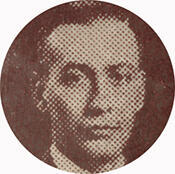
Here you will find contact information for Representative Charles Francis Risk, including email address, phone number, and mailing address.
| Name | Charles Francis Risk |
| Position | Representative |
| State | Rhode Island |
| District | 1 |
| Party | Republican |
| Status | Former Representative |
| Term Start | January 3, 1935 |
| Term End | January 3, 1941 |
| Terms Served | 2 |
| Born | August 19, 1897 |
| Gender | Male |
| Bioguide ID | R000269 |
About Representative Charles Francis Risk
Charles Francis Risk was a Republican member of the United States House of Representatives from Rhode Island who served two consecutive terms in Congress from 1935 to 1941. As a Representative, he took part in the legislative process during a critical era in American history, the years of the Great Depression and the early stages of the New Deal. In this capacity, he represented the interests of his Rhode Island constituents in the national legislature and contributed to debates and decisions that shaped federal policy in the mid‑twentieth century.
Charles Francis Rice (April 4, 1851 – October 2, 1927), with whom Risk is sometimes confused due to the similarity of their initials and middle names, was a prominent Methodist Episcopal minister, author, and church leader in New England. Rice was born on April 4, 1851, in the parsonage of the Walnut Street Church in Chelsea, Massachusetts, the third son of the Reverend William Rice (1821–1897) and Caroline Laura North. He was a direct descendant of Edmund Rice (1594–1663), an early English immigrant to the Massachusetts Bay Colony, through a line running from Edmund to Thomas Rice (1625–1681), Ephraim Rice (1665–1732), John Rice (1704–1771), Nathan Rice (1760–1838), William Rice (1788–1863), and William Rice (1821–1897), his father. Raised in a parsonage household deeply involved in Methodist life, Rice grew up in an environment that emphasized education, religious service, and civic responsibility.
Rice attended Springfield High School in Springfield, Massachusetts, where he delivered the valedictory address for his class in 1868. He then enrolled at Wesleyan University in Middletown, Connecticut, graduating as Salutatorian in 1872. While at Wesleyan he was a member of the Eclectic Society and Phi Beta Kappa, reflecting both his academic distinction and his engagement in collegiate life; his journals from the early 1870s, preserved in the Wesleyan archives, describe his college experiences in detail. He continued his formal education with an A.M. degree in 1875 and later received a Doctor of Divinity (D.D.) from Wesleyan in 1893. Before entering the ministry, Rice taught classics at Springfield High School from 1872 to 1873 and served as a Latin tutor at Wesleyan University from 1874 to 1877. In 1874 he also worked in the Springfield City Library. During his time on the Wesleyan faculty he served on the committee on the Annual Examination and the committee on the Olin Prize, and he was president of the General Alumni Association. His family’s ties to Wesleyan were extensive: his father William Rice was a trustee, and his brother William North Rice was a professor and at times acting president of the university.
Licensed as a member of the New England Conference of the Methodist Episcopal Church in 1873, Rice entered the ministry and began a long pastoral career that would span half a century. He served as pastor of Appleton Church in Neponset, Boston, Massachusetts, from 1877 to 1880; Wesley Chapel in Salem, Massachusetts, from 1880 to 1883; the Methodist Church in Webster, Massachusetts, from 1883 to 1885; St. Paul’s Church in Lowell, Massachusetts, from 1885 to 1888; the Methodist Church in Leominster, Massachusetts, from 1888 to 1893; Epworth Methodist Episcopal Church in Cambridge, Massachusetts, from 1893 to 1898; St. Luke’s Church in Springfield, Massachusetts, from 1898 to 1900; Wesley Church in Springfield from 1900 to 1905; and then, as Cambridge District Superintendent residing in Newton, Massachusetts, from 1905 to 1910. Afterward he served Winthrop Street Church in Roxbury, Boston, from 1911 to 1915; South Street Methodist Church in Lynn, Massachusetts, from 1916 to 1920; and Wellington Church in Medford, Massachusetts, from 1921 to 1925. Though formally retired, he was noted for continuing to serve Wellington Church until his death in 1927.
Over the course of his ministry, Rice emerged as a leading figure in Methodist and interchurch affairs. In 1896 he delivered an address titled “The outlook for the future” at the Centennial Exercises of the New England Conference in Wilbraham, Massachusetts. He became an incoming trustee of the New England Methodist Conference in 1902, confronting the consequences of unwise investments that had cost the church thousands of dollars. He was a delegate to the General Conference of the Methodist Episcopal Church in Los Angeles in 1904 and Baltimore in 1908, and he took part in the Inter‑church Conference on Federation in 1905. Rice was also a delegate to the Federal Council of Churches of Christ in America in 1912, 1916, and 1920. From 1911 to 1921 he served as president of the Massachusetts Federation of Churches, a role in which he helped shape preparations for the 300th anniversary of the landing of the Pilgrims in 1920, and he welcomed national church leaders to Boston with a widely quoted description of the city as “the great heart” of the nation. He was honored for this service in 1922 at a ceremony in King’s Chapel, Boston, where speakers included his brother, the Reverend Dr. William North Rice, then president of the Connecticut Federation, and Lieutenant Governor Alvan T. Fuller. Rice also served as president of the Lynn Inter‑church Union from 1918 to 1919 and as a director of the Federation of Churches and Religious Organizations of Greater Boston. Within Methodist governance he was chairman of the Conference Board Exam from 1897 to 1905, president of the New England Educational Society, president of the New England Conference Board of Stewards, a member of the Board of Education of the Methodist Episcopal Church from 1908 to 1912, and chairman of the board of managers of the New England Deaconess Association.
Rice’s influence extended into education and religious literature. He was a trustee of Wilbraham Wesleyan Academy and succeeded his father as president of its board of trustees from 1898 to 1912, participating in discussions in 1912 about transitioning the institution from a coeducational school to one for boys. He attended meetings of the Boston Alumni Association of the Wesleyan Academy, including one at the American House in 1897. He wrote “History of Methodism in Webster, Massachusetts,” published in the Webster Times in 1884, and co‑authored, with his brother William North Rice, the memorial volume “William Rice: A Memorial” in 1898, honoring their father. He hosted Methodist students from Harvard University in the “Oxford Club” and presented a paper titled “Life in the Epworth Rectory” in 1894. That same year he delivered the Baccalaureate Sermon for Lasell Seminary at the Auburndale Congregational Church, emphasizing the idea that “There is a distinct purpose in the life of everyone. He is the great architect and we the builders, each having a part the great work, however trivial and inefficient our life may seem.” Rice served on the visiting committee of the Boston University School of Theology, delivering communion at its matriculation in 1905, and some of his sermons from Boston University chapel services were later included in “Noontime Messages in a College Chapel: Sixty‑nine short addresses to Young People by Twenty‑five Well‑known Preachers” (1917). He preached the dedicatory sermon for the new Methodist Episcopal Church in Feeding Hills, Massachusetts, in 1901, and in 1905, as Presiding Elder of the Cambridge District, he dealt with accusations by the Reverend George A. Cooke against the Reverend Dr. Charles Pankhurst. Also in 1905 he spoke at a memorial service for Frederick H. Rindge, benefactor of the Harvard‑Epworth United Methodist Church, where Rice had served as the first pastor after the church’s completion. In 1922, during the centennial celebration of Methodism in Medford, Massachusetts, he convened a Union Prayer Meeting of the Methodist churches of Medford, described as “A Love Feast in charge of Dr. C. F. Rice.”
In his personal life, Rice married Miriam Owen Jacobs (1863–1901) on August 25, 1875. She was born in Chicopee, Massachusetts, the daughter of Dr. Horace Jacobs and Emily Owen Jacobs, educated in the Springfield public schools, and a graduate with honors of Vassar College in 1874. Miriam was active in the Woman’s Foreign Missionary Society of the Methodist Episcopal Church, presenting a paper on Professor Harriette Cooke’s medical mission in 1895 and serving as vice president of the Boston West District; she also presented a paper at a meeting in Springfield in 1898. She belonged to the Cambridge Branch of the Massachusetts Indian Association, a local chapter of the Women’s National Indian Association, and in 1897 served on the host committee for a whist tournament to raise funds for Somerville Hospital. She died in 1901 at the age of 48. The couple had five children: Laura Owen Rice, William Chauncey Rice, Horace Jacobs Rice, Paul North Rice, and Rachel Caroline Rice. All three sons attended Wesleyan University; Laura Owen Rice attended Vassar College, and Rachel Caroline Rice attended Boston University. William Chauncey Rice, after graduating from Wesleyan in 1901, earned an A.M. in Government from Yale in 1902, a law degree from Harvard in 1908, and later wrote a dissertation on the decline of the Federalist Party in New England in 1912; he practiced law in Boston. Horace Jacobs Rice also graduated from Harvard Law School in 1908 and practiced law in Springfield. Paul North Rice graduated from the New York Library School and became a notable librarian at the New York Public Library. Rachel Caroline Rice married Burton Howard Camp, a longtime mathematics professor at Wesleyan University. Rice’s family life intersected with his ministry in other ways: in 1907 he and his brother William North Rice officiated at the marriage of his daughter Laura to the Reverend Dr. William Grant Seaman in Newton, Massachusetts, and on January 10, 1914, he hosted Seaman as a guest preacher at Winthrop Street Methodist Episcopal Church in Roxbury.
Rice’s later years combined ongoing public engagement with travel and personal interests. The New York Times recorded that he and his brother William North Rice sailed to Liverpool on the Cunard Line ship SS Bothnia and returned on the SS Catalonia in 1881; in 1882 he presented a sketch of this European trip at a meeting of the Essex Institute. In 1904 he and Laura O. Rice were listed as visitors at Camp Curry in Yosemite Valley in The San Francisco Call. A Republican in politics and a member of Boston’s Twentieth Century Club, he also served as secretary for a Boston Wesleyan alumni group and for the Wesleyan class of 1872. In 1916 he was listed as a donor to the Massachusetts Society for the Prevention of Cruelty to Children. He enjoyed reading and playing golf, pursuits that complemented his demanding public schedule. Rice died on October 2, 1927, at his home at 59 4th Street in Medford, Massachusetts. His funeral was held at Copley Methodist Church in Boston, and he was buried with family members in Springfield Cemetery in Springfield, Massachusetts.